Pharmaceutical stocks are drawing renewed investor attention as obesity treatments, HIV prevention drugs and late-stage biotech assets line up for key milestones in 2026. Merger and acquisition speculation has added momentum, underscoring the strategic value of differentiated pipelines.
BNN Bloomberg spoke with Evan Seigerman, managing director at BMO Capital Markets, about his pharma stock selections and the themes shaping the sector, including obesity drug innovation, HIV prevention advances and rising M&A activity.
Key Takeaways
- Obesity drugs remain a major driver for pharma valuations, with next-generation therapies expected to expand treatment options and patient reach.
- HIV prevention continues to offer long-term growth, particularly through long-acting treatments aimed at reducing new infections.
- Smaller biotech firms with near-term regulatory catalysts are drawing interest as potential acquisition targets.
- Late-stage clinical data and FDA approvals in 2026 are expected to create multiple stock-specific catalysts across the sector.
- Increased merger and acquisition activity reflects large drugmakers’ need to replenish pipelines and diversify beyond blockbuster franchises.
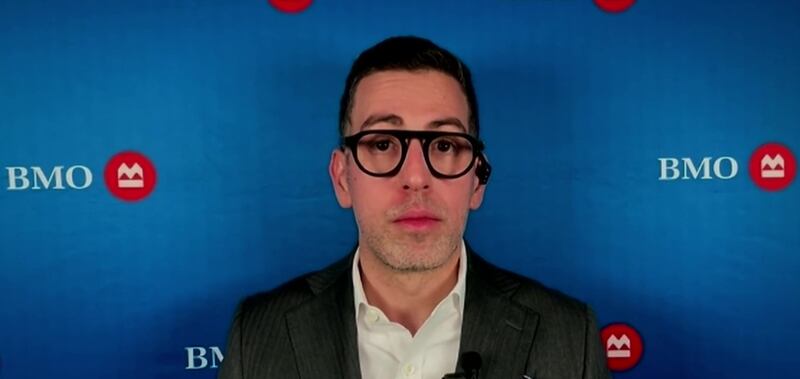
Read the full transcript below:
ANDREW: Time now for Hot Picks in pharma. Our guest has Eli Lilly as one of his selections, as reports swirl that the company is in talks to acquire a California-based biotechnology firm. We will get to that shortly. First, let’s welcome Evan Seigerman, managing director at BMO Capital Markets. Evan, always good to see you. Thanks for joining us.
EVAN: Thank you for having me, and happy New Year.
ANDREW: Happy New Year to you. Let’s start with a familiar name, Gilead. Remind us what the company’s main franchise is today and why you like the stock.
EVAN: Gilead is the leader in HIV treatment and prevention. We are very bullish on its long-acting prevention asset, Yeztugo. We also like the progress the company is making in cell therapy, particularly treatments for blood cancers. We believe Gilead can be very competitive in multiple myeloma, potentially competing against Carvykti, with a possible approval later this year.
Beyond the fundamentals, the company has also worked through some of the investor concerns tied to most-favoured-nation pricing proposals under the Trump administration late last year. Gilead has significant capacity to do transactions and has done a good job tightening up its cost structure. We think it is entering a growth phase and can execute well through the end of the decade, driving strong returns.
ANDREW: Is HIV still a large enough market for a company to generate meaningful growth?
EVAN: Yes, absolutely. There are millions of people living with HIV globally, and prevention remains a major focus. Yeztugo is a long-acting prevention product, and we believe it will become the market leader. We see strength in that franchise well into the 2030s.
ANDREW: Your next pick is Disc Medicine, ticker IRON. What is its core focus?
EVAN: Disc Medicine is one of our biotech picks. The ticker reflects its focus on blood, hemoglobin and iron metabolism. The company received a commissioner’s national priority review voucher, and its drug bitopertin could be approved as soon as this month. The phase two data were strong, and for a small biotech to potentially have an approved asset just a few years after its reverse merger is impressive.
Beyond that, Disc has a drug targeting anemia associated with myelofibrosis. It is a competitive space, but we like what we are seeing so far. The key here is a small biotech with multiple shots on goal, which is relatively unique in the space.
ANDREW: Let’s turn to Eli Lilly. Can you comment on the Wall Street Journal report that the company is in talks to buy Ventyx?
EVAN: Certainly. We published a note on this recently. Ventyx is a smaller biotech, and the reported deal value of about US$1 billion is not a large amount for Lilly. The acquisition would give Lilly access to several small-molecule drugs targeting inflammatory diseases such as ulcerative colitis and Crohn’s disease, as well as cardiovascular indications.
There is also a potential asset aimed at controlling inflammation in the brain, which could have applications in Parkinson’s disease. It is a higher-risk, higher-reward profile, but it highlights Lilly’s strategy of expanding beyond obesity into inflammation.
ANDREW: Lilly is already a stock you like. Is that largely because of its GLP-1 drugs?
EVAN: Yes, we still believe Lilly is the leader in GLP-1s. In our view, Zepbound is best in class. We also expect its small-molecule oral obesity drug, orforglipron, to be approved at some point in the first half of this year, which would compete directly with Novo Nordisk’s oral Wegovy.
What’s important is that Lilly continues to execute across the entire obesity spectrum, from lower-efficacy oral options to retatrutide for patients who need rapid and sustained weight loss. We also like Lilly’s diversification outside obesity, including oncology, neuroscience and inflammation, which gives us more confidence in the overall business.
ANDREW: Are oral GLP-1 drugs actually available on the market now?
EVAN: Yes. In late December, just ahead of Christmas, the FDA approved the oral version of Wegovy, which is semaglutide in tablet form. Novo Nordisk announced availability earlier this week through a cash-pay channel in the United States, with pricing starting at about US$149 per month for the lowest dose.
There has also been a lot of discussion around potential generic semaglutide in Canada. Some reports suggest approval could be delayed due to manufacturing issues, so that is something we are watching closely.
ANDREW: Semaglutide — not sema-glue-tide.
EVAN: Tomato, tomato.
ANDREW: Before we let you go, what should investors be watching for in 2026?
EVAN: We expect significantly more M&A. Large pharmaceutical companies need to add to their pipelines. Firms like Merck, Bristol Myers Squibb and Lilly are likely buyers, and European pharma companies could also be targets. That backdrop is supportive for the small biotech ecosystem, which is why names like Disc Medicine are particularly interesting.
ANDREW: Evan, great to have you. Thanks very much.
EVAN: Always a pleasure.
ANDREW: Evan Seigerman, managing director at BMO Capital Markets.
| DISCLOSURE | PERSONAL | FAMILY | PORTFOLIO/FUND |
|---|---|---|---|
| LLY NYSE | N | N | Y |
| GILD NASDAQ | N | N | N |
| IRON NASDAQ | N | N | Y |
---
This BNN Bloomberg summary and transcript of the Jan. 7, 2026 interview with Evan Seigerman are published with the assistance of AI. Original research, interview questions and added context was created by BNN Bloomberg journalists. An editor also reviewed this material before it was published to ensure its accuracy and adherence with BNN Bloomberg editorial policies and standards.

