Big technology stocks are facing increased scrutiny as investors weigh high earnings multiples against record investment spending on artificial intelligence and cloud infrastructure. Despite those concerns, some strategists argue the sector’s long-term growth and earnings power still support current valuations.
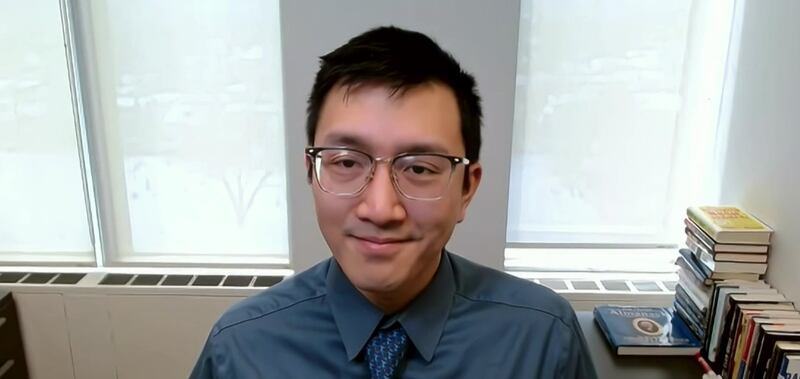
BNN Bloomberg spoke with Ernest Wong, head of research at Baskin Wealth Management, about why he remains constructive on big technology stocks, what upcoming earnings could reveal about returns on capital spending, and how investors should assess risks tied to AI and global supply chains.
Key Takeaways
- Big tech companies play an outsized role in the market, making their earnings guidance and capital spending decisions critical for overall investor sentiment.
- Heavy AI-related capital expenditures have raised concerns about margins, but tight capacity suggests demand remains strong.
- Investors will focus on whether recent spending is translating into sustainable revenue growth and profitability.
- Slower cloud growth at some providers appears driven more by supply constraints than weakening demand.
- Dominance in advanced chip manufacturing remains a key strategic advantage, despite geopolitical risks.
Read the full transcript below:
ANDREW: On Hot Picks today, we are looking at big tech. Our guest says companies are trading at reasonable valuations, even though in many cases they’re spending heavily on investment for future growth. We’re joined now by Ernest Wong, head of research at Baskin Wealth Management. Ernest, always great to see you, and thank you very much indeed.
ERNEST: Good to see you, Andy.
ANDREW: Kick us off here with Microsoft, would you? Of course, it’s seen as a reliable, steady Eddie in the tech industry. A lot of us use — pretty well all of us use — a Microsoft product every day, right?
ERNEST: And I think that’s the key for Microsoft in the AI space, where if you look at who is going to be a winner in enterprise AI, it is companies that have the consumer and enterprise customer base, and solutions that customers can trust and can protect their privacy. And that’s what Microsoft has. They’ve already had good success in cross-selling Copilot to their 365 customer base, and we think that they will continue to roll out more AI solutions to their customers.
ANDREW: What about their role in AI? I mean, are investors worried that they’re not going to reap all the benefits of artificial intelligence?
ERNEST: Yeah, so I think the stock has underperformed in the last few months because of worries about vibe coding, worries that they’ve been losing contracts to Oracle, and that they kind of hitched their wagon incorrectly to OpenAI, just as Gemini and other competing models are outperforming. We view this a little bit differently. We think the share loss to Oracle is something that they did deliberately and reflects strong, prudent capital discipline on the part of Microsoft, and we think that the cloud business is performing very well and will continue to do so through to 2026.
ANDREW: We’re tight for time. Another name is Amazon.com. You say there are worries here that AWS, their giant cloud computing business, might be losing market share. Why is that?
ERNEST: So AWS has certainly been growing less than their competitors, Google and Microsoft, over 2025. We think this is more of a function of supply issues rather than actual demand, and should be resolved going forward. And one other thing to point out for AWS is that Amazon has a partnership and owns 15 per cent of Anthropic, which is the hot name in the AI coding space today. Beyond AI with AWS, we think that the retail business is also performing very well. It’s at record margins. The advertising business is growing double digits, and they’re looking for ways to use AI to drive their retail business and improve costs as well.
ANDREW: And then finally, Taiwan Semi. What could go wrong? I mean, it’s easy to construct a bull case for this dominant chip player. Short of a Chinese invasion of Taiwan — heaven forbid — what could go wrong for Taiwan Semi?
ERNEST: No, that’s exactly right. Taiwan Semiconductor is the only manufacturer of all the leading-edge chips that are powering everything in AI. What we like about the company is that they’ve historically been very disciplined at managing capacity to ensure that they’re not holding the bag when demand falls. And we think that the worries about the stock, and why it is trading at such a modest valuation given the growth, is obviously because of worries about China. We think that China itself relies on Taiwan Semiconductor chips as well. And in that event, if there was an event, I think that all the big techs — Apple, Nvidia, Amazon — they’re all going to have big issues as well. So they are very motivated to ensure that fabs are being built in the U.S. and around the world.
ANDREW: Just comment on Taiwan Semi being so dominant. It’s interesting — the world economy is so reliant on just one company. Are there any plans by Intel and other companies to build facilities that will compete with Taiwan Semi?
ERNEST: No, and I think that’s one of the things that we like about Taiwan Semiconductor. Because all the companies are so reliant on this one company — and not just companies, governments — they are very motivated to ensure that fab and manufacturing capacity is available in the rest of the world. That’s why we saw the U.S. sign a deal with Taiwan, where Taiwan Semiconductor would be building more fabs in Arizona. They’re building fabs in Japan, they’re building fabs in Europe as well, and we view this as a growth opportunity for them going forward.
ANDREW: Give me some insight. How did Taiwan become so dominant in chipmaking?
ERNEST: Yeah, so it’s actually a very long story. Basically, they have the best technology. I think what’s unique about Taiwan Semiconductor, compared with companies like Intel and Samsung, is that they are purely focused on manufacturing chips. As a result, they’re not competing with their customers. They’re able to focus all their efforts and capital on ensuring that they’re making chips to the best of their ability, manufacturing leading-edge chips and having enough capacity to meet growth in whatever is coming along, whether it be AI or self-driving cars. And I think that customers appreciate that.
ANDREW: Ernest, thank you very much indeed.
ERNEST: Thank you.
ANDREW: Ernest Wong, head of research at Baskin Wealth Management.
| DISCLOSURE | PERSONAL | FAMILY | PORTFOLIO/FUND |
|---|---|---|---|
| MSFT NASDAQ | Y | N | Y |
| AMZN NASDAQ | Y | N | Y |
| TSM NYSE | Y | N | Y |
---
This BNN Bloomberg summary and transcript of the Jan. 27, 2026 interview with Ernest Wong are published with the assistance of AI. Original research, interview questions and added context was created by BNN Bloomberg journalists. An editor also reviewed this material before it was published to ensure its accuracy and adherence with BNN Bloomberg editorial policies and standards.

