Small-cap pharmaceutical stocks are drawing investor interest as companies approach pivotal clinical trial readouts and regulatory decisions that could significantly expand revenue opportunities.
BNN Bloomberg spoke with Terry Smith, director of life sciences research at Emerald Advisers, about three small-cap pharmaceutical companies he believes are positioned to benefit from late-stage trials, new indications and expanding treatment markets.
Key Takeaways
- Expanding approved drugs into new disease indications can meaningfully increase revenue without starting from scratch.
- Late-stage clinical trial readouts are often the most powerful catalysts for small-cap pharmaceutical stocks.
- Treatments that improve quality of life, even without curing disease, can see strong patient uptake and compliance.
- Long drug exclusivity periods increase strategic value and acquisition appeal for larger pharmaceutical companies.
- Investors may accept higher valuations when multiple regulatory and trial catalysts are visible within a short time frame.
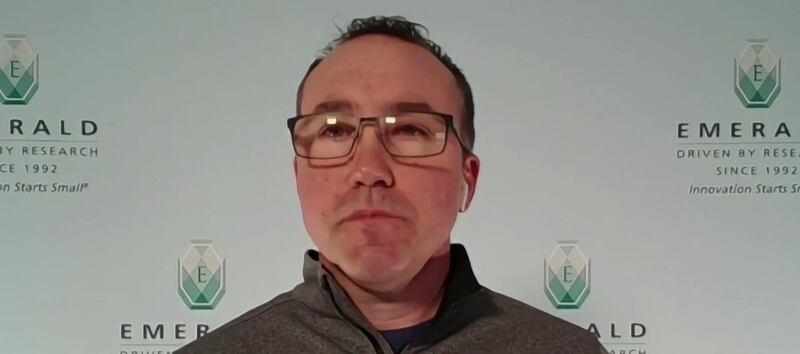
Read the full transcript below:
ANDREW: Time for Hot Picks, and we are zeroing in on the small-cap pharma sector. Our guest’s top pick is United Therapeutics. He believes the company could double its sales with a new drug targeting lung disease. We’re joined by Terry Smith, director of life sciences research at Emerald Advisers. Thanks very much indeed for coming on the show. Tell us about your first name. What exactly is United Therapeutics targeting?
TERRY: Yeah, so United Therapeutics is a company with about a $20-billion market cap. They have several drugs for lung conditions, but the one that’s most interesting is called Tyvaso. Tyvaso is an inhaled drug. It’s approved for two indications already, but they recently had Phase 3 data in something called idiopathic pulmonary fibrosis. This is IPF — it’s a terrible lung disease. Patients generally live four or five years with this disease.
There were two drugs approved about a decade ago for this disease, and they each did over a billion dollars in sales. The drugs weren’t well tolerated, so patients didn’t stay on them for very long. But we believe Tyvaso can be a gigantic drug in this space, maybe $3 billion to $4 billion in peak sales.
They already have one Phase 3 in hand, and they’ll have a second Phase 3 reading out in the next two or three months. It’s highly likely to work, and we believe this could result in a doubling of sales. The stock trades at about 16 times GAAP EPS this year, and we don’t think that’s very expensive when you consider the long runway they have ahead of them.
ANDREW: So they already have some profits?
TERRY: They’re already quite profitable right now.
ANDREW: Next company sounds really interesting. Axsome — they’re working on a drug for major depressive disorder. It’s actually been approved, but they also hope it will show promise in Alzheimer’s disease.
TERRY: Yes. Axsome is a company that’s on the cusp of profitability. They have a drug called Auvelity. It’s approved for major depressive disorder, and it did about $500 million to $600 million in sales last year. It’s growing north of 50 per cent a year. They’re going to continue to grow in MDD.
But the attractive thing is they’ve recently been given the green light by the FDA to submit their application for Alzheimer’s disease agitation. Alzheimer’s disease agitation, of course, occurs in patients with Alzheimer’s disease. There’s only one drug approved in the United States right now for ADA. We believe this would be the second, and it would be a further inflection in sales.
Right now, looking at 50 per cent growth in MDD alone, adding in another indication would be terrific. The nice thing about Auvelity is they have date certainty on when there will be a generic, which is not until 2039 — about 13 years from now. This is the type of thing big pharma loves to acquire, when you have long visibility and multiple indications.
Axsome also has a pipeline that they claim could reach $16 billion in peak sales. That’s probably not probability-adjusted. I don’t think we’re going to pencil in $16 billion in peak sales for a $10-billion market-cap company, but they do have a strong pipeline in addition to Auvelity growing very well.
ANDREW: So it’s not actually an Alzheimer’s treatment — it treats that side effect?
TERRY: Agitation associated with Alzheimer’s, yes.
ANDREW: Right. And it’s interesting — Axsome is a combination of two drugs, including bupropion, which is a well-established antidepressant.
TERRY: It is. They developed this drug and actually had to show that it was better than the two independent components. In the beginning, doctors were a little skeptical — maybe I could just use two generics and it would work the same. It’s shown time and again that it isn’t. There’s something special about this formulation that makes the drug work better than the two individual components.
ANDREW: And tell us about your final company, Mirum. You say it’s just turning profitable and might look expensive at around nine times sales.
TERRY: Yeah. Mirum has one of the best management teams in the small- and mid-cap pharmaceutical space. They have a tremendous pipeline and have been growing very well for the last several years. You can see the stock has done quite well, all on the back of a single drug called Livmarli.
Livmarli is approved for two rare liver indications right now. They’re about to have a third study — kind of a basket study — looking at a variety of liver diseases to bring a third group of patients onto the drug.
What really excites me, though, is a second drug targeting two liver diseases: primary biliary cholangitis and primary sclerosing cholangitis, PBC and PSC. There’s nothing approved for PSC. They’ll have Phase 3 data reading out probably in the April-to-May time frame. The company says these two drugs, in aggregate, could generate $1 billion in sales. I believe they could each be $1 billion drugs.
They’re also doing something really smart with the PSC trial. Nothing has been approved by the FDA because it hasn’t been able to agree on appropriate short-term endpoints. The FDA wants to see things like liver failure or transplant, which take a very long time. As a result, no one’s been able to get anything across the goal line.
Mirum is instead targeting itch associated with PBC and PSC. Patients experience severe itching that dramatically affects quality of life, and treating symptoms leads to strong compliance.
Mirum also recently acquired Bluejay Therapeutics, which is developing a drug for hepatitis delta. We believe that will have a Phase 3 readout this summer. So we’re looking at three or four positive Phase 3 readouts over the next year, on top of an already profitable base business.
ANDREW: We’d better jump. Thanks very much, Terry. Those are three fresh names.
TERRY: Thank you.
ANDREW: Terry Smith, director of life sciences research at Emerald Advisers.
| DISCLOSURE | PERSONAL | FAMILY | PORTFOLIO/FUND |
|---|---|---|---|
| UTHR NASDAQ | N | N | N |
| AXSM NASDAQ | N | N | N |
| MIRM NASDAQ | N | N | N |
---
This BNN Bloomberg summary and transcript of the Feb. 4, 2026 interview with Terry Smith are published with the assistance of AI. Original research, interview questions and added context was created by BNN Bloomberg journalists. An editor also reviewed this material before it was published to ensure its accuracy and adherence with BNN Bloomberg editorial policies and standards.

