Biotech and pharmaceutical stocks are gaining renewed attention as investors reassess growth potential tied to weight-loss drugs, broader therapeutic applications and deeper late-stage pipelines across the sector.
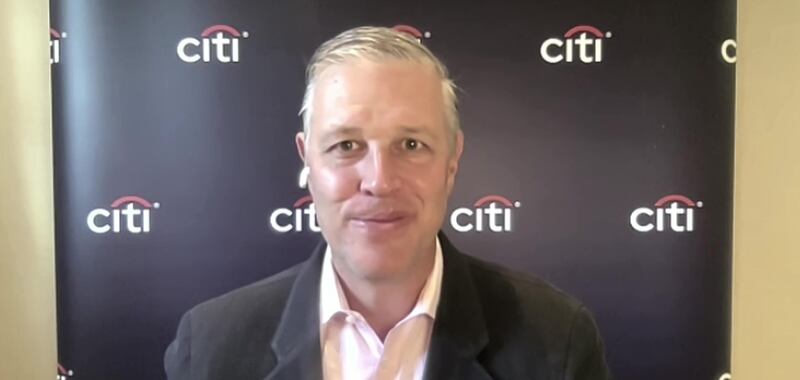
BNN Bloomberg spoke with Geoff Meacham, global head of healthcare at Citi, about opportunities in large-cap biotech, where established revenue streams and upcoming clinical data could shape the next phase of growth.
Key Takeaways
- Weight-loss drugs are expanding beyond obesity and diabetes, with GLP-1 mechanisms showing potential benefits across inflammation, oncology and other diseases.
- Large-cap biotech companies with multiple late-stage assets may be better positioned to sustain growth as early blockbuster drugs mature.
- Stable base businesses can help offset the volatility created by binary clinical trial outcomes.
- Pipeline depth and upcoming phase two and three data readouts are key catalysts for biotech stocks over the next one to two years.
- Innovation in antibody-drug conjugates and immuno-oncology continues to drive optimism beyond gene and cell therapy alone.
Read the full transcript below:
ANDREW: On Hot Picks today, we are focusing on one of our favourite sectors: biotech and pharma. Our guest has Eli Lilly as a top selection. He sees growth for the drug giant amid continued success in the weight-loss drug boom. Let’s get more from Geoff Meacham, global head of healthcare at Citi. Geoff, thanks very much for joining us. You do like the look of Lilly, but is there not a real threat that we’re going to see generic competition emerging in the semaglutide space?
GEOFF: First of all, thanks for having me. I think the market is big enough for multiple players, both generics and branded drugs. I wouldn’t worry too much about generic semaglutide. With Lilly’s injectable business, Zepbound and Mounjaro are both growing nicely. But Orforglipron is really one of the key reasons you want to own this stock. That’s their oral pill, which could launch as early as April, and I think it could really dominate.
ANDREW: And that, of course, is a pill weight-loss drug?
GEOFF: That’s correct.
ANDREW: They also have other irons in the fire. They have a medicine in inflammation as well. Can you tell us a bit about that?
GEOFF: What’s interesting is that the GLP-1 mechanism of action is broadly applicable. What Lilly is finding is that it could help amplify the clinical effect in other diseases. They recently had data showing that GLP-1s improved outcomes for an inflammation drug. That could provide another leg of growth for their inflammation business and potentially down the road in oncology or neurology. GLP-1s work in a very broad way, and that optionality is not really reflected in the stock at all.
ANDREW: Let’s move on to Vertex Pharmaceuticals. One of their core businesses is cystic fibrosis.
GEOFF: It’s a great business for them. There are very few competitors, and Vertex really dominates this space. The intellectual property extends well into the late 2030s. The bigger question for Vertex is what comes next. They have a non-opioid pain drug, a gene-edited cell therapy for sickle cell disease and beta thalassemia, and now potentially a fourth drug for kidney disease, IgA nephropathy. We may hear more about that when they report fourth-quarter earnings. The cystic fibrosis business is not on autopilot, but it does feel very stable.
ANDREW: Turning to Regeneron Pharmaceuticals, you see the stock climbing to the US$900 range. What are the crucial growth areas?
GEOFF: Regeneron has three legacy businesses. Eylea in ophthalmology, Dupixent across multiple inflammatory conditions, and Libtayo in oncology. Those businesses are still growing. Eylea has faced generic and branded competition, but it has held up reasonably well. The real reason we like the stock here is the pipeline. There’s a next-generation melanoma drug that could see data in the coming months, and a very deep oncology and hematology pipeline. Over the next one to two years, we expect multiple phase two and phase three data readouts that could be very positive for the stock.
ANDREW: What’s happening more broadly in oncology? Can you generalize for us on promising areas of research and drug development?
GEOFF: There are a few areas of excitement. Antibody-drug conjugates are one, where a toxic payload is attached directly to a tumour. Immuno-oncology is another. These are technologies that have been around for a few years, but we’re getting much better at engineering more specific immune responses, including bispecific antibodies. It’s not just about gene and cell therapy. There are many foundational technologies that are still growing and proving themselves.
ANDREW: For a company like Regeneron, what’s the crucial driver? Is it simply finding the next blockbuster, or could the company ultimately be taken out?
GEOFF: Regeneron is one of the larger biotech companies by market capitalization. They have deep science, a strong technology platform and exposure to multiple therapeutic areas. The key driver is turning the data card over across the oncology and inflammation pipelines. They have so many assets in early- to mid-stage development that could be meaningful. We’ll have to see how the data plays out.
ANDREW: When you say “turn the data card over,” what do you mean?
GEOFF: It’s the release of final phase two or phase three data. Did the drug work or not? In biotech, that’s one of the biggest binary events. You either have a drug, or you don’t.
ANDREW: It’s amazing how volatile that can be.
GEOFF: It is, but companies like Regeneron do have base businesses with ongoing revenue that help support the downside.
ANDREW: So Regeneron has recurring revenue as well.
GEOFF: Yes.
ANDREW: Geoff Meacham, global head of healthcare at Citi. Thanks very much for joining us.
| DISCLOSURE | PERSONAL | FAMILY | PORTFOLIO/FUND |
|---|---|---|---|
| LLY NYSE | N | N | Y |
| VRTX NASDAQ | N | N | Y |
| REGN NASDAQ | N | N | Y |
---
This BNN Bloomberg summary and transcript of the Feb. 10, 2026 interview with Geoff Meacham are published with the assistance of AI. Original research, interview questions and added context was created by BNN Bloomberg journalists. An editor also reviewed this material before it was published to ensure its accuracy and adherence with BNN Bloomberg editorial policies and standards.

