An equity analyst says strong demand for live events and a robust video game release slate are creating opportunities across media and entertainment stocks.
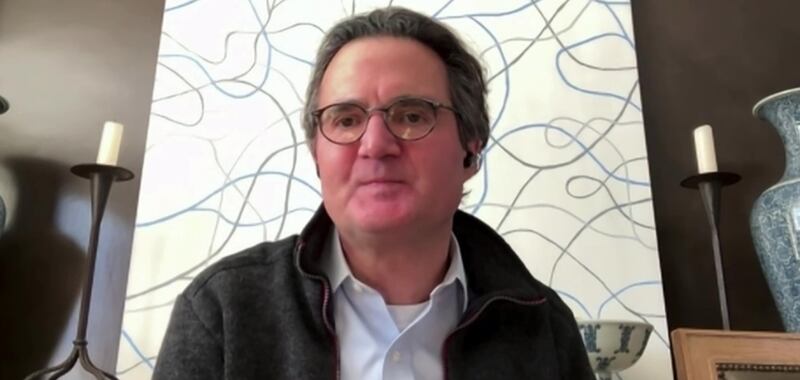
BNN Bloomberg spoke with Jason Bazinet, managing director of media and entertainment research at Citi, who outlined his top picks and discussed how venue ownership, AI-driven advertising and major game launches could support growth.
Key Takeaways
- Consumer demand for live concerts remains strong, with venue ownership and hospitality sales supporting higher margins.
- Antitrust concerns surrounding live entertainment appear already reflected in valuations, limiting incremental downside risk.
- AI-driven ad tools are improving user acquisition efficiency for mobile game publishers.
- Growth in gaming is increasingly tied to in-game spending and monetization rather than unit volume alone.
- A strong pipeline of major releases, including Grand Theft Auto VI, could accelerate earnings in the coming years.
Read the full transcript below:
ANDREW: Time for Hot Picks, and we are looking at media and entertainment. Our guest has Live Nation as his top selection. He says the company is well positioned to benefit from strong demand and that antitrust fears are already more than priced into the stock. We’re joined by Jason Bazinet, managing director of media and entertainment research at Citi. Jason, great to see you, and thanks very much indeed.
JASON: Yeah, happy to be here.
ANDREW: It is incredible. We hear stories of people willing to pay massive prices for live shows, and that’s boosting Live Nation.
JASON: Yeah. I mean, we’ve been on, I’d say, a two-decade journey now where consumers are increasingly wanting to go out and see their favourite artists in person. So the concert business has been growing at a comfortable double-digit pace now for quite some time, and we don’t see any evidence that that’s going to end. The thing that’s exciting about Live Nation is they’re about in the third year of what I’d call backward integrating into more venue ownership, which carries much higher margins.
This company used to spend a couple hundred million dollars a year on capital expenditures. For the last couple of years, it’s been over a billion, and that’s a very good thing, because their returns on invested capital are at record levels, and we just want them to keep spending money. When they spend the money and they own the venue, they get much higher margins because they get site lease fees, they control the food and beverage at the venue, and they get sponsorship revenues. So it’s a very favourable mix shift.
ANDREW: And just tell us, so they’ve been on a real estate buying spree?
JASON: Yeah, they’ve been acquiring venues outright. They’ve been building some from scratch. They’ve been deploying capital to renovate older venues and give them a refresh. One of the big assets they just bought was a sports complex in Paris, and they’re retrofitting it so it can handle concerts. So it’s a very exciting time for Live Nation.
ANDREW: And apparently they are — you talked about hospitality, which would include beverage sales. Apparently — I hope I’m not out of date; I’m looking at a 2024 story — you could buy a can of Liquid Death water, the exclusive water vendor at hundreds of Live Nation venues, for US$7. Live Nation has had an ownership stake in that water brand for quite a few years. So they make money in all kinds of ways.
JASON: That’s absolutely true. I mean, at their amphitheatres, the average fan is probably spending $45 to $50 on merchandise, food and beverage. So there’s just an insatiable appetite on the part of consumers. Live Nation used to call themselves an accidental retailer, where you’d get a warm beer and a cold slice of pizza. They’ve been radically upgrading their offerings to appeal to consumers who are willing to spend more money to get something that’s better.
To your point about Liquid Death, there’s clearly a push for consumers to be a bit more healthy than they were in the past. So they don’t just sell alcoholic drinks, but they also sell water.
ANDREW: Tell us about AppLovin. To my understanding, this company makes it easier to create your own video game.
JASON: Yeah, it’s not so much create your own video game. Their customers — about 90 per cent of revenues — are mobile game companies that are looking for installs. They can choose to spend their user acquisition money on their own, or they can choose to do it through AppLovin. AppLovin has some AI tools that can put the right ad in front of the right person to make the user acquisition spend more effective for the mobile game publisher.
In very short order, AppLovin has gone from an AI winner to an AI loser, which is why the stock is down. But this company continues to put up 70-plus per cent growth. They’ve done that for the last four years. Where the stock is trading right now, even with that very healthy top-line growth, it’s trading at a high-teens multiple of next year’s free cash flow, with no debt. I mean, it’s just absolutely on sale.
ANDREW: Right. And that’s interesting. So the app developers are the ones it’s aimed at, not so much the consumers.
JASON: That’s exactly right. So the way it works is the mobile game publisher goes to AppLovin and says, “I want to spend some money,” and AppLovin goes out and buys mobile game inventory on behalf of the publisher. Then AppLovin gets paid if the consumer actually downloads the game.
ANDREW: And then your final idea here, also video games, Take-Two Interactive.
JASON: Yeah. I mean, we’ve got Grand Theft Auto VI coming out in November. That sort of can — I wouldn’t say we’re variant there. The really interesting thing that I’m focused on is on the balance sheet. They have a line item they call capitalized software development costs, which is essentially cash that they’ve spent developing games that have not yet been released. That number used to be a few hundred million dollars. It sits at $2.2 billion.
My hunch is that there’s a game where the company has spent the cash but not yet released it, and therefore not amortized it. That isn’t Grand Theft Auto — I think it’s something else. And I think that something else might be a Red Dead reboot, which came out almost a decade ago. So what I’m excited about for the stock is not just the Grand Theft Auto release in November, but potentially a Red Dead release maybe the year after.
ANDREW: What is Red Dead? What sort of a game is that?
JASON: Oh, it’s like an open-world western. That’s the way to think about it. You ride a horse, you have a gun and you walk around. It’s considered by video game aficionados as maybe the most realistic open-world game that’s out there, even more so than Grand Theft Auto.
ANDREW: Oh, my goodness. And I guess we’re just in the stone age. Games are going to get more and more immersive, aren’t they?
JASON: Yeah, I think they are. That’s what’s very interesting to the market right now — just looking at all of these AI tools and viewing it as a negative across the board. The market’s painting with a broad brush. I would argue that a lot of these tools are going to be used to lower the cost of development for a lot of these publishers.
Going back to AppLovin, if you take the maximalist AI view — which says AI can just create games at low cost everywhere for everyone — what’s really going to happen is user acquisition prowess is going to be at a premium. This is why mobile game companies spend so much. They spend 30 per cent of revenue acquiring users. Why? Because it’s so easy to make a mobile game.
So if you believe in AI and you think it’s going to be really easy to make a game, that should redound to the benefit of a company like AppLovin that specializes in user acquisition.
ANDREW: Because as games become more complex, the cost of creating them has soared.
JASON: Yeah, that’s right. AI will make it so you’ll have more games, cheaper games. There’ll be a proliferation of games out there. Then having user acquisition acumen, which is what AppLovin does, should be at a premium, because at the end of the day you need to get an install. It’s not enough just to have some fancy graphics on a screen. It’s like, how are you actually going to get users? And that’s hard, and it takes a long time.
ANDREW: It’s interesting. We’re almost out of time, but apparently older adults, especially baby boomers, they’re all over video games. It’s not just a teenage boy thing.
JASON: Oh, that’s 100 per cent right. Your typical consumer on the mobile gaming side is an older female. On the AAA games, you’re right — it’s about half male, half female, and it spans all age groups. I can’t say on the AAA games like Grand Theft Auto or Red Dead that we’re seeing a lot of volume growth. Where they’re getting most of their growth is getting consumers to spend more inside the game once they purchase it.
ANDREW: Right. I think I’ll avoid it, though. I’m in the dream world enough as it is. Jason, thank you very much indeed. Jason Bazinet, managing director of media and entertainment research at Citi.
---
| DISCLOSURE | PERSONAL | FAMILY | PORTFOLIO/FUND |
|---|---|---|---|
| LYV NYSE | N | N | Y |
| APP NASDAQ | N | N | Y |
| TTWO NASDAQ | N | N | Y |
This BNN Bloomberg summary and transcript of the Feb. 24, 2026 interview with Jason Bazinet are published with the assistance of AI. Original research, interview questions and added context was created by BNN Bloomberg journalists. An editor also reviewed this material before it was published to ensure its accuracy and adherence with BNN Bloomberg editorial policies and standards.

