Smart glasses could emerge as a major technology platform over the next decade, potentially reshaping the eyewear industry and creating new opportunities for retailers.
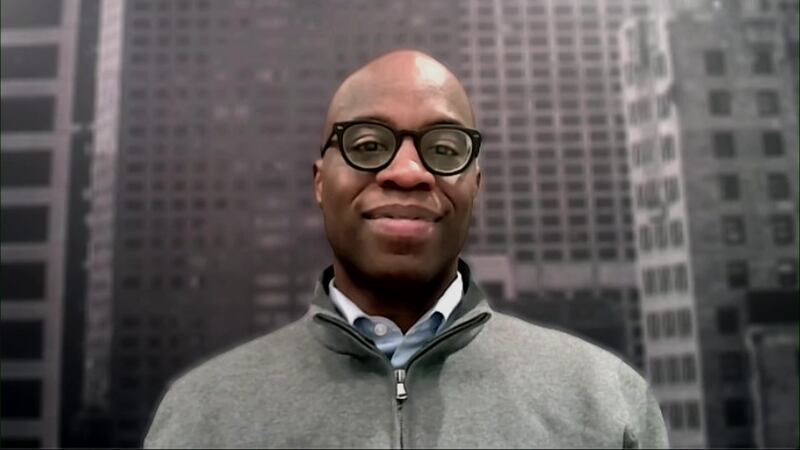
BNN Bloomberg spoke with Anthony Chukumba, managing director at Loop Capital Markets, about trends in optical retail, including pricing strategies, expansion opportunities and the potential long-term impact of smart glasses.
Key Takeaways
- Smart glasses could become a major computing platform over the next decade as wearable devices integrate cameras, microphones and sensors to support artificial intelligence applications.
- Early adoption may be driven by smart glasses replacing several standalone devices, similar to how smartphones displaced digital cameras and MP3 players.
- Eyewear retailers focused on value pricing may benefit from steady demand because prescription glasses are often considered a non-discretionary purchase.
- New smart glasses products expected later in the decade could provide gradual earnings upside as adoption expands across retail channels.
- Discount retailers may continue gaining market share as bankruptcies and liquidations create opportunities to acquire inventory and store locations.
Read the full transcript below:
ANDREW: On Hot Picks today we are touching on a couple of stocks involved in smart glasses. We’re joined by Anthony Chukumba, managing director at Loop Capital Markets. Anthony, thanks very much for giving us the time.
ANTHONY: Thanks for having me.
ANDREW: Start off with your first idea, if you would — National Vision Holdings. So they’ve been selling smart glasses, the Meta Ray-Ban Wayfarers. So they’re a retailer, a retail chain?
ANTHONY: They are a retailer. So they are one of the largest optical retailers in the U.S. Their main two concepts — one’s called America’s Best Contacts & Eyeglasses. The other one is called Eyeglass World. They’ve got about 1,100 stores and they’re nationwide, quite frankly. And they are value retailers, so they tend to undercut a lot of their competitors on price.
Now, to be very clear, smart glasses is just one part of the thesis. It’s actually a relatively small part of the thesis. But you are correct — they are selling the Ray-Ban Meta smart glasses. About 300 stores have them now and they’re going to roll that out chainwide by the end of the second quarter. But there’s a lot of reasons that we like the stock aside from smart glasses.
ANDREW: Right. So just in regular eyewear then, price is one of their propositions here?
ANTHONY: That’s correct. So they are the low-price leader by a very, very wide margin. So they will undercut certainly like a Pearle Vision centre or a LensCrafters, but even like a Costco or a Walmart. I mean, no one really sells glasses any less expensively than National Vision does.
But look, there are a lot of reasons that we like the stock. First off, glasses are a medical necessity, right? They’re non-discretionary. So we expect glasses sales to hold up much better in a sort of middling macroeconomic environment.
They also have new management and the new management team has just a raft of initiatives. I won’t bore you with all of them, but one of the main ones is that 42 per cent of their sales are covered by vision insurance. Historically, they weren’t basically maximizing vision insurance benefits.
So in other words, I’m a vision insurance customer. I have a benefit of $140. I can spend up to $140 on frames without paying $1 out of pocket. They were selling those folks the same way they were selling folks who just walked in without vision insurance. Their ethos was to try to get the customer out at the lowest possible price.
So they would sell that person $100 worth of glasses when their benefit was $140. They’re not doing that anymore, and that’s just one of a number of initiatives. They have a new advertising campaign, they’re adding higher-priced frames to their stores, they’re doing a better job converting customers in-store, they’re improving selling tools for associates, and they’re taking costs out. I mean, you name it — they’re doing it.
And the valuation, even though the stock was up about 170 per cent last year and is off to a pretty decent start this year, is still attractive relative to historical levels.
ANDREW: Let’s move on to Warby Parker, because the stock has been moving higher and smart glasses here are seen as a catalyst?
ANTHONY: Smart glasses are definitely a catalyst as well, but once again a relatively small catalyst.
So with Warby Parker, basically they have a partnership with Google and also with Samsung in which they’re going to develop Warby Parker smart glasses using Google’s Android XR operating system. But those glasses are not going to come out until, call it, late 2026.
So I don’t think they’re going to have much of an impact in 2026. I think certainly they’ll have more of an impact in 2027 and 2028.
To be very clear, we are very, very bullish on smart glasses. But with Warby Parker, our investment thesis is just around the fact that this is a company that has about 320 or so stores. They think they can grow that to 900 stores in the U.S.
There are 45,000 optical stores in the U.S., more than half of them are independents. And similar to National Vision, Warby Parker is a value retailer. Their entry-level offer is a pair of frames with single-vision lenses, and their opening price point is $95. Once again, nobody comes close to that.
In addition to that, their stores are beautiful — particularly for optical stores. Most optical stores are kind of sterile at best, but Warby Parker stores are sort of like the Apple stores of optical retail. So it is a much more pleasant shopping environment.
And they’re underpenetrating a lot of high-margin areas. For example, they sell a much lower percentage of progressives relative to a lot of other optical retailers. They have a much lower percentage of eye exams relative to a lot of other optical retailers.
So this is an organic square-footage growth story, but there are also opportunities for them to further drive store productivity.
ANDREW: We’ve got less than 60 seconds, sorry Anthony. Ollie’s Bargain Outlet Holdings — what draws you to that stock?
ANTHONY: Yeah, so they are the largest closeout retailer in the U.S. Once again, given the kind of uncertain macro environment, folks are trading down to Ollie’s.
And given the rash of retail bankruptcies over the last few years — think Bed Bath & Beyond, Christmas Tree Shops, Party City — they are seeing more and more attractive closeout buying opportunities.
They’re also buying more direct from manufacturers, particularly in the consumer packaged goods space. So that’s a name we really like as well.
ANDREW: Anthony, thank you very much indeed. Anthony Chukumba, managing director at Loop Capital Markets.
| DISCLOSURE | PERSONAL | FAMILY | PORTFOLIO/FUND |
|---|---|---|---|
| EYE NASDAQ | N | N | Y |
| WRBY NYSE | N | N | Y |
| OLLI NASDAQ | N | N | Y |
---
This BNN Bloomberg summary and transcript of the March 6, 2026 interview with Anthony Chukumba are published with the assistance of AI. Original research, interview questions and added context was created by BNN Bloomberg journalists. An editor also reviewed this material before it was published to ensure its accuracy and adherence with BNN Bloomberg editorial policies and standards.

