Retail companies attempting to rebuild growth are drawing investor attention as brands focus on restructuring operations, expanding through acquisitions and reconnecting with consumers. Turnaround strategies and cost controls could help several apparel companies recover after a difficult stretch for the sector.
BNN Bloomberg spoke with David Swartz, senior equity analyst, consumer equity research at Morningstar, about retail opportunities involving Nike, Gildan and VF as companies pursue brand resets, acquisitions and balance-sheet improvements.
Key Takeaways
- Retail turnaround strategies are focusing on rebuilding brand relevance, improving retailer relationships and strengthening direct-to-consumer channels.
- Global sporting events and athlete partnerships remain powerful marketing platforms for athletic brands launching new products.
- Apparel acquisitions can rapidly expand distribution, add recognized brands and shift companies toward higher-margin retail businesses.
- Cost advantages and manufacturing efficiency continue to drive market share in the printwear and basic apparel categories.
- Asset sales and debt reduction are key restructuring tools as apparel companies streamline portfolios and stabilize balance sheets.
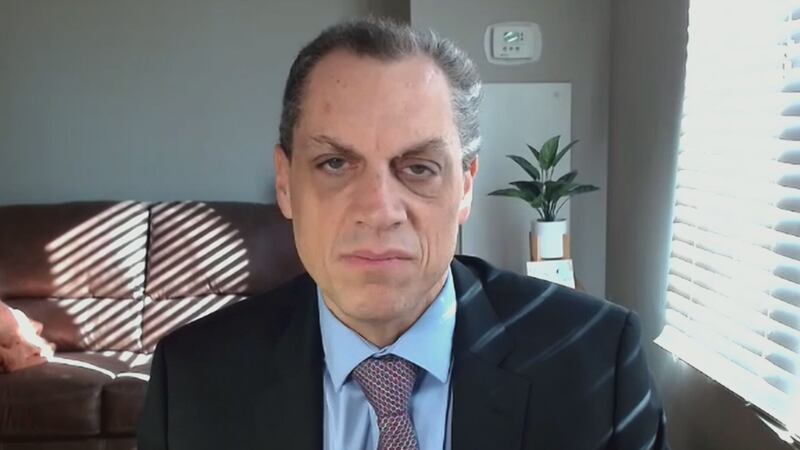
Read the full transcript below:
ANDREW: Time for Hot Picks. Let’s zero in on three ideas in retail. Our guest has Nike as his top selection. He believes the company can stage a turnaround using its strong connections to global sports teams, athletes and events. Let’s get more from David Swartz, senior equity analyst, consumer equity research at Morningstar. David, great to see you and thanks very much. Why do you think Nike offers an opportunity for investors?
DAVID: Nike has had a really tough time the last couple of years and the company is in the midst of a turnaround, but I think the stock is quite undervalued. My fair value estimate is $102, which is obviously well above where it is right now. The stock has really been weak, even lately it has had a big downturn, and that is because people do not have clarity on when a turnaround might happen. But I do think Nike is making progress. The company is working on improving its relationships with retailers like Dick’s Sporting Goods and Foot Locker, and working on its own direct-to-consumer channels as well.
Nike has struggled in China and that is another major concern. I think it is possible we will see a major restructuring in China at some point that could be a positive catalyst for the stock. It is also possible that Nike will sell Converse, which is a very small part of the business, but it has been a real drag on earnings because it has been struggling badly. Nike recently announced significant layoffs at Converse, which suggests it is no longer really supporting the brand.
Nike also has a lot of new products coming out. The World Cup is obviously coming up in a few months. That is a huge marketing event for Nike. Nike will be all over the place at the World Cup. It is also going to be an opportunity for Nike to launch a number of new products. So Elliott Hill, the CEO, has been in place now for about a year and a half and I think we are going to start to see progress next fiscal year, but right now investors really have a negative view of the company.
ANDREW: Converse is an old, venerable brand, but it has just lost its way, has it?
DAVID: Yeah. I mean, Converse is a very small percentage of Nike’s total revenue. In the past it was a growth driver, but recently it has had very poor results. It is not something Nike has put a lot of marketing dollars behind and there are not a lot of new products coming out. Nike has said in the past that it wants to keep Converse, but there has been a lot of speculation lately that it is probably being set up for a sale.
ANDREW: Your next idea is Canadian company Gildan Activewear, a generic play on T-shirts and underwear.
DAVID: Yeah, Gildan’s primary business is printwear, which is mostly blank shirts sold into the printwear market. Recently Gildan acquired Hanesbrands, which essentially doubles the size of the company. This will get Gildan much more heavily into retail basics because Hanes brings some leading brands in categories like socks and men’s underwear.
The Hanes brand is obviously very well known, much better known than Gildan in North America, and so this will give Gildan an opportunity now to expand away from its core market into more of a retail branded business. Some investors have been concerned about that because historically Gildan has not done that very well in that market. But Hanes was really on its way toward a turnaround when Gildan acquired it and I think Gildan paid a very good price for it.
My fair value estimates are $128 Canadian on the Toronto shares and $93 on the New York shares for Gildan. I think it is actually quite undervalued, although it has had a bit of a run. But Gildan bought Hanes at a very low price and I think it is going to benefit from that acquisition over time.
ANDREW: And finally VF, apparel and footwear. Can you remind us what the big brands are there and why you like the stock?
DAVID: Yeah, VF operates in apparel and footwear. Its biggest brands are Vans, The North Face and Timberland. It has exposure to both the active category with Vans and some other brands and the outdoor category with Timberland and The North Face.
In recent years VF has really fallen on hard times. It was once a very successful company, especially when Vans was in its real growth phase, but Vans has struggled over the last few years and that has caused a huge decline in VF’s stock price. The North Face has been healthier and is still doing pretty well, but there is work to do there as well.
I think VF is extremely undervalued. My fair value estimate is close to $40 per share. The CEO, Bracken Darrell, similar to what I talked about with Nike, is pursuing a turnaround that is taking time and investors are unsure when it will really happen. But I think progress is being made. I think what will happen here is that Vans will stabilize at some point and people will recognize that VF has a lot of value.
The company has also improved its balance sheet considerably. It has sold some brands, including Supreme and Dickies, which it used to own, which has allowed it to reduce debt, which in the past has been a major problem. That allows the company to focus on its core brands, which are The North Face, Vans and Timberland.
ANDREW: Thank you very much indeed. It is always great talking to you. David Swartz, senior equity analyst, consumer equity research at Morningstar.
| DISCLOSURE | PERSONAL | FAMILY | PORTFOLIO/FUND |
|---|---|---|---|
| NKE NYSE | N | N | N |
| GIL TSX | N | N | N |
| VFC NYSE | N | N | N |
---
This BNN Bloomberg summary and transcript of the March 12, 2026 interview with David Swartz are published with the assistance of AI. Original research, interview questions and added context was created by BNN Bloomberg journalists. An editor also reviewed this material before it was published to ensure its accuracy and adherence with BNN Bloomberg editorial policies and standards.

