Entertainment stocks are under pressure as regulatory developments and geopolitical tensions raise questions about growth and valuation across live events and sports.
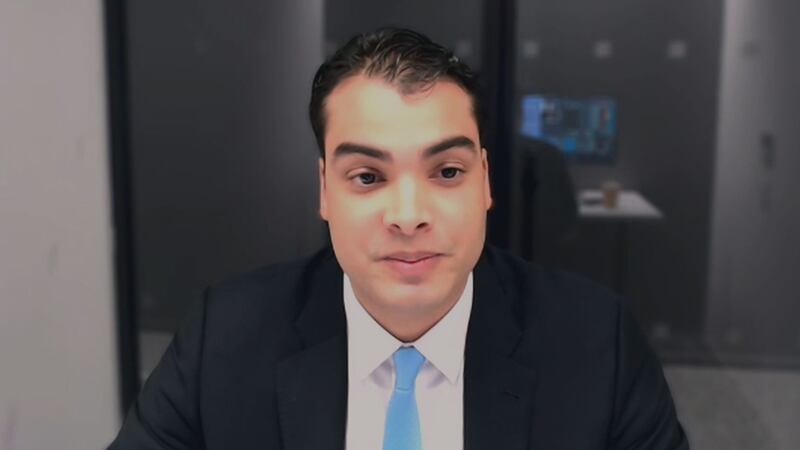
BNN Bloomberg spoke with Ian Moore, vice-president and research analyst at Bernstein, about shifting investor sentiment tied to legal overhangs, sponsorship growth and global event disruptions.
Key Takeaways
- A major antitrust settlement removed breakup risk, but uncertainty around regulatory outcomes continues to weigh on sentiment.
- Strong demand for live experiences is supporting long-term growth expectations despite broader disruption narratives from AI.
- Sponsorship and media rights deals are expected to drive future revenue growth, with monetization gains lagging initial agreements.
- Current valuations in sports and entertainment appear to reflect prolonged geopolitical disruption rather than short-term event impacts.
- Core revenue streams such as broadcast rights remain resilient even if event cancellations persist in affected regions.
Read the full transcript below:
LINDSAY: It’s time now for Hot Picks, and today we are zeroing in on the entertainment sector. Our next guest has Live Nation as his top pick, a company that recently settled an antitrust lawsuit with the U.S. Department of Justice. Here to tell us more is Ian Moore, vice-president and research analyst at Bernstein. It’s good to have you join us this morning. Thanks so much.
IAN: Yes, I’m Ian Moore. I cover several music- and sports-linked equities for Bernstein. The majority of them are facing some pretty serious disruption narrative pressure, including a flood of AI-generated music. But the live category here is completely unassailable. No one wants to watch Sora create fake cars driving around a racetrack at 250 miles an hour. A screen can never replicate the pure electricity of being front row at a BTS or a Bruno Mars concert, and no video will ever do justice to two elite athletes competing in front of a roaring crowd. This is why live entertainment really stands alone as the scarcest, most irreplaceable asset in media today, in my view, and why the entire category, including Live Nation, but also including TKO Group and Liberty Media’s Formula One Group, should see meaningful multiple expansion this year.
LINDSAY: Yeah, no kidding. Let’s go through the hot picks one by one. I know you just listed them, but let’s start with Live Nation and break down exactly why you like it. I take your point that people love live events, right? There’s nothing quite like it. But let’s start with Live Nation. What do you like about it?
IAN: Absolutely. As you mentioned, one of the biggest uncertainties in the past year has been the long-running DOJ antitrust complaint, which even raised the possibility of a breakup of this company. Earlier this month, Live Nation announced what I view as a very favourable settlement. In that case, the stock popped initially, but has given a lot of that back and trades below $150 a share today. The terms of the settlement create roughly a $50 million to $60 million annual financial impact. In my view, that’s very manageable for a business that I see doing close to $3 billion of adjusted operating income next year.
What really matters is the venue network — its owned and operated locations — which is untouched and highly profitable across food and beverage and other ancillary growth opportunities. I’ve done some differentiated work pulling on more than a decade of individual tour dates and gross ticket sales. That granular analysis gives me confidence in a path to double-digit adjusted operating income growth in 2026, and the touring pipeline is simply filling faster this year than it has in the last two years. My price target is $200 a share. That’s about 30 per cent upside to the current price in a year with some serious macro uncertainty tied to Iran. Live is a clean, predictable compounder, in my view.
LINDSAY: Okay. And next up, you also like TKO Group, was that right?
IAN: Yeah, TKO. Last year, they locked in a slew of major media rights renewals that created a clear opportunity for a free cash flow inflection. The Iran situation has added some near-term volatility here. I did some deep work last week on content monetization, though, and I highlight that the longer-term setup is highly compelling and unchanged.
Using cross-sectional sponsorship regressions across every major sports league, I showed that media rights growth drives partnerships with a two-year lag and an 80 to 90 per cent pass-through. That monetization gap that exists today between UFC and WWE and some of the larger leagues like the NBA and NFL, with continued execution on category diversification, points to TKO hitting management’s $1.2 billion partnership target as early as 2028 — two years ahead of guidance.
Boxing, which they are in the process of building up, adds another layer of optionality, in my view. Streaming is displacing pay-per-view across boxing, enabling multiple major events every year, bigger audiences and preserved live financial incentive economics. I see potential for hundreds of millions in incremental EBITDA from that segment by 2030. The stock is sitting around $190 today. My target is $250, so that’s more than 30 per cent upside, even with this curveball in Iran. TKO is the most concentrated partnership and sponsorship inflection story in sports.
LINDSAY: Yeah, and Formula One as well. I believe they’ve actually cancelled some races in the Middle East because of what’s happening. But you still like Formula One? We don’t have a lot of time left, but tell us what you like about it.
IAN: Yeah, just very quickly, I upgraded this stock back in January. I see the Formula One calendar shifting toward higher-paying markets. Apple is poised to invest aggressively in Formula One, and the opportunity to apply the Formula One playbook to MotoGP adds $300 million or more of EBITDA by 2030.
The Iran situation, as you mentioned, has been the big curveball. Bahrain, the Saudi Grand Prix on the Formula One side, and the MotoGP Qatar race have all been cancelled. The stock has pulled back to about $83. In a note I published yesterday, I did some bottom-up scenario analysis, and the current price reflects more than just a few months of disruption. In fact, at today’s valuation, the stock is pricing in a prolonged conflict, even a complete wipeout of races in the region in the second half of this year.
So if the conflict eases in the coming weeks, this could be a very compelling long-term buying opportunity. My price target is $110, implying 30 per cent or more upside.
LINDSAY: So interesting. All right, we’re going to have to leave it there. Ian Moore, vice-president and research analyst at Bernstein. Appreciate you coming on. Thanks so much.
---
This BNN Bloomberg summary and transcript of the March 27, 2026 interview with Ian Moore are published with the assistance of AI. Original research, interview questions and added context was created by BNN Bloomberg journalists. An editor also reviewed this material before it was published to ensure its accuracy and adherence with BNN Bloomberg editorial policies and standards.

