Telecom stocks are in focus as competition in wireless intensifies and pricing strategies evolve across the sector.
BNN Bloomberg spoke with David McFadgen, managing director of institutional equity research at ATB Cormark Capital Markets, about his top telecom picks and where he sees value emerging.
Key Takeaways
- Quebecor is gaining market share by offering roaming-inclusive plans that pressure incumbents’ high-margin revenue streams.
- Wireless remains the key growth driver, but industry growth is expected to stay in the low single-digit range.
- Valuation gaps in telecom stocks may present upside, particularly where assets are underappreciated by the market.
- BCE offers stability and dividend support, but growth prospects remain modest compared with peers.
- Dividend sustainability concerns continue to weigh on parts of the sector, particularly where payout ratios exceed cash flow.
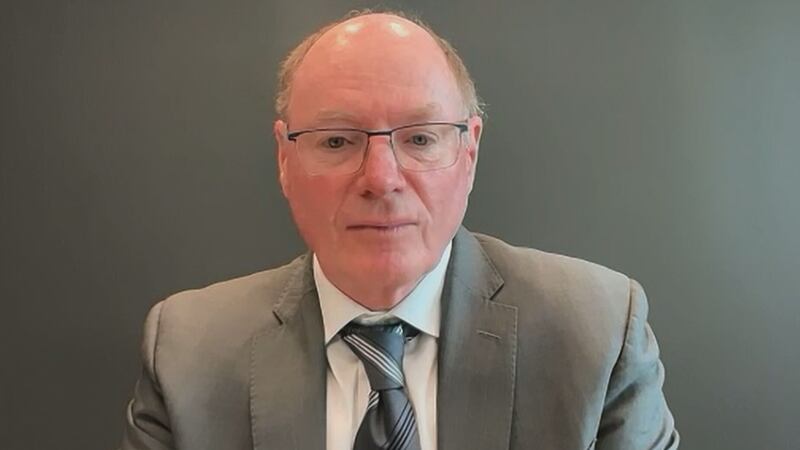
Read the full transcript below:
ANDREW: Let’s zero in on telecom in Hot Picks today. Our guest has Quebecor as his top idea. We’re joined by David McFadgen, managing director of institutional equity research at ATB Cormark Capital Markets. David, thanks for joining us. Quebecor is certainly shaking things up in the Canadian mobile industry. You like the stock.
DAVID: Yeah, it’s my favourite name in the telecom space. When I think about Quebecor, I go back to what the company did in 2005 in the cable telephony market. It entered that market from zero and came in with a low-priced cable telephony product — I think it was around $30 at the time — while Bell’s ARPU was around $50, so that was its main competitor.
There wasn’t really a lot Bell could do because it didn’t want to reprice its subscriber base. It tried to compete on bundling and marketing, reinforcing the brand, but there wasn’t much it could do.
Fast forward 10 years and Quebecor had about 1.35 million landline telephony subscribers, generating over $200 million of EBITDA. So, obviously very successful. It has since come off due to wireless substitution in the market, but clearly very successful.
When I think about that, it reminds me of what they’re doing right now. They’ve purchased Freedom Mobile and are coming into the market with a very compelling product. They’re including roaming in all their plans, so they’re hitting the incumbents where it hurts.
Right before COVID-19, incumbents used to do about $400 million to $500 million a year in roaming revenue — very high-margin revenue. By including roaming in all their plans, Canadians can travel the world without worrying about bill shock. It’s very appealing, and the incumbents don’t want to match that because they don’t want to lose that high-margin revenue.
Quebecor is doing very well. It’s gaining share and continuing to take share, and I expect that to continue for many years.
ANDREW: You also favour Rogers, partly due to expected growth from the Shaw acquisition.
DAVID: Rogers — like most of these companies, except Quebecor — is looking at low single-digit organic growth. What’s appealing is the valuation.
If you value the core business at around seven times EBITDA and assign zero value to the sports assets, you get a target of around $50, which is close to where the stock is trading. That implies the market is assigning no value to those assets, which isn’t realistic.
We value the sports assets at about $11 billion — roughly $9.5 billion for the 75 per cent interest in MLSE and about $1.5 billion for the Blue Jays and related assets.
If you include that, you get a target price of about $74. It’s a very high target compared to where the stock is trading.
There’s also an event coming. Rogers is expected to buy out the remaining 25 per cent interest in MLSE, combine it with the Blue Jays and then sell a minority stake. When a third party puts a value on those assets, I think the stock will rally because it confirms the value.
Right now, the stock is trading around the mid-six times EBITDA range, but it’s actually cheaper than that because the sports assets don’t generate EBITDA. So I think there’s a catalyst coming this year that will unlock value.
ANDREW: And finally, BCE, the parent of this network. You think that stock is attractive. Why?
DAVID: I’d buy the other two first, but I do like BCE. It’s a very stable company. They right-sized the dividend, so it should be safe.
They’re focused on AI, with a goal of generating $2 billion a year in revenue from AI by 2028. They also did a deal recently in Saskatchewan that’s expected to add about $500 million in revenue.
So I see a stable company — low growth, but stable with a solid dividend. I like Quebecor and Rogers more, but I do like BCE.
ANDREW: Just quickly, what about Telus?
DAVID: I don’t recommend Telus. I think there are concerns about the dividend. If I were the new CEO, I’d probably cut it — I’m not saying they will, but that’s what I would do.
The payout ratio is over 100 per cent. If they sell a minority interest in Telus Health, they lose access to that cash flow, which makes the situation more challenging.
So I’m not a fan of Telus right now.
ANDREW: Thank you very much, David. David McFadgen of ATB Cormark Capital Markets. Just a reminder, BCE is the parent company of BNN Bloomberg and competes with Rogers, Telus and Quebecor.
| DISCLOSURE | PERSONAL | FAMILY | PORTFOLIO/FUND |
|---|---|---|---|
| QBR.B TSX | N | N | N |
| RCI.B TSX | N | N | Y |
| BCE TSX | N | N | N |
---
This BNN Bloomberg summary and transcript of the April 8, 2026 interview with David McFadgen are published with the assistance of AI. Original research, interview questions and added context was created by BNN Bloomberg journalists. An editor also reviewed this material before it was published to ensure its accuracy and adherence with BNN Bloomberg editorial policies and standards.
BNN Bloomberg is owned by Bell Media, which is a division of BCE.

