Geopolitical disruptions and tightening global supply are reinforcing bullish sentiment in oil markets, with investors still underestimating how long constraints could last.
BNN Bloomberg spoke with Cole Smead, CEO and portfolio manager at Smead Capital Management, who highlighted why he sees continued upside in Canadian energy names as supply discipline and strong pricing persist.
Key Takeaways
- Markets are underestimating the duration and impact of Middle East supply disruptions on global oil flows.
- Backwardation in oil markets signals sustained tight supply and stronger returns for producers.
- Capital discipline is limiting new drilling activity despite high oil prices, supporting the cycle.
- Canadian oilsands producers benefit from long reserve life and improved energy security concerns.
- Valuation gaps and corporate actions, including buybacks and potential mergers, remain key catalysts.
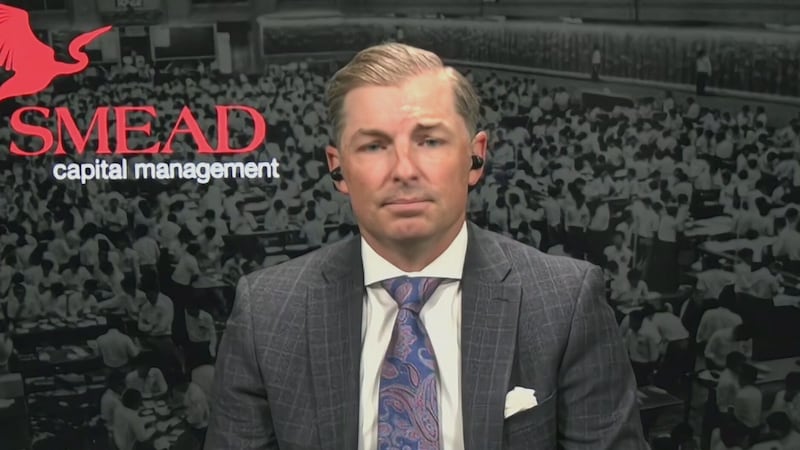
Read the full transcript below:
ANDREW: It’s time for Hot Picks. Today we are looking at three Canadian energy producers, and we’ve got one of our favourites, Cole Smead, CEO and portfolio manager at Smead Capital Management. Cole, it’s great to see you. Thanks very much indeed. Before we get into the individual stocks, you reckon the market — the energy market — is underestimating this supply disruption from the Persian Gulf and how long or severe it will be?
COLE: Yeah, and before I get into that, Andy, I just want to say congratulations on a wonderful career. On behalf of all my colleagues and the thousands of Canadians that spend their time here in the desert every winter. And so we owe you a drink, dinner or a round of golf whenever you’d like.
ANDREW: I’ll be there. Thank you.
COLE: So to your point, Andy, the answer is unequivocally yes. Look at global indices — we’re sitting at three to four per cent in this space. And this is a rude awakening for investment markets. If anything, investors thought this was going to be adorably cute, like Venezuela, and they found out that this is a 60-day stalemate so far, and the time needed to actually get boats to Asia with this crude is going to be 30 to 40 days out. So there are real-world implications going on.
And it’s even interesting to watch something like the ARC purchase go on this week, with them getting taken out. People are thinking, “Oh, it’s a 30 per cent premium. This is great.” Well, if you look at ARC’s performance, ARC was not one of the winners. And I think I have a piece out today talking about the idea that the real winners in all this are the oil names — they continue to be.
If you look at the futures market, the contango investors are willing to bet on isn’t as valuable. Looking into backwardation for years argues supply is going to be tight for a very long time and requires a lot of faith. And that’s really what investors have been missing time and time again in this space.
ANDREW: Let’s get into some of your stock ideas. CVE — a mighty player in the oilsands. And of course, this bodes well for the oilsands, really, if people are questioning security of supply and energy.
COLE: No question. You’ve got long reserve life in these assets. It’s something they haven’t been as excited about up until really late last year, and now you’re seeing the strength of this come to pass. The MEG purchase just looks fantastic right now. They’re going to increase production into this environment, which looks great for them.
They’ll use the NOLs from MEG, which has worked out to their favour. You’re seeing them buy out preferreds, and you’re going to see them do buybacks. That’s all great. If anything, this is a tailwind that also feeds the downstream business.
We’ve been critical of the downstream business because we think the best businesses are pure upstream. That said, the reality is that diesel crack spreads right now are literally minting downstream, and that is going to feed Synovus in a way it doesn’t for some of the other independent producers that don’t have a downstream asset like that.
But again, this is a new all-time high in the stock, and I just don’t think we’re going to see the period we saw prior, where people are worried about an oversupplied market. We’re going to have to build up supply for a few years here.
ANDREW: And just walk us through what you said about backwardation again in the oil market. I want to make sure I have it straight. Right now we have a situation where futures are a lot lower than physical prices. What is that telling us?
COLE: Yeah, so spot today is high. If you go two years out or more, you’re at $70 or lower per barrel in the futures. Now, admittedly, just so your listeners know, there’s not much volume as you go up the futures curve either. In other words, you can’t go out and trade that in a lot of volume. Can one of the big producers go out and trade five or six years out? The answer is no.
So I don’t think that’s a very good physical guide to hedging what they can potentially do. Also, if you go back, is this a good predictor of the future? It’s not. It didn’t predict Iran, it didn’t predict Ukraine.
People will look and say, “What’s mid-cycle? Is the middle of the curve moving?” The last two years, these stocks have moved on that. If that moved down, they traded the stocks down. The problem with that is — go look at the Baker Hughes rig counts. Rig counts are down eight to nine per cent in the United States over the last year. Has spot been pretty nice for those producers? Yes.
So what are we learning? The industry has been trained not to misallocate capital, not to waste it on frivolous capex spending. And we’re seeing that play out in the open market right now, where even very high spot prices relative to the recent past are not causing them to go out and drill.
Comparatively, if you look back at the 2010s, you had contango. As an investor, if I knew nothing about the companies or the environment, I’d know that in contango oil companies lose money, and in backwardation oil companies make really good returns. Looking back five years, a lot of these have compounded at 40 per cent.
What would I rather have? I want backwardation. Does it require faith? Yes — I have to look at $70 or less three years out. But you know what faith is? That’s where the big money is.
ANDREW: Backwardation, of course, where the futures price is lower than the spot price. Sorry, we’ve used up a lot of time. Strathcona is another stock you like. Walk us through that.
COLE: Strathcona might be the cheapest name in the space right now. If you look at their total capital, they trade for about 1.3 times that capital. They are unhedged. They’re going to be watching revenues month to month.
In March and April, they’re probably running 80 per cent higher revenues per day than they were at the start of the year. So what I think the Street will have to do is sit down and say, “What if we stop this today and go to $70 oil for the rest of the year?” You’re still going to see returns on capital of 25 to 30 per cent.
If you make those kinds of returns, you don’t trade at 1.3 times total capital. So I think people are going to have to buy the stock because of the attractiveness and capital allocation.
And I’ll add one more thing. On my recent visit to Calgary, Adam and Connor and I were joking about this — no one is saying these are the good old days. These are the good old days. This is a golden era in the history of the energy business, and it is not going to stop right now. People need to buckle up.
ANDREW: Finally, Tamarack Valley — we’re tight for time. What’s your verdict?
COLE: Vote against the board recommendation for a poison pill. Great management, bad board idea. Vote against proposal three. It’s a really bad idea. And if you have any questions, find me.
ANDREW: As good as there could be money to be made in a takeover?
COLE: Yes, I totally agree. They should be merging with Headwater, unequivocally. ’Tis the season.
ANDREW: Thank you so much. I really appreciate it. And when I’m down in Phoenix, I’ll give you a call. Cole Smead, CEO and portfolio manager at Smead Capital Management.
| DISCLOSURE | PERSONAL | FAMILY | PORTFOLIO/FUND |
|---|---|---|---|
| CVE NYSE | Y | N | N |
| SCR TSX | Y | N | N |
| TVE TSX | Y | N | N |
---
This BNN Bloomberg summary and transcript of the April 30, 2026 interview with Cole Smead are published with the assistance of AI. Original research, interview questions and added context was created by BNN Bloomberg journalists. An editor also reviewed this material before it was published to ensure its accuracy and adherence with BNN Bloomberg editorial policies and standards.

