Biotech stocks are seeing improving investor sentiment as merger activity, IPOs and advances in cancer and rare disease treatments drive renewed interest in the sector. Robert Driscoll said the industry is benefiting from stronger dealmaking and growing optimism around clinical development pipelines.
BNN Bloomberg spoke with Robert Driscoll, senior vice-president in equity research at Wedbush, about Arcus Biosciences, Tyra Biosciences and Monte Rosa Therapeutics, and why he sees potential in their oncology, autoimmune and inflammation-focused drug programs.
Key Takeaways
- Improving biotech sentiment is being driven by stronger M&A activity, successful IPOs and demand for new pharmaceutical pipelines.
- Kidney cancer treatments targeting HIF-2 alpha are emerging as a new backbone therapy alongside immunotherapies and tyrosine kinase inhibitors.
- Targeted therapies aimed at FGFR3 are showing potential across bladder cancer, rare cancers and genetic bone growth disorders.
- Molecular glue degraders are emerging as a new therapeutic class designed to destroy disease-causing proteins rather than simply block them.
- Large pharmaceutical companies are increasingly turning to biotech firms for pipeline expansion as patent exclusivity periods near expiration.
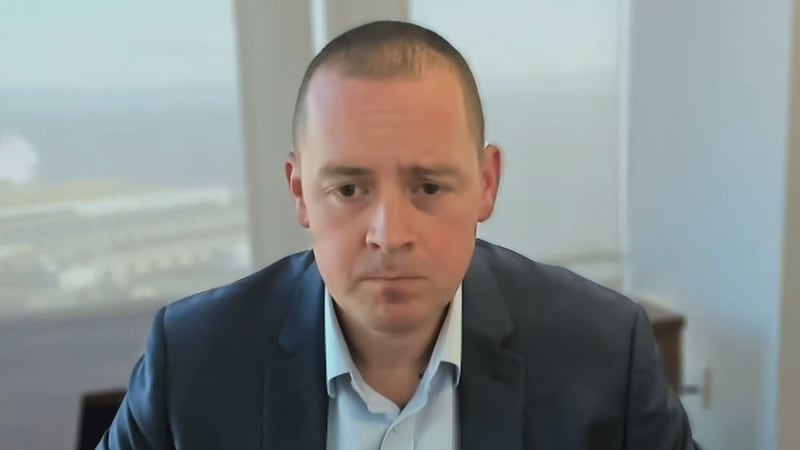
Read the full transcript below:
LINDSAY: It’s time now for Hot Picks, and today we are zeroing in on three plays in the biotech sector, pointing to California-based companies specializing in cancer treatments. For more, let’s welcome Robert Driscoll, senior vice-president in equity research at Wedbush. It’s great to have you join us. Thanks so much.
ROBERT: Great. Thanks for having me.
LINDSAY: Before we get into your hot picks, I want to talk about the biotech sector and zoom out a bit to discuss it as a whole, because the sector is seeing a bit of a rebound. What’s your take on it now? Is it still trading below historical averages at the moment?
ROBERT: Yeah, so biotech stocks are up pretty much in line with the broader indices this year, coming off a really great second half of 2025. Sentiment does continue to improve despite the chaos at the FDA. A lot of that is driven by really strong merger-and-acquisition activity in the last few months. I think we’ve had more than US$16 billion in deals this year, with both public and private companies getting taken out, and some successful IPOs as well. So I do think sentiment is going to continue improving for the rest of the year.
LINDSAY: Wow. Okay, so let’s get into it then. Arcus Biosciences is your first pick. Tell us more about this one.
ROBERT: Yeah, we’ve got an outperform rating with a US$41 price target. It’s trading around US$25 a share right now, with a US$3-billion market cap. These guys have a pipeline of therapies for oncology and immunology. The main focus is a drug called casdatifan, or CAS, that’s being developed for kidney cancer.
Treatment for metastatic kidney cancer has progressed substantially over the last decade. Chemotherapy doesn’t really work in the majority of kidney cancer cases. We now have immunotherapies and something called tyrosine kinase inhibitors, and these are both used separately and together, and have greatly improved outcomes for patients.
More recently, a third pillar of treatment has emerged that attacks the driver of kidney cancer. Arcus’s drug CAS is a best-in-class, highly potent HIF-2 alpha inhibitor that has shown really exciting activity on its own and is now being combined with immunotherapies and tyrosine kinase inhibitors as a backbone treatment for this disease.
We’re going to get multiple clinical data readouts this year. We think these are going to cement this as a best-in-class molecule, and we expect it to be approved in the next couple of years. Importantly, cash is about US$870 million, which gives them runway into the second half of 2026.
LINDSAY: Wow. Okay. Next up is Tyra Biosciences. Why do you like this one?
ROBERT: Yeah, so the price target is US$53. Tyra is developing a pipeline of targeted therapies. The real value driver in this pipeline is something called TYRA-300, or “Dabo,” which is a highly selective inhibitor of a target called FGFR3.
High selectivity is really important here because less selective drugs can often cause severe side effects and limit the clinical benefit. Dabo is in development for a type of bladder cancer called non-muscle invasive bladder cancer, where FGFR3 really drives the disease.
It’s also in development for a disease called upper tract urothelial carcinoma, or UTUC. This is a much rarer cancer, but one we think could allow for rapid approval of Dabo.
Then it’s also in development for achondroplasia, a bone growth disorder that results in dwarfism and is driven by a genetic mutation in FGFR3 as well.
Targeting FGFR3 in each of these diseases has already been validated as an effective treatment approach. We’re going to get bladder cancer data in August and achondroplasia data later this year, and we do think the stock is undervalued ahead of those readouts. Cash was roughly US$384 million as of the latest quarter, which gives them runway into the second half of 2028.
LINDSAY: Okay, last up is Monte Rosa Therapeutics. This one focuses on autoimmune disease, inflammation and cancer. Tell us more about why you like this company.
ROBERT: Yeah, so Monte Rosa is pioneering development of a relatively new class of therapeutics called molecular glues, or molecular glue degraders.
Instead of binding to a disease-causing protein like traditional therapeutics, it actually causes the protein to be destroyed or removed from the cell. This has a number of advantages versus traditional drugs that just bind to these proteins, including potentially better safety and efficacy. It also opens up new targets for development.
Monte Rosa uses an AI-fuelled platform to design these molecules. They currently have three programs in the clinic.
The first is in early development for prostate cancer. The second hits a novel autoimmune target and is partnered with Novartis, which will pay for later-stage clinical development across a large number of autoimmune diseases. That could really drive a lot of value.
Finally, the third program targets the root cause of inflammation and showed some exciting data earlier this year for the treatment of cardiovascular disease. We think that validates its potential in other inflammatory conditions such as gout.
We’ll have updated data for that third program later in the second half of this year. Again, they have a really strong balance sheet at about US$671 million, which should support them into 2029.
LINDSAY: It’s so interesting. When you talk about these companies and the sector as a whole, you say there’s a lot of merger-and-acquisition activity happening right now in this sector. Why is that?
ROBERT: Yeah, I mean, a lot of it is that patent exclusivity is going to end soon for a number of pharmaceutical products, so companies are looking at the loss of a lot of revenue and need to replace it. That’s where biotech companies come in.
LINDSAY: Any of these companies — is there any merger-and-acquisition activity on the horizon for any of these three that you know of?
ROBERT: We’re not party to any of that chatter, but when you have a successful drug with potential in large markets, there’s always going to be interest from larger pharmaceutical companies. Monte Rosa in particular does have a couple of deals with larger pharmaceutical companies that we expect could help drive those conversations.
LINDSAY: Yeah, okay. Just wasn’t sure if you’d heard any of that chatter. Robert Driscoll, senior vice-president in equity research at Wedbush, appreciate you joining us today. Thanks so much.
| DISCLOSURE | PERSONAL | FAMILY | PORTFOLIO/FUND |
|---|---|---|---|
| RCUS NYSE | N | N | Y |
| TYRA NASDAQ | N | N | Y |
| GLUE NASDAQ | N | N | Y |
---
This BNN Bloomberg summary and transcript of the May 13, 2026 interview with Robert Driscoll are published with the assistance of AI. Original research, interview questions and added context was created by BNN Bloomberg journalists. An editor also reviewed this material before it was published to ensure its accuracy and adherence with BNN Bloomberg editorial policies and standards.

