The cannabis sector could be entering a new growth phase as regulatory momentum in the United States and expanding international markets create fresh opportunities for operators. Investors are increasingly focused on companies with strong medical cannabis exposure and international growth potential.
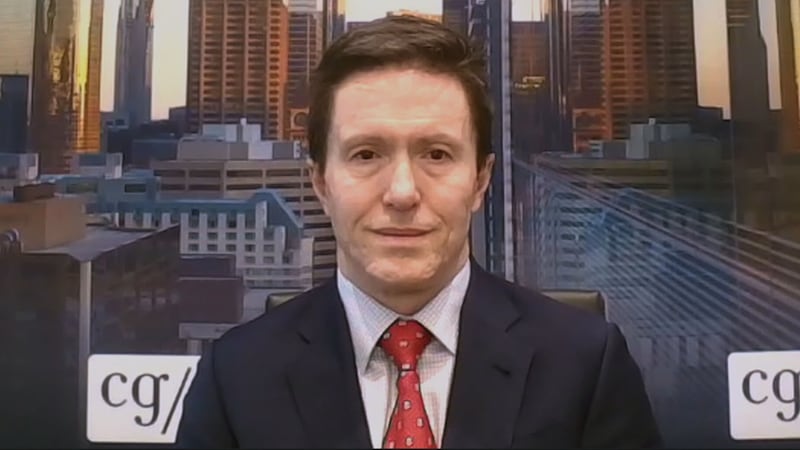
BNN Bloomberg spoke with Kenric Tyghe, Special Situations Analyst at Canaccord Genuity, about the outlook for cannabis stocks, the impact of U.S. marijuana rescheduling and why European expansion is becoming a key differentiator for some operators.
Key Takeaways
- U.S. marijuana rescheduling is viewed as a potential catalyst that could drive the next growth phase for the cannabis sector.
- Canadian cannabis market growth remains modest, but improving pricing conditions and international demand are helping rebalance oversupply concerns.
- Medical cannabis exposure is becoming increasingly important as investors focus on regulatory tailwinds tied to healthcare markets.
- Europe is emerging as a major long-term opportunity for cannabis companies, particularly in Germany and the U.K.
- Industry risks remain tied to potential oversupply and execution challenges as new international markets develop.
Read the full transcript below:
LINDSAY: It’s time now for Hot Picks, and today we are zeroing in on three plays in the cannabis sector. For more, let’s welcome Kenric Tyghe, special situations analyst at Canaccord Genuity. Good morning. Great to have you join us.
KENRIC: Good morning. Great to be here. Thank you.
LINDSAY: Let’s do a quick overview of the sector as a whole. First of all, what phase do you feel the cannabis sector is in right now? A more mature phase, would you say?
KENRIC: I think we’re actually on the cusp of that next leg in terms of the cannabis sector, particularly in the U.S., given recent rescheduling announcements. So I think the big change here is, I would perhaps characterize the opportunity in the U.S. as something of a new day, as medical rescheduling has been passed. Looking forward, we also expect a high probability that we’ll move forward on broader rescheduling.
So while the Canadian market is, I think, as you described it, relatively mature, certainly the U.S. and international markets are still in the early stages, and I think we’re at the beginning of a very exciting phase.
LINDSAY: Okay, yeah, I was more referring to the Canadian market, because I guess growth in the Canadian market is maybe slowing down, but it sounds like growth in other markets might be picking up. Is that right?
KENRIC: That is about how I would frame it as well. The Canadian market is obviously finding its balance and rebalancing as we move forward here, and certainly the international markets have helped settle out that balance and create a bit of growth that otherwise the Canadian market wouldn’t have.
LINDSAY: Okay, let’s get into your Hot Picks then. The first one is Trulieve, ticker symbol TRUL. What do you like about this company?
KENRIC: So Trulieve is the dominant player in Florida. It is also the single highest-margin operator in the U.S. Trulieve commands EBITDA margins in excess of 35 per cent. It also has greater than 80 per cent of its revenues medically focused and is far and away the market leader in Florida.
So what makes Trulieve unique is not just its commanding share in the Florida market, but how well this team has delivered and how consistently it has delivered over time, with a very strong lobby group, very strong operations and frankly a footprint that has proven very hard to beat in Florida. Hence, they continue to maintain a leadership position despite every competitor coming after them over the last five-plus years.
LINDSAY: You’re also watching Verano, ticker symbol VRNO. Adjusted EBITDA margin declined recently, but what is it that you like about this one?
KENRIC: Sure. So Verano has long been something of an orphan, long forgotten. It didn’t get the same sort of recognition out of the gate as some of its peers did. Verano is in the No. 2 position in Florida behind Trulieve. The Florida market, obviously being a medical market, is in focus currently on the back of this rescheduling.
And I think the story on Verano really is one of valuation relative to peers. Verano and Trulieve are two of the cheapest names in the space by valuation. Both Verano and Trulieve trade at less than four times 2026 EBITDA, and both have significant option value with great operations. This is a case of companies built from the ground up in terms of operating capability, and Verano is one of the better operators in the market today.
LINDSAY: Curaleaf is a company I think most of our viewers are pretty familiar with. It posted a beat in the latest quarter. Tell us more about Curaleaf and why you like this one.
KENRIC: Sure. Curaleaf is a bit of an outlier among the MSOs. It’s the only one with a major presence in Europe, most notably Germany and the U.K. So certainly, as one looks to the U.S. MSOs and potential international optionality, Curaleaf moved early, moved fast and built out a very compelling business in Europe.
That is also reflected in its valuation. It does trade at a premium versus the group, but certainly one would look at that premium and the optionality that Curaleaf has created by moving sooner in Europe, which is one of the single largest growth opportunities going forward. As some of the more established markets start to mature, it’s still early days in Europe.
LINDSAY: It’s interesting. When you look at the industry, at least in Canada, it seems as though a lot of these companies are shifting, or there is at least a bit of a shift, from recreational to medical use of cannabis and medical cannabis sales. Do you see that elsewhere in the world, or is it still too early in other markets to really say?
KENRIC: Great question. I think that is something we’re starting to see. We’ve seen the launch recently of an adult-use program in Switzerland. The Netherlands is deep into a pilot program that has been running for many years. There are a number of other markets either considering launching programs or migrating existing programs to recreational use.
It’s not a straight line. Nothing in cannabis ever is. But I think the key piece here is that you are seeing movement in a number of European markets, and part of that is frankly due to the success of Germany. It has defied expectations in terms of how quickly it has grown, how well that growth has been received and the opportunity it has created for operators, both domestically and internationally.
LINDSAY: Interesting. And lastly, what are some of the risks these companies and this sector face moving forward? I guess it’s maybe different for Canada than it is for the rest of the world, but what are the risks?
KENRIC: I would hope some of the tough lessons from the oversupply dynamics in Canada have been learned. Certainly, there is always a risk that people get over their skis and we see too much product pushed too soon into international markets as operators chase that margin differential.
One would expect, and certainly to date people have seen, better discipline than we did in the past. I wouldn’t say there isn’t a risk of oversupply as these markets continue opening up, but we certainly would not expect to see the excesses of the past.
LINDSAY: Sorry, I said that was the last question, but I just wanted to ask one more, picking up on that point. The oversupply issue here in Canada — do you feel as though that’s largely resolved at this point?
KENRIC: I think international markets have helped resolve some of that. A lot of that excess has actually been absorbed outside of Canada. It’s not necessarily that the Canadian oversupply problem has gone away, it’s that Canadian supply has found new markets and new destinations where that product can be moved. I think that has helped bring back some balance.
Certainly, the Canadian market is looking healthier than it has in a while. We are actually seeing modest growth out of this market. We are seeing reduced pricing pressure within the market, and on balance it is definitely a healthier market than it has been at any point in the last three-plus years.
LINDSAY: Okay, we will leave it there. Kenric Tyghe, special situations analyst at Canaccord Genuity. Appreciate your time today. Thanks for joining us.
| DISCLOSURE | PERSONAL | FAMILY | PORTFOLIO/FUND |
|---|---|---|---|
| TRUL CNSX | N | N | N |
| VRNO OTCMKTS | N | N | N |
| CURA TSX | N | N | N |
---
This BNN Bloomberg summary and transcript of the May 14, 2026 interview with Kenric Tyghe are published with the assistance of AI. Original research, interview questions and added context was created by BNN Bloomberg journalists. An editor also reviewed this material before it was published to ensure its accuracy and adherence with BNN Bloomberg editorial policies and standards.

