Pharmaceutical stocks are regaining momentum as investors grow more confident in obesity drugs, oncology treatments and innovation across the biotech sector. Analysts say improving earnings, renewed M&A activity and expanding treatment markets are helping support sentiment across healthcare names.
BNN Bloomberg spoke with Evan Seigerman, managing director and head of healthcare research at BMO, about Eli Lilly, Gilead Sciences and Scholar Rock, and why he sees continued opportunities tied to metabolic disease, HIV prevention and rare disease therapies.
Key Takeaways
- Investor sentiment toward pharmaceutical companies improved following stronger-than-expected first-quarter earnings across the sector.
- Obesity and metabolic disease treatments remain a major growth driver as demand for GLP-1 therapies continues to expand globally.
- Increased M&A activity suggests large pharmaceutical companies are still relying on biotech innovation to strengthen long-term pipelines.
- HIV prevention therapies and oncology drug development are supporting growth opportunities beyond obesity treatments.
- Large drugmakers continue to face pressure to replace future revenue tied to blockbuster drugs approaching patent expiry.
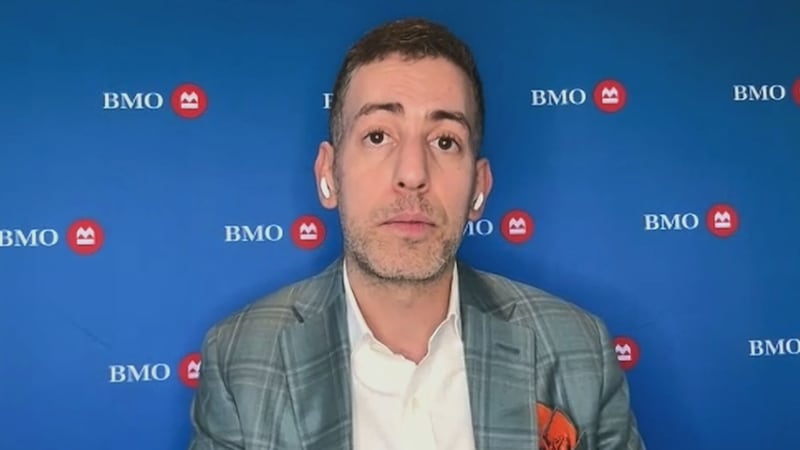
Read the full transcript below:
LINDSAY: It’s time now for Hot Picks, and today we’re zeroing in on three plays in the pharmaceutical sector. For more, let’s welcome Evan Seigerman, managing director and head of healthcare research at BMO. It’s great to have you join us. Good morning.
EVAN: Thank you for having me. Good morning to you.
LINDSAY: Before we get into your picks, I want to talk about the sector as a whole. How would you describe investor sentiment around the pharma sector right now?
EVAN: Great question. We just finished first-quarter earnings, and they were pretty good prints across the board. I think sentiment at the end of last year was good. At the beginning of the year, it was a little wishy-washy, especially with some of the macro concerns. But leaving first-quarter earnings, people are feeling good about the sector.
Yes, there are still some areas where some of these pharma companies need to work on things. But I think there’s renewed enthusiasm around the GLP-1 space, which we’ll talk about with Lilly, interest heading into the cancer meeting coming up in early June, and I think folks are feeling better about things with regard to the FDA now that Makary and Vinay Prasad, who were kind of controversial, are out of their roles.
LINDSAY: Do you think the sector is still in an innovation-led cycle?
EVAN: I think so, for sure. We’ve seen a lot of M&A, so big biopharma companies are scooping up small, innovative biotech companies, and that’s really a sign of a healthy innovation cycle, where the small biotech companies are doing the cutting-edge science and generating clinical data that interests the big guys.
The big guys take them over and then bring them through to commercialization. So we’re seeing that nice bit of M&A, which means we have some health in the sector.
LINDSAY: OK, let’s get into it then. You teased the first one already, Eli Lilly. You say “back like they never left.” Why is that?
EVAN: Heading into first-quarter results, there was a lot of nervousness around guidance and the competitive dynamics with Novo Nordisk, and we were really looking to see what their oral GLP-1 pill, orforglipron, was going to do.
I think they put a lot of those concerns to bed. What’s really interesting today is we looked at script numbers for orforglipron versus Novo’s pill, and the Wegovy pill declined slightly, whereas we saw really nice growth for orforglipron. So we expect that to continue.
When we look at Lilly, they don’t just have an obesity and metabolic franchise. They have neuroscience, oncology and immunology. I think over the course of the year we’re going to get more data for a key drug called retatrutide. A lot of folks are really interested in that because it could be an even better weight-loss drug than Zepbound.
Of course, we’ll also see the pull-through from orforglipron as they lean into direct-to-consumer advertising to drum up interest in that asset.
LINDSAY: You say it’s important right now not to over-index on script data. Tell us more about that.
EVAN: I think a lot of folks are looking at the script numbers every week for orforglipron and the Wegovy pill, trying to figure out long-term trends. But we only launched orforglipron in early April, and it’s mid-May. You can’t really make long-term trends and predictions based off, let’s say, six weeks’ worth of data.
I am encouraged by what I see. I don’t want folks to say Novo is the winner and Lilly’s the loser, or vice versa. You have to take it week by week, see what happens and really look at the whole picture versus just one asset.
LINDSAY: OK, we’ll move on to the next one now, Gilead Sciences. You’ve got an outperform rating on this one.
EVAN: Most definitely. What’s really interesting with Gilead is that over the past five years, they’ve taken a lot of unnecessary operating expenses out of their P&L. Now they are in a position where they can grow earnings while they invest in the business.
For a long time, this company had been a laggard when it came to valuation. They would always trade at a single-digit multiple and could never really get out of this value-trap status.
Now they’ve cleaned up the P&L, they are executing well with their long-acting prevention drug, Yeztugo, they’ve done some interesting acquisitions, and we’re seeing consistent earnings growth, which allows for multiple expansion.
Folks are really comfortable with the story. We know they have good revenue visibility into the 2030s, and now that they can invest, they can add more franchises to their already strong HIV business.
LINDSAY: OK, last stop is Scholar Rock. Tell us more about this company.
EVAN: It’s a little mid-cap biotech company. What’s really interesting is they have a drug for muscle wasting associated with a rare disease called SMA. It’s a well-characterized disease, and Biogen has a drug for it, so we know where these patients are.
The big controversy has been getting this drug approved — not because it doesn’t work, but because they’ve had manufacturing issues related to a facility owned by Catalent, now Novo Nordisk.
The TLDR version is they are likely to get approved by September. They have a second manufacturing facility up and running and waiting for inspection by the FDA. Once that gets approved, I think people will breathe a sigh of relief.
They’re also well-capitalized. We’re not worried about dilution in the near term. I think this could fit nicely within any big biopharma company that either has an obesity or rare disease franchise, and there are many of those.
LINDSAY: Lastly, you mentioned the sector still has some areas to work on. What’s the main one?
EVAN: Great question. I think some of the larger names, like Merck, Bristol and even AbbVie, still need to do more business development to add to their pipelines.
When you look at Merck, for example, they have a huge loss-of-exclusivity event sometime in the late 2020s or early 2030s with Keytruda going off patent. They’re going to have to come up with US$20 billion in new revenue. That’s not easy to do.
You’ve got to do it with acquisitions and internal development. They’re well on their way, but they’re not there yet. Similarly with Bristol, AbbVie and Pfizer, these companies need to come up with cohesive revenue stories into the 2030s for investors to remain comfortable investing for the long term.
LINDSAY: OK, so interesting. We’ll have to leave it there. Evan Seigerman, managing director and head of healthcare research at BMO. Appreciate your time today. Thanks so much.
EVAN: Thank you.
| DISCLOSURE | PERSONAL | FAMILY | PORTFOLIO/FUND |
|---|---|---|---|
| LLY NYSE | N | N | Y |
| GILD NASDAQ | N | N | N |
| SRRK NASDAQ | N | N | N |
---
This BNN Bloomberg summary and transcript of the May 15, 2026 interview with Evan Seigerman are published with the assistance of AI. Original research, interview questions and added context was created by BNN Bloomberg journalists. An editor also reviewed this material before it was published to ensure its accuracy and adherence with BNN Bloomberg editorial policies and standards.

