Canada’s industrial sector is gaining momentum as nuclear investment, electrification and AI-driven infrastructure demand reshape growth expectations for engineering, construction and equipment companies.
BNN Bloomberg spoke with Maxim Sytchev, managing director of industrial projects at National Bank, about why he sees improving prospects for AtkinsRéalis, Aecon Group and Finning International as nuclear development and resource infrastructure spending accelerate.
Key Takeaways
- Nuclear development is becoming a major long-term growth driver for Canadian industrial and engineering companies.
- Electrification and power infrastructure spending are supporting stronger demand for construction-related businesses.
- Ontario’s upcoming nuclear technology decisions could create significant opportunities tied to CANDU reactor development.
- Resource development, pipelines and LNG projects are improving the outlook for industrial equipment demand in Canada.
- Investors are increasingly viewing construction and infrastructure companies as more insulated from AI disruption concerns.
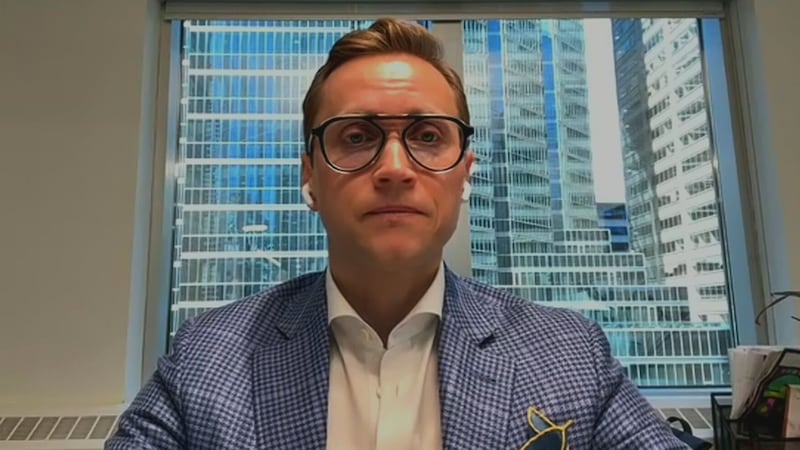
Read the full transcript below:
ROGER: Time for Hot Picks, and today we are zeroing in on three plays in the industrials sector. Our next guest is highlighting some work in nuclear. For more on this, let’s bring in Maxim Sytchev, managing director of industrial projects at National Bank. Maxim, thank you, as always, for joining us.
MAXIM: My pleasure.
ROGER: Okay, let’s get right to it. AtkinsRéalis — nuclear is having a little bit of a renaissance, isn’t it?
MAXIM: Yeah, absolutely. Even though the share price is actually down eight per cent year to date, the market is somewhat concerned about how AI could potentially impact the engineering business. But we strongly believe that when people make a parallel to software, for example, it’s not the same sort of dynamic as with civil engineering.
What’s exciting right now with Atkins is the fact that you would have seen the federal government is going ahead with its electricity plan and, by extension, nuclear is taking centre stage in Canada. Right now, Atkins derives roughly 25 per cent of its top line from nuclear, but more than 40 per cent of its value as a percentage of net asset value is driven by this end market.
When you look at Ontario alone, we think that both OPG, Westlaw and Bruce C will be selecting technology later this year, and we strongly believe it’s going to be CANDU reactors. By extension, Atkins is going to be in a prime position to develop this very safe, non-enriched uranium technology, which is also indigenous to Canada.
I’m still actually kind of bewildered by some of the news flow right now where people are speculating that maybe another technology could be selected. For us, clearly, CANDU is the right one, and ATRL is the major beneficiary of building out that capacity.
ROGER: Going back just to the AI point, all these industries incorporate new things. I think back to CAD. When computers were introduced for engineering, I’m sure everybody thought that was the end of a bunch of things then. But you incorporate, don’t you?
MAXIM: Roger, you make a very good point. Engineering consulting has been evolving for many years. We’ve seen CAD, parametric design, et cetera. What’s actually happening on the ground right now is that you get a better product ultimately delivered by the consultants, which enables better sensitivity modelling for the clients, better forecasting and ultimately faster and higher-quality delivery.
We do agree on that point, even though the market is still somewhat undecided in terms of how the business model of engineering is going to evolve over time.
ROGER: All right, let’s get into building things — Aecon.
MAXIM: Yeah, absolutely. To be honest, it’s the same sort of thematic exposure. Nuclear is 28 per cent of the company’s top line, utilities another 18 per cent, so basically, if you think about electrification for the next decade-plus, more than 50 per cent of the company’s top line stems from this very important vertical.
Obviously, Aecon has rallied dramatically on a year-to-date basis. It’s up 50 per cent and has come off somewhat recently, but we do view it as a buying opportunity.
Historically, it was also a business that had some run-ins when it came to execution. What has happened over the last couple of years is that the procurement methodology has evolved dramatically for government projects, so we think the possibility of potential cost overruns is much lower.
If you look at the percentage of contracts that are not fixed price for Aecon, it’s more than 70 per cent, so the business has evolved in a positive direction. Market exposure is very positive, and when you look at the valuations of U.S. peers such as Quanta and MasTec, which are trading at 20 to 25 times EV/EBITDA, Aecon’s 25-times P/E valuation actually looks like a bargain in comparison.
We are extremely bullish on construction, and to your point around AI being a potential question mark for engineers, construction entities are actually viewed as safer-from-AI plays and that has enhanced the share price performance on a year-to-date basis.
ROGER: And if you’re going to build things, you need things to build those things. Finning International?
MAXIM: Yeah, exactly. You need the equipment. When you look at Canada right now, for the longest time we were shying away from development of commodities, and right now you look at the narrative change around pipelines, LNG, et cetera.
About 50 per cent of the company’s top line is driven by Canada, and we do think that on a prospective basis the outlook is dramatically better.
Copper, which is part of the Latin American business for Finning, is 40 per cent of the top line. Obviously, copper is in a very healthy position right now. We do expect more projects coming to market.
Argentina could be another interesting way to participate in development. It is only five per cent of the top line right now, but we think it could be as much as 10 per cent prospectively, driven by copper, lithium, et cetera.
Ultimately, it’s dramatically better execution under relatively new CEO Kevin Parkes. When you look at the ROE generation, it’s up from 13 per cent in 2019 to north of 20 per cent right now, so it’s been a massive turnaround in terms of actual fundamental performance overall.
ROGER: I think we’re having some technical difficulties. Maxim, I don’t know if you can hear me, but we have lost your audio there. We apologize for that. We’re almost out of time, but thank you, as always, for joining us and hopefully we can get that issue fixed.
That was Maxim Sytchev, managing director of industrial projects at National Bank.
| DISCLOSURE | PERSONAL | FAMILY | PORTFOLIO/FUND |
|---|---|---|---|
| ATRL TSX | N | N | Y |
| ARE TSX | N | N | Y |
| FTT TSX | N | N | Y |
---
This BNN Bloomberg summary and transcript of the May 21, 2026 interview with Maxim Sytchev are published with the assistance of AI. Original research, interview questions and added context was created by BNN Bloomberg journalists. An editor also reviewed this material before it was published to ensure its accuracy and adherence with BNN Bloomberg editorial policies and standards.

