Artificial intelligence investment is expanding beyond chipmakers and software companies as demand grows for the infrastructure needed to power data centres. Investors are increasingly looking at industrial companies tied to cooling, power generation and energy storage.
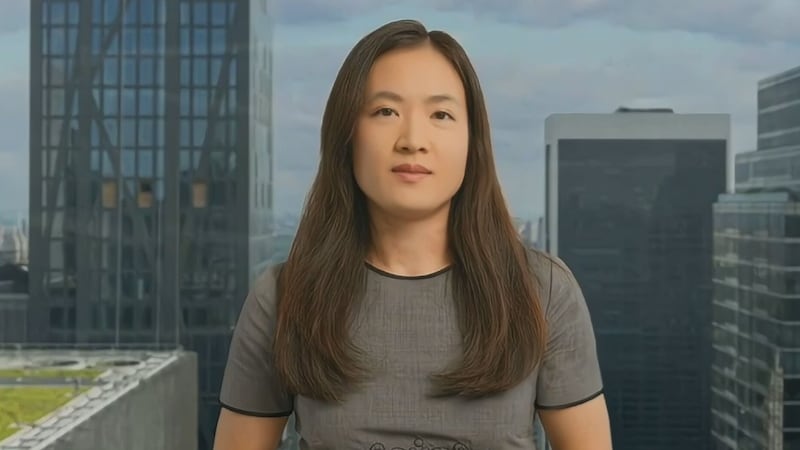
BNN Bloomberg spoke with Evelyn Chow, managing director at Neuberger Berman, about industrial stocks benefiting from AI infrastructure spending and the long-term themes shaping data centre growth.
Key Takeaways
- AI investment is broadening beyond technology stocks to include industrial companies that provide critical data centre infrastructure.
- Power generation and grid capacity have emerged as major constraints on AI expansion, creating opportunities for companies tied to electricity infrastructure.
- Liquid cooling is becoming increasingly important as advanced AI chips generate more heat and require more efficient thermal management.
- Energy storage systems are helping data centres secure and manage power capacity, supporting AI growth both inside and outside North America.
- Labour shortages in skilled trades and construction could become a key bottleneck for future data centre development.
Read the full transcript below:
LINDSAY: It’s time now for Hot Picks, and today we are focusing on the industrial sector. Joining us now is Evelyn Chow, managing director at Neuberger Berman. It’s great to have you join us.
EVELYN: It’s a pleasure, Lindsay.
LINDSAY: So, before we get into your actual Hot Picks, I want to talk about this sector in general because we’ve seen investors largely crowd into mega-cap tech names when it comes to the AI buildout. What opportunities are you seeing in the industrial sector tied to the AI buildout?
EVELYN: I think, Lindsay, that’s a great observation because tech is actually not the only place where AI matters. In fact, when you look at global industrial indices, some of the AI equipment and electrical equipment makers are the best performers in the index year to date. I think that is counterbalanced by some cyclical uplift we’re seeing in the sector. There’s a lot of opportunity to invest in some of the brick-and-mortar players within industrials that are building AI.
LINDSAY: Right, because we’ve seen the AI investment story evolve this year into semiconductors. Do you see it evolving further into the infrastructure story instead?
EVELYN: Absolutely. I think one of the names that I like best when I think about the major constraints facing data centre buildouts today is nVent Electric. The ticker is NVT. One of the biggest challenges is how to handle all the heat coming out of data centres as chips get hotter and denser.
They’ve evolved from what was historically a traditional industrial company about a decade ago into one of the leading ways to play liquid cooling, which is a technology involved in about 15 to 30 per cent of all AI deployments today. That number is meaningfully higher when you think about cluster deployments.
One of the advantages of liquid cooling is that, unlike air cooling, it can handle chips, especially in the new Vera Rubin generation, that are getting hotter and hotter. Liquid cooling is a very efficient way to transfer heat out of the data centre. NVT is also doing that in a way that allows it to compound earnings at more than 20 per cent over a cycle, with organic growth driving that in the mid-teens or higher.
LINDSAY: Another name you like is GE Vernova. Why has power become one of the biggest bottlenecks when it comes to AI growth?
EVELYN: Power has been kind of the debate du jour when it comes to the AI buildout. Some estimates I’ve seen suggest there’s a requirement for more than 15 gigawatts of additional power generation annually, much of it driven by data centres. There’s this massive supply-demand gap within power.
GE Vernova stands out because it has more than 25 per cent of the global gas turbine market. Gas is going to be one of the leading ways we get more power for more data centres.
What’s really compelling about GEV is that it has a multi-year backlog, approaching $200 billion by 2027, which gives it a ton of visibility into its growth profile. It’s getting that growth at a very high average selling price, which is very accretive for the company. It’s also compounding that growth with an extremely strong services engine that is seeing higher pricing as well.
The stock has taken a bit of a step back since its April earnings report. There have been some concerns around what could happen to capacity in the market as some key peers plan to add capacity in 2029 and beyond. I see this relative pullback as quite compelling for a name like GEV.
LINDSAY: You’ve also highlighted Contemporary Amperex Technology. This is about energy storage. Tell us how that fits into the AI landscape and narrative going forward.
EVELYN: Sure. If NVT is solving heat and GEV is solving power, then CATL is solving energy storage, which is one of the key technologies driving deployments in AI data centres today.
One of the things about CATL that’s very interesting is that it shows the data centre opportunity isn’t just constrained to North America. This is a Shenzhen-listed company that was historically an EV battery and battery materials maker and has carved out a leading position in the integrated, full-stack AI data centre energy storage ecosystem.
One of the things I really like about CATL is that it has demonstrated leadership in energy storage while also showing an ability to access the U.S. market through its tie-up with Ford. It is also pioneering technologies such as sodium-ion batteries, which could become an important medium-term storage solution.
LINDSAY: It’s interesting because we’ve been hearing a lot of concerns about grid constraints across North America moving forward. Does power scarcity become one of the defining investment themes of the next decade?
EVELYN: I think that’s a really trenchant observation because we’re already starting to see the gap between how much power we’re able to produce today, how much power we’re able to deliver at different points of the day and how much power data centres actually need.
Across the ecosystem, transformer investment is up roughly 120 per cent over the last five years, and capacity is still not sufficient. We’re seeing increases in interconnection activity. We’re seeing companies like GE Vernova stepping into the breach and trying to figure out how to get more power into AI data centres because they are dramatically reshaping the energy demand landscape after many years of relatively flat demand growth.
LINDSAY: You’ve highlighted three names within the same sphere, but they have different stories and help solve different challenges tied to the AI buildout. Just quickly, are there any headwinds these companies could face?
EVELYN: I think a very important industry headwind at this point is labour availability. It seems counterintuitive that investing in cutting-edge AI technology could ultimately be constrained by something as basic as labour, but what we’ve been hearing is that when you talk to EPC companies — the companies actually constructing data centres — there could be a real labour availability gap.
This is highly skilled labour, especially as we move toward the end of the decade. Frankly, that’s one of the biggest constraints on the ability of some of these power and liquid-cooling companies to continue accelerating. The gating factor is that you simply can’t build data centres fast enough.
LINDSAY: Wow. Okay, we’ll have to leave it there. Evelyn Chow, managing director at Neuberger Berman, really appreciate your time. Thanks so much.
| DISCLOSURE | PERSONAL | FAMILY | PORTFOLIO/FUND |
|---|---|---|---|
| NVT NYSE | N | N | Y |
| GEV NYSE | N | N | Y |
| CATL SHE | N | N | Y |
---
This BNN Bloomberg summary and transcript of the June 2, 2026 interview with Evelyn Chow are published with the assistance of AI. Original research, interview questions and added context was created by BNN Bloomberg journalists. An editor also reviewed this material before it was published to ensure its accuracy and adherence with BNN Bloomberg editorial policies and standards.

