Geopolitical disruptions, shifting trade flows and tight tanker supply are supporting a favourable outlook for tanker operators. Longer shipping distances and resilient freight rates are creating opportunities across both crude and refined product markets.
BNN Bloomberg spoke with Liam Burke, managing director at B. Riley Securities, who outlined why tanker fundamentals remain strong and highlighted three companies positioned to benefit from higher rates, fleet renewal and shareholder-friendly capital allocation.
Key Takeaways
- Tanker rates remain above historical averages despite easing from recent peaks, supported by tight fleet capacity and changing global trade patterns.
- Diversification away from Middle East crude supplies is increasing demand for longer-haul shipments from regions such as West Africa, Latin America and the U.S.
- Restocking depleted energy inventories after disruptions to Middle East shipping could support tanker demand for an extended period.
- Limited fleet growth, aging vessels and a manageable order book continue to create a favourable supply backdrop for tanker operators.
- Strong balance sheets, low cash costs and shareholder return programs position many tanker companies to benefit from sustained cash flow generation.
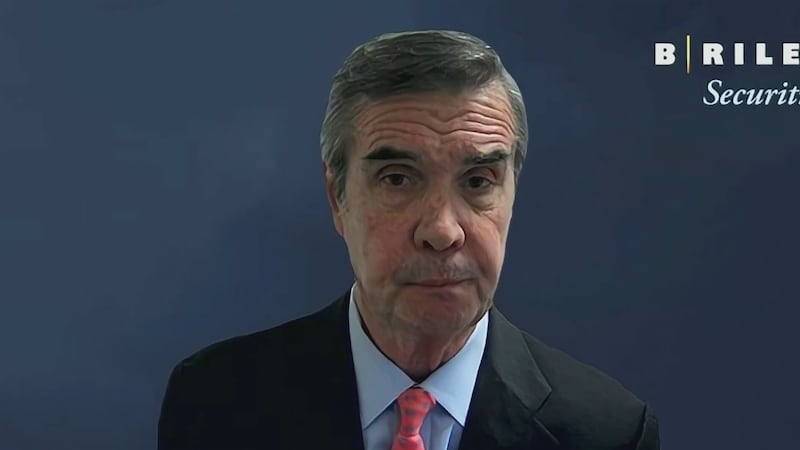
Read the full transcript below:
ROGER: It’s time for Hot Picks, and today we are zeroing in on three tanker names our next guest says could benefit as global tensions reshape shipping routes. Let’s welcome Liam Burke, managing director at B. Riley Securities. Liam, thanks very much for joining us.
LIAM: Thank you, Roger. Good morning.
ROGER: Sorry, go ahead. I was going to say it must be challenging right now trying to figure out what to play, how to play it and which direction the ships are going.
LIAM: Well, it is, and we’ve sort of taken a stand here where we think this is a good time to own the tanker stocks. Now, obviously, rates spiked at the beginning of the Iranian conflict and then sort of backed off, even though the Strait of Hormuz is still closed, because there was some relative normalization of traffic.
When rates came off their peaks, so did the tanker stocks. However, they’re staying at pretty elevated levels by historical standards, and we think they’ll stay there. The main reason is that once the strait is open, hopefully sooner rather than later, countries are going to need to restock depleted inventories on both a strategic and commercial basis, and some of these carriers expect that to take as much as two years.
The other thing is that, with the conflict in the Middle East, traditional buyers of crude are going to want to diversify their sources. That would move more demand over to West Africa, Latin America and the U.S. When you look at that redistribution, it increases ton-miles as well.
Finally, people are looking at these rate spikes as temporary, but the cash flow is permanent. The cash flows that will be accrued in the second quarter will benefit shareholders. On the supply side, fleet capacity is pretty much at equilibrium when you look at the age of the fleet balanced against a manageable order book.
When we talk about the three stocks, there are some commonalities before we go into the details. Balance sheets are in great shape. Cash costs are very low. Liquidity positions are in great shape. So they have the flexibility, if rates come down and asset values drop too, to step in and add value. They all have individual policies on returning cash to shareholders. So that’s the setup here.
ROGER: All right, so they sound solid to start with. Let’s start with Scorpio first.
LIAM: Sure. That’s a product tanker play. Product tankers carry refined petroleum products like gasoline and diesel.
The shift in Atlantic Basin activity has kept rates up. Also, after the strait opens up, there is a fair amount of refining capacity bottled up in the Middle East. There’s a significant amount of pent-up demand for refined products like naphtha and jet fuel. Scorpio has the assets in place to be able to meet that need.
When you look at its capital allocation policy, it has a dividend payable throughout the cycle, a respectable two-and-a-half per cent. It has been buying back stock and its balance sheet is in a net-zero debt position. For a capital-intensive business, it has a very strong balance sheet, to say the least.
Looking at the other end of the spectrum, Roger, we have Nordic American Tankers. This is a crude tanker pure play concentrated in one vessel class known as the Suezmax. It’s not the largest crude carrier — that would be the VLCC — but where the Suezmax has an advantage is that it can visit 10 times the number of ports.
When we go back to our discussion about shifting demand to the Atlantic Basin, Latin America or West Africa, that’s traditional Suezmax territory. We would expect that additional demand to keep rates high, benefiting operators of Suezmax vessels.
From a capital allocation standpoint, Nordic American has a very strong dividend policy. If you take the trailing four-quarter basis, NAT shares yield more than 10 per cent. Remember, the second quarter is really where they’re going to see the big cash flow windfall, so we would expect that benefit to go right to shareholders in the form of dividends.
Then, Roger, we have International Seaways, which has a diversified fleet of both crude and product tankers. For the reasons I laid out for both Nordic American and Scorpio, you can see how it will benefit from exposure to crude while also seeing demand on the product side.
The company is taking delivery of several vessels over the next couple of quarters, which will provide an additional benefit. It has a great balance sheet and opportunistically buys back shares. Last quarter, its dividend payout ratio was 85 per cent.
If we do the same calculation as we did with Nordic American on a trailing four-quarter basis, INSW shares yield about 10.5 per cent. Again, heading into the second quarter, where we see a very strong free cash flow quarter, that payout will go right to investors.
Those are the three as we’ve laid them out. Each one has its differences, but that’s why we like them.
ROGER: Yeah, they’re all across different segments within the sector, aren’t they? They all have very different styles and cargo exposure.
I want to ask quickly before we go: What kind of impact are the ghost ships, or dark ships, having right now?
LIAM: Well, right now they’re older, underinsured and quite dangerous from a crude oil safety standpoint. They carry sanctioned oil, so you see Russian and Iranian cargoes, and before the regime change in Venezuela, you saw it there as well.
What happens is that when oil is no longer under sanctions, as we saw in Venezuela, those shadow fleet vessels pretty much go to scrapping or become of no use to anybody because conventional producers are not going to want to use unsafe, underinsured vessels.
Conventional vessels then come in and take over. Using Venezuela as an example, Roger, we saw the carriers we follow filling that gap. It essentially squeezes capacity when sanctions are lifted and the shadow fleet is eliminated.
ROGER: All right, we’ll have to wrap it up there, Liam, but thanks as always for joining us. Appreciate it.
LIAM: Thank you, Roger.
ROGER: Liam Burke, managing director at B. Riley Securities.
| DISCLOSURE | PERSONAL | FAMILY | PORTFOLIO/FUND |
|---|---|---|---|
| STNG NYSE | N | N | Y |
| NAT NYSE | N | N | Y |
| INSW NYSE | N | N | Y |
---
This BNN Bloomberg summary and transcript of the June 3, 2026 interview with Liam Burke are published with the assistance of AI. Original research, interview questions and added context was created by BNN Bloomberg journalists. An editor also reviewed this material before it was published to ensure its accuracy and adherence with BNN Bloomberg editorial policies and standards.

