Biotech stocks are showing signs of recovery after several difficult years, supported by improving capital markets, lower interest rates and renewed investor interest in innovative drug development.
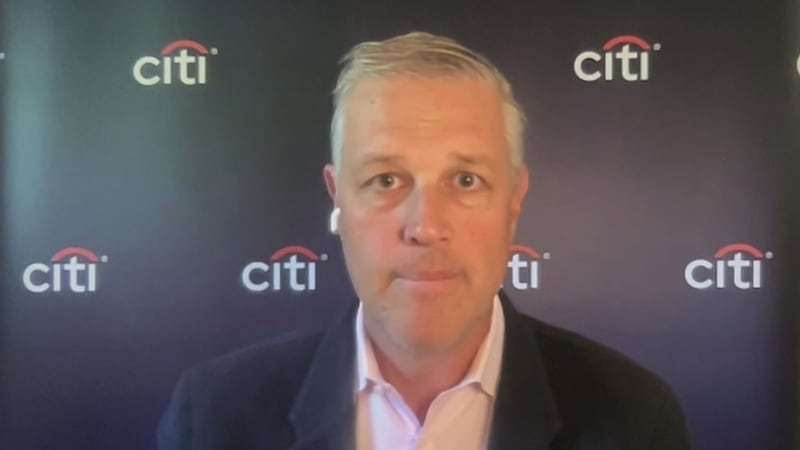
BNN Bloomberg spoke with Geoff Meacham, global head of healthcare at Citi, who discussed opportunities in Eli Lilly, Veradermics and Amylyx Pharmaceuticals, while highlighting the growing importance of clinical data, obesity treatments and rare disease therapies.
Key Takeaways
- Improving capital markets and lower interest rates are helping revive investor interest in biotech after several challenging years.
- Companies that raised funding as early-stage platforms are now advancing drugs through clinical trials, creating new catalysts for investors.
- Obesity and metabolic disease treatments remain one of the largest growth opportunities in healthcare, with expanding applications beyond weight loss and diabetes.
- Rare disease therapies continue to attract attention because of significant unmet need, limited competition and favourable orphan-drug economics.
- Clinical trial outcomes remain the primary driver of biotech valuations, with successful studies capable of creating significant upside and failed trials posing substantial risk.
Read the full transcript below:
LINDSAY: It’s time now for Hot Picks, and today we are zeroing in on three plays in the biotech sector. Let’s welcome Geoff Meacham, global head of healthcare at Citi, to talk about this. Great to have you join us. Good morning.
GEOFF: Hey, Lindsay. Good morning. Good to talk to you.
LINDSAY: Before we get to your hot picks, I just want to talk about the biotech sector in general because it’s been a couple of difficult years for biotech stocks. I’m wondering, are you starting to see the beginning of a sustained recovery in that area?
GEOFF: I think we are. The capital markets have definitely improved this year, really over the past, let’s call it nine months or so, with lower interest rates, maybe a little bit more. I agree with you. It’s been a couple of years of a bit of a nuclear winter, and we thought we were out of that last fall. I think we’re on an upward trajectory looking to the end of this year and even into next year.
LINDSAY: What’s driving investors back into the biotech sector? What’s exciting them?
GEOFF: There are a lot of really cool technologies that, if you look at the last funding cycle in the early 2020s, it was mostly preclinical, early-stage platform companies. Now, those same platform companies have real drugs in clinical trials and have meaningfully good data that looks different. It’s the typical innovation that you get in biotech, but with a little more mature companies.
LINDSAY: All right, your first topic today is Eli Lilly. Tell us more about what opportunities you’re seeing here.
GEOFF: Yeah, it’s been our favourite stock for quite a while. We just got back from a site visit to their offices in Indianapolis. They have a very exciting pipeline portfolio. I think the first thing I would say is that there are a lot of companies, Pfizer, Amgen and others, that are heavily investing in the metabolic disease, obesity and diabetes space, but Lilly has probably the best suite of products on the market today.
They’re launching an oral drug called orforglipron. They have a couple of newer assets in clinical trials, but they’re also moving into related diseases outside of diabetes and obesity. This GLP-1 mechanism can be used, for example, in inflammation, neuropsychiatric diseases and even oncology. The total applicability of these drugs is far wider than people realize, in our view.
LINDSAY: Veradermics is the next one. You say you’re positive on the commercial opportunity for male and female pattern hair loss. Tell us more about what Veradermics is working on.
GEOFF: Veradermics just IPO’d this year. They have a successful Phase 3 study in male pattern hair loss, one completed study, with another still to come at the end of the year. The untapped market opportunity that isn’t really in anyone’s models is the female population. That trial is ongoing right now, but the mechanism should work in the female population as well.
When you look outside the U.S., there’s really nothing in people’s models for markets beyond the U.S., so there’s a lot more to come. Despite the stock doing quite well, there’s still a lot ahead of it in our view, based on clinical data and, obviously, commercial opportunities.
LINDSAY: What risks are facing this company?
GEOFF: When you look at the regulatory side, I think it’s pretty straightforward. There hasn’t been anything in clinical trials that has looked untoward from a safety-profile standpoint, but that’s why you do the experiment. That’s why you still have to conduct the large-scale human studies. One of the bigger risks is something unforeseen in clinical development. I think that’s a low probability, but you never say never.
LINDSAY: Okay, you’ve also got Amylyx Pharmaceuticals as one of your picks today. You say it’s also working on some high unmet needs. Tell us more about that.
GEOFF: Yeah, this is an orphan disease company. In patients who have undergone bariatric surgery, either previously or going forward, a little less than 10 per cent experience uncontrolled hypoglycemia. Amylyx is working on a drug to address that.
It’s a brutal indication where the adverse events and side effects can often be fatal. This is a rare disease, with Amylyx working on a Phase 3 trial. We’ll have data sometime next quarter. The drug is called avexitide. You can get orphan-drug pricing, it’s a massive unmet need, and there are really no companies entering this space.
LINDSAY: Again, are there any risks associated with Amylyx Pharmaceuticals?
GEOFF: The main one is really the same as Veradermics: clinical-trial risk. What you get in small-cap biotech is a massive value inflection point if the trial is successful, but you also have unforeseen issues that can arise on the safety and tolerability side, or if results don’t meet investor expectations on efficacy. That’s probably the biggest risk driving volatility in these stocks.
LINDSAY: Same question for Eli Lilly. I realize I didn’t ask you about risks for that company. The second two have similar risks, but Eli Lilly is such a big company. What about Eli Lilly?
GEOFF: When you think about Lilly, it’s mostly about meeting investor expectations. It’s a company worth more than a trillion dollars, highly profitable and probably the biggest healthcare company on the planet. Meeting and exceeding expectations each quarter is probably one of the bigger risks that drives volatility in the stock.
When you think about the pipeline and current commercial trends, they’re all moving in the right direction and progressing. But you have to continue beating expectations each quarter, and that’s where investors hold management’s feet to the fire.
LINDSAY: I wonder, too, as we’re starting to see more momentum in the biotech sector, is it getting easier for biotech firms to raise capital today than it was a couple of years ago to invest in some of these projects?
GEOFF: For sure, it is. Both the venture-capital and IPO markets are definitely heating up today. Some of the projects today may be aided by AI, and perhaps their probability of success is higher. We won’t know that answer for a couple more years because we still have to conduct the clinical trials.
In general, though, I would agree. After a couple of years of minimal activity, investor enthusiasm is back.
LINDSAY: Okay, we’ll leave it there. Geoff Meacham, global head of healthcare at Citi. Appreciate your time. Thanks for joining us.
GEOFF: Thank you.
| DISCLOSURE | PERSONAL | FAMILY | PORTFOLIO/FUND |
|---|---|---|---|
| LLY NYSE | N | N | Y |
| MANE NYSE | N | N | Y |
| AMLX NASDAQ | N | N | Y |
---
This BNN Bloomberg summary and transcript of the June 4, 2026 interview with Geoff Meacham are published with the assistance of AI. Original research, interview questions and added context was created by BNN Bloomberg journalists. An editor also reviewed this material before it was published to ensure its accuracy and adherence with BNN Bloomberg editorial policies and standards.

