Artificial intelligence is driving investment beyond semiconductors and into the physical infrastructure needed to support data centres, electricity grids and power transmission. Companies supplying these critical systems could benefit from years of structural investment as electricity demand continues to rise.
BNN Bloomberg spoke with Mike Clare, senior vice-president and senior portfolio manager at Brompton Funds, about three companies he believes are well positioned to benefit from AI infrastructure spending: Alphabet, Prysmian and Quanta Services. He explained why each company offers exposure to different parts of the AI ecosystem, from cloud computing and data centres to electrical transmission and grid modernization.
Key Takeaways
- AI is accelerating infrastructure investment, but grid modernization, electrification and renewable power remain the primary long-term drivers.
- Alphabet’s vertically integrated AI platform combines cloud computing, proprietary chips, data centres and AI models under one ecosystem.
- Prysmian is benefiting from growing demand for high-voltage transmission cables and fibre-optic networks supporting energy and AI infrastructure.
- Quanta Services is positioned to benefit from decades of investment in electricity generation, transmission and grid modernization.
- Governments and private investors are expected to play an important role financing the infrastructure needed to support future electricity demand.
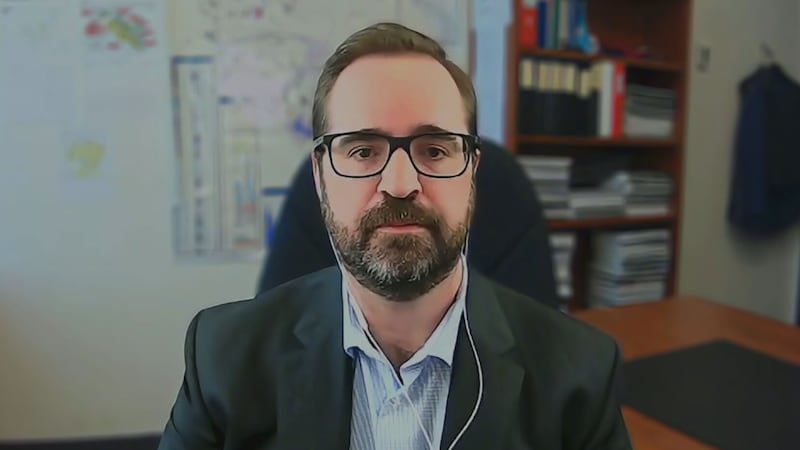
Read the full transcript below:
LINDSAY: It’s time now for Hot Picks, and today we are looking at three suppliers building the physical backbone behind AI. The essential hardware, like electrical supplies and transmission cables, helps keep data centres running. So, here with his top picks is Mike Clare, senior vice-president and senior portfolio manager at Brompton Funds. It’s great to have you join us. Thanks so much.
MIKE: Thanks for having me.
LINDSAY: So, is infrastructure becoming more attractive to investors right now, do you think?
MIKE: I think it’s become attractive and will continue to be attractive over the next several years. Obviously, there are a lot of areas of infrastructure where we, as an economy, a global economy, need to continue to build, whether that be grid infrastructure or infrastructure for power projects, as well as artificial intelligence projects, with all the data centres being built out.
LINDSAY: Right. Because I was wondering, like, how much of that interest is being driven by AI? Is it the majority of the interest at this point?
MIKE: It’s not the majority, actually. The majority of the building is for the backbone of our economy, for things like grid modernization, electrification, renewable power. But AI certainly is the growth engine of the infrastructure sector right now.
LINDSAY: Okay. All right, so let’s get into your picks. Your first one is Alphabet. Tell us why you like Alphabet right now.
MIKE: Yeah, so we like Alphabet, or Google, as we think it’s the ultimate AI infrastructure powerhouse. They’re spending billions and billions of capital, building, owning and operating their own data centres, and what we really like about them is the vertically integrated AI solution. So, they’ve got the Gemini model, which is showing strong performance versus their peers. They’ve got access to all kinds of data to train the model. Importantly, they’ve got the financial capability to outspend their peers. We’re looking at them spending upwards of $200 billion of capex this year while remaining marginally free cash flow positive. They also have their own chip unit, so they’re building these TPUs to compete with Nvidia’s GPUs. That gives them an advantage over their peers because they don’t have to pay essentially Nvidia 75 per cent gross margin, so it gives them a financial advantage in terms of building out these data centres at lower cost. We also like the core business. The cloud business at Google is growing north of 60 per cent year over year, generating $20 billion of revenue a quarter now while expanding margins, and the backlog there has grown quite significantly over the past year, now upwards of $450 billion. The search business at Google also is their cash cow, remains their cash cow, and continues to grow despite competition from other AI players.
LINDSAY: I wonder, for a company as big as Alphabet, what kind of headwinds do you see, if any, do you see this company facing?
MIKE: Well, I think the headwinds we see certainly are competition among the different AI model players, whether it be the private companies like Anthropic or OpenAI, as well as Microsoft and some others. But we think that Alphabet has such a dominant position, they will be a leader in the space for many years to come.
LINDSAY: Okay, your next pick is one we don’t talk about a lot. It’s an Italian company trading on the Milan Stock Exchange. Prysmian. Tell us more about this one and why you like it.
MIKE: Yeah, so this one’s a bit different. This certainly is classified as a supplier to the AI infrastructure space. So, essentially, what they do is they’re the largest manufacturer of cables, cables used for power and telecommunications. So, they’re essentially the backbone to both the global energy transition as well as the digital revolution, with exposure to a number of key themes, whether it be AI infrastructure, grid modernization, decarbonization and electrification. So, the core of this business is the transmission division. They’re essentially the global leader in these high-voltage cables that are either laid underground or laid on the floor of the ocean. They have a number of competitive advantages there, including ownership of these specialized ships to lay the cables in the ocean that can hold upwards of, like, 17,000 tonnes of cable on a single ship. They’re also evolving from a commodity provider of cabling to essentially a strategic partner, where they’re capturing more of the value chain by not just selling miles of wire, but selling uptime to their customers through design, engineering, installation and monitoring of these projects.
MIKE: The other growth engine, of course, is on the AI infrastructure side. So, essentially they’re taking their competitive advantage in cabling and now selling fibre-optic and power cables that will essentially power these data centres and capture some of the, you know, upwards of a trillion dollars of annualized capex we’re seeing in the market now for the buildout of data centres.
LINDSAY: Interesting. Okay, your last one is Quanta Services. So, back to the U.S. for this one. Tell us what your investment case is here and why you like this company.
MIKE: Yeah, so again, you know, along with the buildout of data centres, we’re seeing the need for more and more electricity, you know, power plants being built, transmission lines. So, Quanta is the largest specialty infrastructure contractor in North America. So, they essentially do all the engineering, procurement and construction of power plants and grid infrastructure and the like. They essentially build, fix and upgrade the physical infrastructure that powers our world. You know, what we like about them, of course, is exposure to these key themes, but they’re also an end-to-end provider, so doing business for power plants, as well as the transmission network, as well as doing some of the wiring inside customer buildings. They have exposure to quite a large addressable market, with upwards of a $2.4 trillion addressable market through the end of 2030, and we’ve seen growth in their revenues and growth in their backlog, as well. They’re also, you know, providing reliable long-term work for their customers, and more and more of it is now being done under recurring contracts with a strong financial or financially sound customer base, which has allowed them to move away from some of the more volatile fixed-price construction contracts of the past.
LINDSAY: Wow. I wonder, do you think investors are becoming more willing to finance larger long-term projects when it comes to infrastructure?
MIKE: Yes, I do think that, and I think we need to see participation not just from the private sector and investors, but also governments around the world. And this is a theme that, you know, we’re going to see continue in the market, and there are going to continue to be ways to get exposure to this theme, I think, over the next several years, and potentially decades or longer.
LINDSAY: Okay, we’ve got to leave it there. Mike Clare, senior vice-president and senior portfolio manager at Brompton Funds, appreciate you joining us. Thanks so much.
| DISCLOSURE | PERSONAL | FAMILY | PORTFOLIO/FUND |
|---|---|---|---|
| GOOG NASDAQ | N | N | Y |
| PRY BIT | N | N | Y |
| PWR NYSE | N | N | Y |
---
This BNN Bloomberg summary and transcript of the June 29, 2026 interview with Mike Clare are published with the assistance of AI. Original research, interview questions and added context was created by BNN Bloomberg journalists. An editor also reviewed this material before it was published to ensure its accuracy and adherence with BNN Bloomberg editorial policies and standards.

