Smaller energy companies are attracting renewed interest after a strong but volatile start to the year. The segment offers several ways to participate in changing oil, natural gas and power trends.
BNN Bloomberg spoke with Shawn Severson, chairman and CEO of Water Tower Research, about four energy stocks he believes offer compelling long-term potential.
Key Takeaways
- Small-cap energy funds remain significantly higher year to date despite giving back gains associated with the spike in oil prices.
- Natural gas infrastructure could benefit from the expansion of AI data centres and liquefied natural gas exports.
- Strong balance sheets, limited capital spending and dividends can provide protection during periods of commodity volatility.
- Individual research is particularly important in small caps because broad indexes contain companies with widely varying fundamentals.
- Oilfield service providers are expanding into power generation as data centre developers seek reliable electricity supplies.
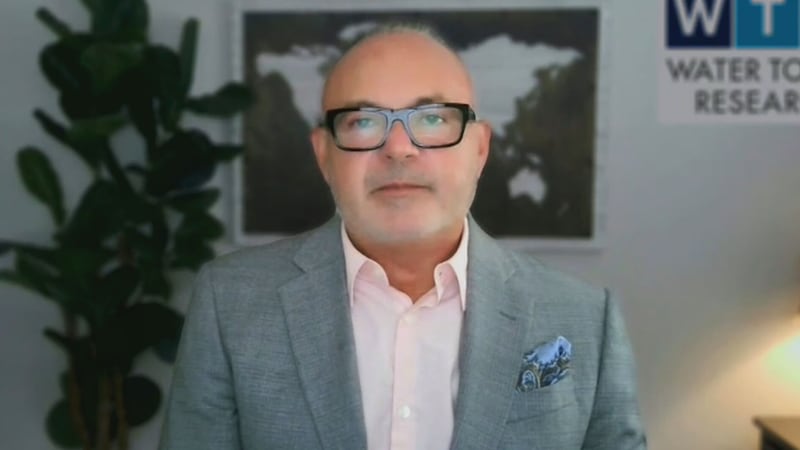
Read the full transcript below:
LINDSAY: It’s time now for Hot Picks, and today we are zeroing in on three small-cap energy options that our next guest believes have some upside. For more on his top picks, let’s welcome in Shawn Severson, CEO and chairman of Water Tower Research. Good morning. Thanks for joining us.
SHAWN: Good morning, Lindsay. Thank you for having me.
LINDSAY: Yeah, this is going to be an interesting conversation because we don’t talk about this as much. I wonder, first of all, before we get to your picks, like, how have small-cap energy stocks been performing this year compared with some of the larger producers?
SHAWN: Well, you know what? Interestingly, the equal-weighted has done quite well. If you look at the ETFs, for example, both in those services and in the energy side, so they’ve been doing quite well. I think there are some interesting nuances, though. They started doing well before oil spiked and the war in Iran started, so they had a very strong start to the year. And then, obviously, we had a big spike as oil spiked up towards, you know, $112, and have actually come back down and round-tripped to where they started on average — at least the ETFs — where they started at the beginning of the war, but still up significantly for the year, capturing that first part of the year where they did real well. So, it’s been volatile, but overall, year to date, been — it’s been a great place to be.
LINDSAY: Okay, so let’s get to your picks then. The first one is Natural Gas Services. You say this is the under-the-radar toll booth on gas. Tell us more about why you like this one.
SHAWN: Yeah, I mean, it’s done well, so it’s not as much under the radar, I think, as it used to be. But the idea is, if you look at where the actual, you know, the big, the big infrastructure plays are, things that have real megatrends, as I like to call them, and that’s, you know, the AI and LNG, and that requires moving the natural gas. No matter what the use is for, you’ve got to get it to — get it somewhere. You need compression infrastructure, and these guys fit smack dab in the middle of that thesis. I know, about a $511-million market cap, but I think it has significant long-term trends because, you know, we look at the AI infrastructure, power build, and then, of course, LNG exports, tying back to a bullish thesis on natural gas over the long term, and they fit squarely in that mix. Have long-term contracts, very attractive from that standpoint, so it fits our thesis well in playing into both the AI power and the natural gas infrastructure.
LINDSAY: Next up is Kimbell Royalty Partners. You say that this is a way for investors to really get involved in this whole U.S. drilling boom picture. Tell us more about that.
SHAWN: Yeah. So, the other part of the equation is, I think, in this environment, you know, looking for companies that have really strong balance sheets and, you know, can weather, you know, let’s call it the ups and downs of volatility. You want to — you want to look to balance sheets and those that don’t have big capex spends, and this fits right in that mix. And also, just a nuance, too, is that, you know, oil probably has more upside than downside here. So, looking for a company with a strong balance sheet that fits in that thesis, you know, good oil exposure in the — in the U.S. side, and even the Canadian side, for that matter. But in Kimbell’s case, the U.S. side, and being able to see if oil goes up, you get the upside. In the interim, you have a very strong balance sheet and a 10 per cent yield. So, trying to find those companies in the mix, again: balance sheet strong, upside if oil goes up because I think the bias is to the upside, and not heavy capex. And Kimbell fits right in the middle of that.
LINDSAY: Your next one — I’m not sure if I’m pronouncing this right — is it Vitesse Energy?
SHAWN: Yeah. Yes, exactly. So, they — they’re a non-operated oil and gas producer, so they have interests in wells in the Bakken and expanding into Powder River. It’s 89 per cent oil, and this goes back to that other — that other way we were just talking about, that thesis of getting oil exposure with a good balance sheet and having an opportunity to, you know, to go up along with oil because, obviously, it’s cap — it’s about cash flows, and that increases their oil, again. Low capex. This one, you know, has been really, you know, suffering through a dividend cut and a few other items that have brought it down, you know, relative to the — to the broader oil and gas industry. But it does have a nice 10 per cent dividend yield as well, so it fits in our thesis again. Plus, you’re getting paid to wait. Oil goes up, you know, you’re going to see lifts across the sector. So, I think a lot of the prices — oil is upside-biased. You look for companies that can benefit from that.
LINDSAY: You do have a larger-cap bonus, and we are going to have time to get to that. But just before we move off of small caps, I wanted to ask, too, like, do you feel like investors are paying enough attention to small-cap energy right now?
SHAWN: Well, I’ll tell you what. Small-cap, in general, has historically — as I say, historically over the past several years — has not gotten much attention. You could, by the lag of the Russell 2000 — that changed in 2026. It’s been an overall outstanding market, outperformed the broader indices, so small-cap has gotten attention. But the thing about small-cap is you have to dig through to find fundamental — a fundamental thesis from the — from the bottom up. You can’t buy an index, for example, because you’re going to have all kinds of different companies in the Russell 2000. So, quite frankly, it requires more work, looking through all the companies and finding the right ideas. So, to answer your question, it hasn’t gotten enough attention. It’s starting to because there are opportunities in there, and I think the broader small-cap index doing well has gotten people looking for, you know, what are good small-cap ideas, and that — and that certainly benefits, you know, the energy companies in there as well.
LINDSAY: For sure. Okay, so before we wrap up here in our last minute, Liberty Energy is your larger-cap bonus. Yeah, you say this one’s becoming an AI-powered company. Tell us more about it.
SHAWN: Yeah, so it’s a — it historically still is a U.S. hydraulic frac services company. So, it definitely trades, you know, along with the broader — the broader scope of where oil and gas is going, the — the broader energy index is going. But what’s interesting about these is that this one is — they’re levering into our AI thesis for energy generation, and it’s still small, but becomes an interesting opportunity. So, over time, you’re going to see that particular business start to do better, and it’s doing quite well. I shouldn’t say better; becoming bigger, and will be. And that carries, you know, a very different, I think, tone with investors and view with investors when you’re talking about AI power generation. So today, it’s still trading very much with the, you know, with the broader oil and gas market, but it has this high-growth business inside that’s AI, so it’s something to take a look at for investors. Particularly, the sector continues to come under pressure as oil prices flatten or go down a little bit over the short term. Some of these companies, like, you know, like Liberty, fit two of the, you know, two parts of the thesis.
LINDSAY: Okay, all right. We’ve got to leave it there. Shawn Severson, CEO and chairman of Water Tower Research. Really appreciate your time. Thank you.
SHAWN: Great. Thank you, Lindsay.
| DISCLOSURE | PERSONAL | FAMILY | PORTFOLIO/FUND |
|---|---|---|---|
| NGS NYSE | N | N | N |
| KRP NYSE | N | N | N |
| VTS NYSE | N | N | N |
---
This BNN Bloomberg summary and transcript of the July 13, 2026 interview with Shawn Severson are published with the assistance of AI. Original research, interview questions and added context was created by BNN Bloomberg journalists. An editor also reviewed this material before it was published to ensure its accuracy and adherence with BNN Bloomberg editorial policies and standards.

