Retail spending remains divided as inflation pressures middle- and lower-income households while wealthier consumers selectively spend at the high end. Retailers must appeal to increasingly cautious shoppers without sacrificing convenience or innovation.
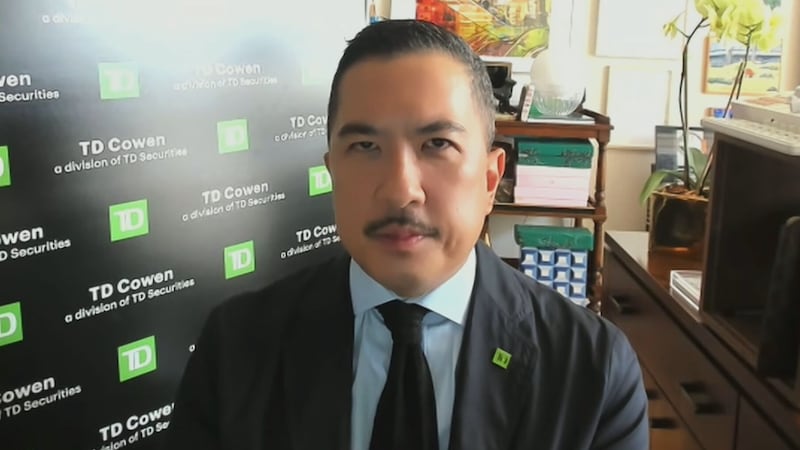
BNN Bloomberg spoke with Oliver Chen, managing director at TD Cowen, about the changing consumer landscape and the retail segments offering compelling opportunities.
Key Takeaways
- Walmart combines its grocery and value businesses with faster-growing revenue streams such as digital advertising, its marketplace and AI tools.
- Costco’s e-commerce growth, global expansion and renewal rates of 91 to 92 per cent support its premium valuation.
- Walmart and Costco benefit from diversified discretionary and non-discretionary offerings as consumers become more selective.
- Membership programs and first-party customer data are becoming increasingly important for personalization, loyalty and long-term customer value.
- Richemont’s Cartier and Van Cleef & Arpels brands are benefiting from resilient jewellery demand while luxury handbag sales remain softer.
Read the full transcript below:
LINDSAY: It’s time now for Hot Picks, and today we are zeroing in on the retail sector. So, let’s get more now from Oliver Chen, managing director at TD Cowen. It’s great to have you join us. Thanks so much.
OLIVER: Lindsay, my pleasure. Great being here. Thanks.
LINDSAY: Of course. So, before we get into your actual Hot Picks, I just want to talk about the retail sector a little more broadly. Like, what are you seeing right now when it comes to consumer spending trends? Is it still that K-shaped economy that we’ve been talking about?
OLIVER: Yeah, Lindsay, we are seeing that bifurcation. So, in the K-shaped paradigm, the high end’s pretty strong selectively. What has been happening at the high end is the wealth effect and stock market performance globally has been fuelling selective high-end spending. At the same time, middle- and low-income has been under pressure. As you know, we’ve been facing inflationary pressure across the board, and that’s been very sensitive to the middle- and lower-end consumers. As consumers look at higher food prices, higher energy and health care, they’re cutting back on discretionary spending and also being very selective about how they choose to spend.
LINDSAY: Are there certain parts of retail that are performing kind of better right now and certain parts that are, that are maybe groceries and stuff, that may be struggling a little more?
OLIVER: Yeah, Lindsay. What we’re looking for in terms of top ideas are those stocks that respond well to value and have that as a key proposition. Walmart, everyday low prices, and also, as we, we all love the treasure hunt at Costco, you find things you didn’t know you needed there. But their business model is set up for the lowest price and really designed to maximize membership income and offer consumers the strongest values at Costco. So, Costco and Walmart have been key ideas in this K-shaped paradigm.
LINDSAY: So, let’s get into that further, then. Walmart is your, one of your picks for today. Tell us more about why you like Walmart right now and maybe also some of the headwinds that this company could potentially be facing.
OLIVER: Yeah, Lindsay, we’re watching what’s happening with the consumer, which is fairly volatile. As we zoom out on the consumer, the consumer is sentimentally weak but fundamentally strong. So, consumer sentiment is something to watch. Thinking about Walmart, Walmart’s a technology opportunity as well as offering a great grocery and value business. As you think about technology specifically at TD Cowen, we, we’re following something, what we call the retail nexus: Walmart offering a marketplace where you can buy from third-party merchants, Walmart having digital advertising and Walmart executing very well on artificial intelligence. For example, in AI, as many as half of the mobile app users are using their assistant called Sparky, and Sparky is lending itself to average order sizes over 30 per cent higher. So, we’re seeing recognizable AI results at Walmart as well.
And as you think about Walmart as a tech company, digital advertising is fuelling outsized growth, as this is growing 20 per cent plus, and it comes at very high margins. So, you get a great grocery business, which is about 60 per cent of the business, but you also get technology at Walmart. These things excite us for the future.
The other part of Walmart, which is impressive, is that they’re getting a higher share of higher-household-income consumers. So, there are things you can buy in the marketplace, for example, like Hermès, Burberry as well, where you’re getting that high-end consumer and beauty, and you’re also executing to this everyday-low-priced consumer looking for value, and you’re getting technology, and it’s a good AI opportunity. In part because, as we think about AI, first-party data is so important, and the Walmart+ membership flywheel and ecosystem will be increasingly important as all retailers think about loyalty and customer lifetime value.
LINDSAY: For sure. Okay, Costco is your next pick. It already trades at a premium multiple. Like, what gives you confidence there’s still room to run for this company?
OLIVER: Yeah, Costco has a lot of opportunity to continue to innovate in digital and do incremental things, but it is, in many ways, boring and awesome in terms of their merchandising skills, the everyday low price on how they think about assortment and also that amazing Kirkland brand. So, you get a treasure hunt, you get global growth and you get stability, as well as being an OG within this warehouse club paradigm, which is quite an overall attractive place to be.
You have Costco, you have Sam’s and we like BJ’s as well. But Costco is delivering on outstanding growth, double-digit growth and even better growth in their e-commerce division, with lots of good things on the horizon, including global growth as well as continuing to add excitement to their merchandise all around. Renewal rates are very high, at 91 to 92 per cent, because customers are really happy to shop here, and traffic has been exceptional as well, at plus four to six per cent. That’s very distinguished from a sector that’s been tougher in terms of getting customers and getting traffic.
LINDSAY: How resilient is a company like Costco, Walmart, if consumers continue to pull back on discretionary spending?
OLIVER: What’s great about these companies is that there’s a diversified revenue stream in terms of discretionary and non-discretionary. So, you got to go to Costco for—I mean, I love the chicken and the beef and the caviar at Costco—but then you find other things like apparel and jewellery that work in conjunction. That’s also true at Walmart, where there’s a core grocery business in addition to discretionary. So, they’re benefiting from having a multi-brand, multi-product offering.
The other factor here is both Walmart and Costco have tremendous scale. So, we’ve seen unprecedented supply-chain volatility, and that’s been a big positive in terms of negotiating for the best deals and getting the right product at the right place at the right time. Costco is also pushing into AI, specifically the pharmacy and gas. So, there’s lots on the horizon with that, and both of these have very good membership programs. The future of retail is about data, and data’s driving this loyalty loop. So, it’s important for these retailers to earn the trust of consumers as we think about many issues in privacy and AI.
LINDSAY: Just lastly, I want to get to your last pick today. It’s on the luxury side of things. Richemont, tell us about this one.
OLIVER: Yeah, I mean, I, I’m, I have a great footprint of coverage across luxury as well as broad lines, and Richemont, specifically Cartier and what they’re doing with hard luxury at the high end. Consumers are looking for value too, so what’s happening is jewellery is really working. The Van Cleef brand, the Cartier brand and execution, as we know, you know, gold has been tremendous, and Richemont’s done a good job not overly raising prices. And gold’s prices have been rising faster.
So, consumers are buying jewellery. They’re buying hard luxury. What’s been softer is handbags. So, the numbers across luxury have been a mixed bag. China’s been tougher, but China’s been getting better. But bottom line on Richemont: the hard luxury story, the jewellery, the watches, the power brands of Van Cleef and Cartier, really working here to distinguish the growth.
LINDSAY: Okay, we’ll leave it there. Oliver Chen, managing director at TD Cowen, really appreciate you joining us. Thank you.
OLIVER: Pleasure being with you. Have a great summer.
LINDSAY: You too.
| DISCLOSURE | PERSONAL | FAMILY | PORTFOLIO/FUND |
|---|---|---|---|
| WMT NASDAQ | N | N | Y |
| COST NASDAQ | N | N | Y |
| CFR SWX | N | N | N |
---
This BNN Bloomberg summary and transcript of the July 17, 2026 interview with Oliver Chen are published with the assistance of AI. Original research, interview questions and added context was created by BNN Bloomberg journalists. An editor also reviewed this material before it was published to ensure its accuracy and adherence with BNN Bloomberg editorial policies and standards.

