Geopolitical tensions and rising electricity consumption are increasing the importance of energy exposure as oil and natural gas supplies face new pressures.
BNN Bloomberg spoke with Rob Thummel, senior portfolio manager at Tortoise Capital, about opportunities across crude oil production, LNG exports and power generation.
Key Takeaways
- Thummel expects oil prices to remain elevated as geopolitical tensions increase the appeal of energy exposure.
- Chevron could generate stronger earnings and free cash flow while expanding its global crude oil production.
- Venture Global could benefit from the gap between U.S. and international natural gas prices as Qatari LNG supply remains constrained.
- Europe’s need to replenish natural gas inventories ahead of winter could support demand for U.S. LNG.
- Vistra’s generating assets in PJM and ERCOT offer exposure to rising electricity consumption from AI and data centres.
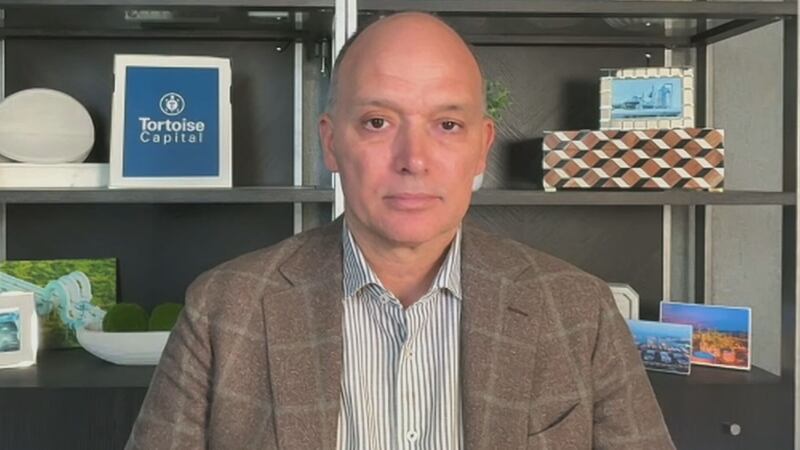
Read the full transcript below:
LINDSAY: It’s time now for Hot Picks, and today we are zeroing in on three energy names spanning oil, natural gas and global energy infrastructure. So, for more on his top picks, let’s welcome in Rob Thummel, senior portfolio manager at Tortoise Capital. Great to have you join us once again.
ROB: Good morning, Lindsay.
LINDSAY: So, before we get to your Hot Picks, as usual, let’s take, like, a broader look at the sector in general. Is there a main driver within the energy sector right now? Like, is it oil, natural gas, infrastructure? What do you think?
ROB: Well, I think—I think oil is leading the sector right now. I mean, I mean, we think that, you know, electricity is the new oil going forward with AI developing, and that natural gas will play a really important role both in the U.S. and Canada in providing the electricity and being the supply source for electricity going forward. But right now, there’s no doubt that oil is at the top of any investor’s mind. And, you know, we’ve seen the energy sector perform pretty well. Part of that is because of, you know, the oil price and what we’ve seen it do and its reaction over really just the last couple—really several—days as the tensions in Iran have continued to escalate.
LINDSAY: Yeah, it’s been an interesting week, for sure, to watch oil prices go up. Is that where you’re seeing the most interesting risk versus reward right now as well? Is it oil versus some of the other areas within the sector?
ROB: Yeah, well, I think what we think at Tortoise is that—that we are going to see probably higher oil prices for a while now. And so, yeah, that—that—that does present an opportunity for investors, especially here in the U.S., and maybe even Canada as well, that aren’t exposed to the energy sector. What surprised me is that a lot of investors we talked to over the last even, you know, couple months, even years, are underallocated to the energy sector or have no allocation to the energy sector. And it’s really been proven to be a fairly critical sector, and obviously one now that you want to be—have—has—have some exposure to, given its potential upside with kind of where we are from a geopolitical perspective.
LINDSAY: Okay, so let’s get into your Hot Picks, then. The first one is Chevron Corporation. This company reporting earnings, I believe, at the end of the month. What are you watching for here? What is it that you like about Chevron?
ROB: Yeah, so I like Chevron with just the—you know, it’s one of the oil majors in the U.S., as you know, Lindsay, and it offers really opportunities for investors to benefit from upside in—in both free cash flow and earnings. Excuse me, as a result of higher—the higher oil prices, they’re one of—Chevron’s one of the leading producers of oil in the U.S. and globally, frankly. And Chevron’s going to play a really important role globally and in helping to reduce the reliance of—on foreign countries for crude oil. And Chevron will be able to provide more—produce more crude oil globally that—that will help countries all over the world, basically, and you won’t have to rely as much—those countries will not have to rely as much on OPEC and other countries around the world.
The other thing—the other thing about Chevron, real quick, Lindsay, is, you know, they’re participating in the AI story too. They just announced a deal with Meta, and we think we’ll see some more of this, right? Where Chevron’s going to provide the natural gas, Meta actually is—obviously Meta—in providing the AI, and Chevron’s going to build an electric generation facility in West Texas, take advantage of low-cost natural gas that—that—that Chevron has to allow Meta to produce or to continue to advance AI in a cost-efficient way.
LINDSAY: And sorry, I didn’t mean to interrupt you. The other interesting thing about Chevron we’re not really talking about anymore is that it is the largest foreign oil producer in Venezuela. Is that still a positive for the company? We haven’t been talking about Venezuela much in months. There’s been so many other things to talk about around oil.
ROB: You’re exactly right on that—with that statement, Lindsay. They—Chevron’s the only U.S. company operating in Venezuela, I believe, at the present time. And so, they—yes, they have the ability to expand Venezuelan production. We will see. It’s going to take a lot of capital expenditures. Chevron’s got a lot of great projects to invest in, potentially. So, the Chevron—or the Venezuela project—will have to compete with all of the other Chevron projects from a rate-of-return perspective. But they have potential to increase their production out of Venezuela too over the next several years.
LINDSAY: Okay, next up is more in the LNG space. It’s Venture Global. Tell us about this company. Why you like it?
ROB: Yeah, Venture Global. So, so Tortoise—we like LNG in general. We think liquefied natural gas. Obviously, the U.S. has become the largest producer of natural gas in the world, the U.S. largest exporter of liquefied natural gas in the world. You know, one of the casualties of this war has been the fact that the number two supplier of liquefied natural gas, Qatar, is going to have some of its facilities offline for an extended period of time.
So, what we think will happen is that will create an opportunity for other—well, for all liquefied natural gas operators, and Venture Global is one of those. Cheniere’s one that operates a kind of a fee-based model, and we think that’s a fantastic way to operate in the LNG space. Venture Global takes a little bit of a different tilt. They focus more on the difference in the—and the spread between European natural gas prices and U.S. natural gas prices. Over the next, you know, year or so, we think that European natural gas prices will continue to move higher as LNG demand in Europe and Asia continue to rise because the—Europe is going to need to refill natural gas inventories, basically, for the summer and then for next winter as well.
LINDSAY: And then, last up, a company we don’t talk about as much, Vistra Energy. Tell us why you like this one?
ROB: Yeah, you know, Vistra doesn’t get talked about as much. Probably deserves a little bit more because here—look, what do we need to fuel AI? We need electricity, right? And so, if elect—or if electricity is the new oil, you’re going to need a lot of electricity. What does elect—what does Vistra do? It produces the electricity in the growing regions of where electricity demand is rising because of AI.
And so, that’s in a region—operating region—called PJM, which is basically on the East Coast, and in ERCOT, which is basically the state of Texas. Both of those areas are probably going to see four to five per cent increases in annual increases for quite a while in electricity demand. And that will benefit companies like Vistra, who have operating electric generation facilities in those regions, because we think that ultimately power prices will probably rise a bit, but demand is going to rise because those markets are undersupplied. And Vistra is going to help balance the markets from—terms of electricity as this AI revolution continues to evolve.
LINDSAY: Just in our last minute, obviously we’re talking a lot about tariffs this week, as there’s going to be some potentially new tariffs imposed on Canada by the U.S. Is this a sector that’s impacted heavily by tariffs or trade tensions at the moment?
ROB: The energy sector, probably not. I mean, I mean, Canada is a pretty important partner—trading partner. If you think about, for the U.S., you know, one of the reasons why the U.S. has been so successful in—in being able to sustain low inflation in a period of time where oil prices have been so much—so high is because of Canada and the U.S. ability to import Canadian crude oil and refine that into gasoline, diesel and jet fuel.
And so, the U.S. is not seeing, you know, this tremendous rise in gasoline, diesel and jet fuel prices. Yes, they’ve gone up, but they would have gone up way more if we didn’t have Canada as this—as this trading partner to—to provide this low-cost fuel supply source in—in the form of Canadian oilsands oil.
LINDSAY: Okay, we got to leave it there. Rob Thummel, it’s always great to have you on the show, senior portfolio manager at Tortoise Capital. Thanks so much.
| DISCLOSURE | PERSONAL | FAMILY | PORTFOLIO/FUND |
|---|---|---|---|
| CVX NYSE | N | N | N |
| VG NYSE | N | N | N |
| VST NYSE | N | N | N |
---
This BNN Bloomberg summary and transcript of the July 22, 2026 interview with Rob Thummel are published with the assistance of AI. Original research, interview questions and added context was created by BNN Bloomberg journalists. An editor also reviewed this material before it was published to ensure its accuracy and adherence with BNN Bloomberg editorial policies and standards.

