Consumer staples are attracting renewed attention as questions about technology valuations, consumer strain and tariff uncertainty encourage interest in defensive businesses.
BNN Bloomberg spoke with Keith Buchanan, partner and senior portfolio manager at Globalt Investments, about opportunities among three established companies with different customers and growth drivers.
Key Takeaways
- Walmart’s e-commerce and advertising businesses provide growth beyond its traditional retail operations, although its elevated valuation raises execution risk.
- Costco benefits from an affluent customer base, strong membership loyalty, bulk purchasing and private-label growth.
- Philip Morris is using cash flow from its traditional cigarette business to support the expansion of smoke-free products.
- Smaller baskets and more grocery-focused purchases suggest consumers are becoming increasingly cautious with discretionary spending.
- Tariff uncertainty is complicating retailers’ cost planning and contributing to wider financial guidance ranges.
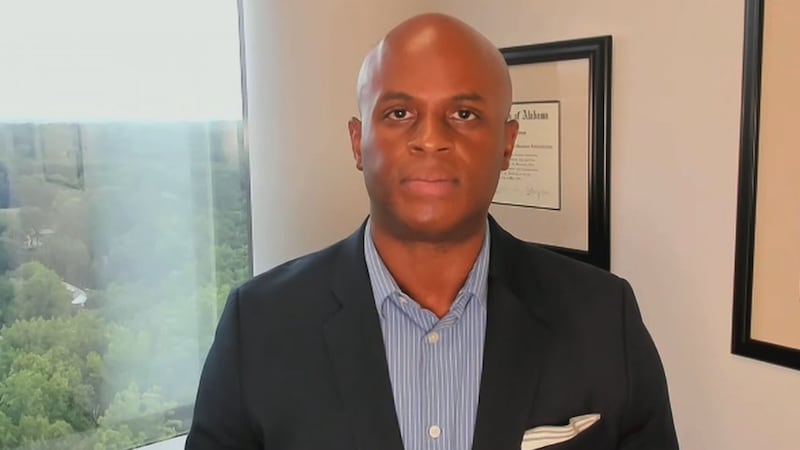
Read the full transcript below:
LINDSAY: It’s time now for Hot Picks, and today we’re focusing on three household names in the consumer staples sector. For more on his top picks, let’s welcome in Keith Buchanan, partner and senior portfolio manager at Globalt Investments. Great to have you join us. Thank you.
KEITH: Thank you.
LINDSAY: So, the sector in general has been outperforming recently. Why is that?
KEITH: Well, thank you for having me again this morning. It’s been a sleepy sector for some time now, as the market has preferred growth. These really have been cast-aside subindustries and names that really have business models that have been proven over time. And now that we’ve questioned the growth of some of the returns of some of the bigger names that have AI-driven stories, some of these stories that have, you know, again, some of the narrative around them doesn’t really correlate with artificial intelligence, but the stories remain intact and execution is really important. Some of these names have been around for generations.
LINDSAY: Okay, so let’s get to your top picks then. Walmart is the first one. What is it that you like about this company moving forward?
KEITH: Sure. Walmart has multiple earnings-growth stories and growth drivers right now that we found interesting and fascinating and investable, frankly, for the last couple of years. Coming out of COVID, they really leaned into e-commerce. They really got that engine started just before COVID, really leaned in on that time period. They really paid dividends for them, and they’re really seeing that grow into an advertising space and also e-commerce that really has led to growth beyond what you would expect at a consumer-driven space like Walmart, an environment where the consumer, their target consumer, really hasn’t thrived. They’ve had—they’ve seen margin squeeze, but Walmart’s been able to drive growth beyond what their target market has experienced. That’s a really attractive space name. The valuations get really juicy at this level and start to make the execution have to be flawless. And we’re focused on making sure that growth is intact for a name like Walmart, so that valuation remains reliable.
LINDSAY: I’m just reading something from RBC Capital Markets in a note yesterday that said, because of lower-income consumers remaining pressured, Walmart is expected to see a softer fiscal Q2 as a result of that. Is that something that you’re anticipating or have looked into or see as maybe a headwind moving forward?
KEITH: Sure, and that’s where the valuation—that’s above the market and also above its historical valuation, as the market has appreciated the growth drivers that I mentioned. That growth has remained intact and also has to be crystal clear on a year-over-year basis, and also the returns and how you get to that year-over-year growth that sustains that higher valuation. And so that’s why we look at the valuation as being something that we have to pinpoint every point of that growth and make sure it’s sustainable, because those questions really chip away at the valuation that’s up at these levels.
LINDSAY: Okay. Next up is Costco. You say this is less price-sensitive. This has a less price-sensitive target. Tell us more about why you like Costco right now.
KEITH: Sure. This target market is more affluent than Walmart’s historically. They’ve been able to really—of course, the loyalty is crystal clear with membership renewals. They see rarely any—very little attrition on a year-over-year basis. So, the loyalty is there, and they’ve been able to drive value through, of course, the bulk purchases that those customers really appreciate, and they really lean into a Costco and that business model. You know, in these types of periods where the consumer is looking for that value, whether they’re going to Walmart from other places or actually shopping at Costco to have more bang for their buck in that manner. Also, they have a private label that’s driving a lot of growth and margin expansion, and also that, again, that loyalty is driven through their private label as well. So, they have a lot of different—again, a lot of shots on goal, a lot of growth drivers. We feel like that is also positioned to benefit going into the next couple of quarters as the consumer environment starts to evolve around this higher-energy-cost environment that we’re in right now.
LINDSAY: Your last pick is Philip Morris. I believe this company just—it’s a holding company. I believe it just reported earnings this week. Tell us more about the opportunities you see here.
KEITH: Sure. Totally different speed than Walmart and Costco. It’s transitioning away from our, you know, our grandparents’ Philip Morris, where it was just a cigarette business. They’ve now evolved to more smokeless tobacco, and that innovation has really given it more growth drivers as well. So, you have a traditional cigarette business that has—that’s a declining business nonetheless, but also has tremendous cash flows, funding growth levers through its innovative spaces with the smokeless experience as well. So, it’s, again—and you get a healthy dividend. So, you have free cash flow, margin expansion and a yield that makes the investor experience quite appealing. And the stock has really proven that over the last couple of years.
LINDSAY: Just in terms of, like, consumer spending moving forward, any trends you’re seeing? Are you seeing shoppers continuing to trade down to cheaper brands, or are premium products making a comeback? Like, what are you seeing in that space?
KEITH: Sure, and that’s really Walmart—looking, digging into their earnings call and communications with the management team. They make it pretty clear that they see their consumer really starting to dig deeper in their pockets and prioritize their spending in ways that resemble more strain in the consumer environment. They talk about how they have consumers not buying a full tank of gas, if you will, and that affecting the purchases they see going out the door. The basket size is getting smaller and more grocery-oriented, so that normally leads to and indicates a stressful environment for the consumer, and that’s kind of what we’re seeing bear out in the macroeconomic data as well. So, we’re really honed in on how the consumer, which is two-thirds of our economy, can continue to drive GDP growth here in the U.S., considering all of the headwinds that the consumer is facing.
LINDSAY: And then, obviously, one of the big stories we’re facing here in Canada this week is more U.S. tariffs potentially starting tomorrow, as well as about 30 days from now. I wonder how tariffs and the ongoing trade war across the border have really been affecting this sector as well.
KEITH: It’s kind of been front and centre for this sector, as the retailers—at least the big, the big, bigger-box retailers, Walmart and the like—have really started to explore, you know, how they, you know, the input costs they have as far as what they import and put on the shelves in relation to how that affects their bottom line if this tariff volatility continues. So, we’ve had to all re-evaluate, you know, some of their business models as far as, you know, some of the volatility, which is, of course, at least mainly out of their control, but they have to control the returns of shareholders, and we demand that as investors. So, it’s put them in an even tighter position as a consumer is evolving and changing. They’ve also had to really grapple with an ever-changing tariff environment, which is, you know, trying to keep a lot of balls in the air at once. So, thus, you see guidance ranges start to expand as we progress through this really tenuous environment that we’re in.
LINDSAY: For sure. Okay, Keith Buchanan, partner and senior portfolio manager at Globalt Investments. Really appreciate your time. Thanks for joining us.
| DISCLOSURE | PERSONAL | FAMILY | PORTFOLIO/FUND |
|---|---|---|---|
| WMT NASDAQ | N | N | Y |
| COST NASDAQ | N | N | Y |
| PM NYSE | N | N | Y |
---
This BNN Bloomberg summary and transcript of the July 23, 2026 interview with Keith Buchanan are published with the assistance of AI. Original research, interview questions and added context was created by BNN Bloomberg journalists. An editor also reviewed this material before it was published to ensure its accuracy and adherence with BNN Bloomberg editorial policies and standards.

