Renewed investor interest, clearer regulation and increased dealmaking are supporting valuations across the biotechnology and specialty pharmaceutical sectors.
BNN Bloomberg spoke with Ash Verma, analyst at UBS, about why Teva Pharmaceuticals, United Therapeutics and Acadia Pharmaceuticals stand out within the sector.
Key Takeaways
- Teva is shifting toward higher-value branded medicines, which are expected to account for 40 per cent of its revenue within five years.
- United Therapeutics’ Tyvaso could address significant unmet demand among patients with idiopathic pulmonary fibrosis.
- United Therapeutics is also developing xenotransplantation technology that could allow pig kidneys to be transplanted into humans.
- Acadia faces an imminent Phase 2 clinical readout for a treatment targeting Alzheimer’s disease psychosis.
- Patent expirations are encouraging large pharmaceutical companies to acquire innovative biotechnology businesses and replenish their drug pipelines.
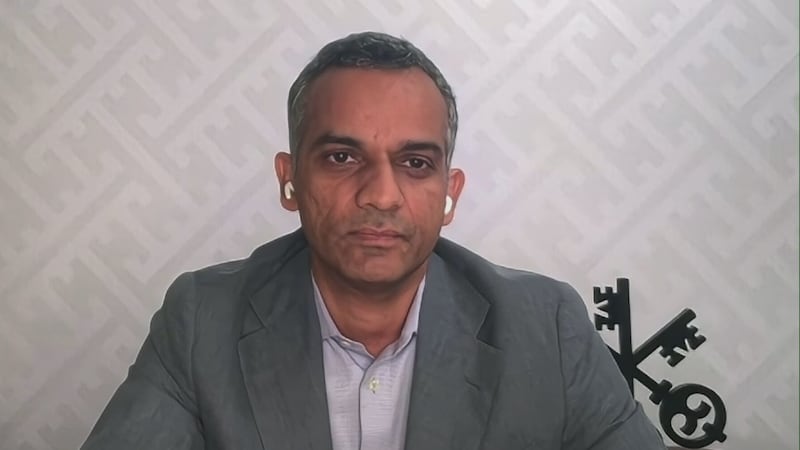
Read the full transcript below:
LINDSAY: It’s time now for Hot Picks, and our next guest covers the health-care sector and has three names that he believes are positioned for growth. Let’s bring in Ash Verma, analyst at UBS. It’s great to have you join us. Thank you.
ASH: Yeah, thanks for having us. Excited to be here.
LINDSAY: So, before we get into your three names, let’s just kind of go over the sector as a whole. Like, what’s driving health-care stocks right now?
ASH: Yeah, in terms of the focus area for me, small-cap biotech and specialty pharma biotech has really seen a resurgence in terms of investor interest in the last one to one and a half years. There’s been a lot of positive data that has come out. The regulatory landscape has become a lot clearer, and there is more M&A. So, that has continued to drive valuations, and things are looking really good on fundamentals.
LINDSAY: Okay, so let’s get into it then. Teva Pharmaceuticals is your first pick today. Tell us why.
ASH: Yeah, so Teva, this has been a topic for us for a while and continues to be the main focus. Here is that the company is transitioning from a generics company to more a branded company, and this is the main innovation engine behind it that is driving the growth. And as people realize that this growth is more durable, this will continue to drive more of a premium multiple compared to where it’s trading. Just in terms of where the brands for this company are right now, 20 per cent of their revenue comes from brands. That will become 40 per cent in the next five years, and we think just, like, the quality of the pipeline is seeing a really big uplift. So, in the past, they were focused on brands, but those were in more crowded categories. But more recently, they’ve been doing more high-science R&D that has been very successful. And meanwhile, the generics business has stabilized quite a bit and now is a strong free cash flow driver. And we have more than $250 billion of branded patents coming off in the next five years, which would be a great opportunity set for something like Teva.
LINDSAY: Okay, next up is United Therapeutics. Tell us more about this company and what opportunities you see here.
ASH: Yeah, so this stock has had some pullback here, and that’s why we like it a lot. They have a big launch coming up next year for idiopathic pulmonary fibrosis, just short-form IPF. This can be a pretty significant launch. Just in this disease, United Therapeutics’ drug Tyvaso has shown, hands down, the best clinical data that there is, and this remains a tough disease where there are not a lot of drug treatment options available. So, there is pretty significant pent-up demand where physicians and patients are looking for the right drug, and I think Tyvaso can solve that problem. So, we think that this launch can be pretty strong right out of the gates. And then, just beyond IPF, United Therapeutics also has another launch coming, ralinepag for pulmonary hypertension, which can be another solid launch for them. And then, just, like, the pipeline for this is very attractive. They have several different programs that are going on, and one of the things that they are trying is looking at whether pig kidneys can be transplanted into humans, which can pretty significantly solve the organ transplantation issue that exists out there.
LINDSAY: Is there a timeline for that?
ASH: Yeah, we should start to get data for that toward the end of next year, and this is a phased study. They think that they can get to the market by 2029 or 2030.
LINDSAY: Okay, your last pick for today is Acadia Pharmaceuticals. Tell us more about why you like Acadia.
ASH: Yeah, so Acadia has a big binary clinical data catalyst coming up, which is imminent. So, we are expecting a Phase 2 Alzheimer’s disease psychosis study to read out in short order. We like the chances of success here for their drug, and this is a good business. They have pretty stable, growing drugs even otherwise. So, in terms of the risk-reward, the stock can react favourably if the data is good and is really not pricing in any success here. And you have a profitable business that is growing. So, there’s something to fall back on in terms of valuation if the clinical data doesn’t turn out to be positive.
LINDSAY: Okay. So, just in terms of the biotech and pharma sector in general, you mentioned there’s still a lot of M&A activity, particularly in biotech. What makes a biotech company an attractive acquisition target right now?
ASH: Yeah, I would say, look, I mean, you see a lot of innovation that is happening, and big pharma, they have just a tremendous amount of patent cliffs coming up, and that is the trigger for them to look externally and look at these biotechs that are doing a lot of innovation. There are more and more new drug classes that are opening up and new mechanisms that are developing. So, the biotech sector has been at the forefront of bringing out these therapies. And for big pharma that don’t have as big of a pipeline or are looking to, you know, solve for this patent cliff, this becomes an easy way for them to bring in the innovation from external candidates.
LINDSAY: Are we still seeing M&A happening in waves, or is it just kind of sporadically here and there at this point?
ASH: I would say, like, Q2 of this year has been a big high-water-mark quarter, so that has been a big resurgence. It’s hard to, you know, continue at that pace because this was setting a record, but I think it will still continue at a healthy pace, and that’s a big positive for the sector.
LINDSAY: For sure. Okay, Ash Verma, analyst at UBS. Really appreciate having you. Thanks so much.
ASH: Yeah, thank you.
| DISCLOSURE | PERSONAL | FAMILY | PORTFOLIO/FUND |
|---|---|---|---|
| TEVA NYSE | N | N | N |
| UTHR NASDAQ | N | N | N |
| ACAD NASDAQ | N | N | N |
---
This BNN Bloomberg summary and transcript of the Sept. 16, 2026 interview with Ash Verma are published with the assistance of AI. Original research, interview questions and added context was created by BNN Bloomberg journalists. An editor also reviewed this material before it was published to ensure its accuracy and adherence with BNN Bloomberg editorial policies and standards.

