The artificial intelligence investment cycle is creating opportunities across several layers of the technology sector as companies expand their computing infrastructure.
BNN Bloomberg spoke with Felix Wang, managing director of global technology at Hedgeye Risk Management, about three stocks he believes are positioned to benefit.
Key Takeaways
- Wang believes the AI cycle is in its early-to-middle stages, although stagnant enterprise spending and the potential commoditization of large language models present risks.
- Nvidia’s Hugging Face acquisition could give the chipmaker greater influence over the distribution of open-weight models and provide a hedge against slower growth at frontier AI labs.
- Marvell offers long-term exposure to networking and optical technology, areas that remain significant bottlenecks in the expansion of AI infrastructure.
- Silicon Motion provides an indirect way to invest in memory demand because its economics depend more on controller volumes, market share and design wins than NAND prices.
- Networking could capture a greater share of AI system spending if elevated memory prices prompt developers to reduce memory content in next-generation servers.
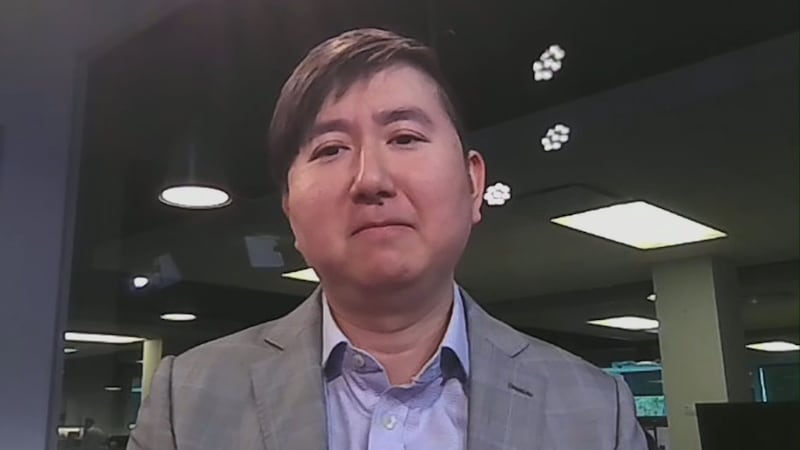
Read the full transcript below:
LINDSAY: Time now for Hot Picks. Our next guest sees potential in three technology names tied to the AI buildout and growing demand for data storage. Let’s welcome in Felix Wang, managing director of global tech at Hedgeye Risk Management. It’s great to have you join us. Thank you.
FELIX: Glad to be back. Thank you.
LINDSAY: So, before we get into your three names, just first of all, where are we, do you think, in the AI capex cycle? Like, what stage are we in? What stage are we entering? Where are we?
FELIX: Yeah, that’s a good question. I tend to think we’re maybe in the early, the mid, middle part of the AI cycle. Look, there’s a lot of competition out there among the, among the open-source and closed models from both the U.S. and China sides, and we’ve seen some incredible models and technology coming out of that ecosystem. But, as you can see, you know, the, I would say, the margin of improvement has been narrowing. There are some exceptions, of course. We have Astra from GPT-6 — incredible — and there are some other, some models from China, particularly on the cost-efficiency side, from DeepSeek, Kimi and others, have also been incredible. But, in general, I would say, you know, there’s still some concern about commoditization, and there’s some general concern that, if you look at token prices, if you look at what we follow, which is enterprise spend, enterprise spend didn’t grow in the past month, and this is, this is a problem. And what I mean by enterprise spend: enterprise spend on LLMs. So, you know, again, I, I remain quite optimistic on where we could head on AI, but there are definitely some hurdles.
LINDSAY: Okay, so let’s talk about some of your names, then. First of all, Nvidia. I think most people know this company, but tell us why — what opportunities do you see here moving forward for Nvidia?
FELIX: Sure, this is an easy one. I mean, the biggest company in the world just said that their chip sales double will double in 2027. In my mind, you know, Nvidia is going through a lot of deal-making. They’re putting a lot of chess pieces on the chessboard to expand their influence in AI hardware and software. I’m extremely optimistic about their acquisition of Hugging Face. Hugging Face, you know, very popular — sort of the first stop for engineers when they are looking for a good AI model to run, and probably the last stop before putting that model into production. It’s sort of like a model app store. I love this deal because Nvidia now is going to have more control over this developer distribution layer for open-weight models and may actually affect the neutrality that’s set up by Hugging Face. Another hedge for Jensen Huang, and to me, you know, this is a hedge in case the U.S. frontier labs slow down, in case the open-weight models, open-source models, really step on the accelerator. He, Jensen, is a master of hedging. He’s also an expert in picking the best-looking leather jacket out there. But this is another way for him to get ahead of the game. Okay, Nvidia — very cheap on earnings.
LINDSAY: Okay, next up is Marvell. It recently raised its guidance, but you’re still seeing some near-term challenges. Despite that, you’re still bullish on Marvell. Why is that?
FELIX: I still think it’s an underappreciated long-term story in networking and optics. I like to use a restaurant analogy with Marvell. You know, sometimes you may not win the entrée dish from the hyperscalers, but you get everything else. You get the appetizers, you get the desserts, you get the cocktails. It’s actually making me a little bit hungry and thirsty right now. But all of these dishes are called XPU attach, and they can add up in a very big way. Our supply chain contacts continue to tell us that networking remains a huge bottleneck in the AI trade. Google is also a big part of the Marvell story. They issued a — Marvell issued a new warrant deal recently. Investors are expecting about US$1.8 billion of new Google business for the next seven years. Marvell also has a great relationship with Nvidia in terms of critical, in terms of getting new business as we transition to higher and higher speeds in optical networking. So, they’re networking their way around, pun intended. So, I think we’re keen, and they also have an investor day coming up as well. So, I do like this one.
LINDSAY: Okay, and then last is Silicon Motion. Why do you believe it can benefit from growing storage demand without taking on some of the same risks that other memory producers are taking on?
FELIX: Yeah, so this is a very niche play. So, everybody kind of wants to buy the brains of AI. I’m actually interested in buying the part that helps it remember where it put things. So, that’s SIMO. That’s Silicon Motion. Silicon Motion, for those of you who don’t know, this is a fabless semiconductor company specializing in NAND flash controllers. I say it’s a niche play in the memory storage play, memory storage space. They control the third-party SSD controller market. I’ve been framing it as a hedge, actually a hedge on the memory space, because, to what you just said, you know, if storage tightness actually loosens in the second half of next year and into 2028, SIMO should benefit tremendously from that because they benefit from more NAND unit elasticity. And the other thing is they have a good relationship with YMTC. YMTC is the Chinese disruptor in NAND, and if YMTC really ramps up supply in the next 12 months or so, SIMO again will be an indirect winner from that. We have very good read on the supply chain, and we think SIMO could really be a winner here. Their specialty is in consumer devices, but they’re also making some headway into AI and enterprise SSDs. Again, the stock is cheap, just like Nvidia.
FELIX: Is there any area of this sector right now, do you think, that is, like, most underappreciated? Whether it’s semiconductors, networking, power, cooling?
FELIX: I still think, you know, networking is a big part, and the reason why is because right now people are trying to figure out the trade-off because, between memory and other parts of the AI supply chain, just because memory prices have, you know, gone bonkers, right? And it’s become super, super expensive. So, if — and this is a big if — if memory content for the next generation of servers that’s coming, the next generation of AI systems that’s coming, actually shrinks because people got tired of paying exorbitant prices for them, what other parts will replace that?
LINDSAY: Right.
FELIX: And I tend to think networking would be a strong candidate for higher content value in the AI systems. So, that’s kind of how I’m thinking about it.
LINDSAY: Okay, we’ll leave it there. Felix Wang, managing director of global tech at Hedgeye Risk Management. Always great to have you join us. Thanks so much.
| DISCLOSURE | PERSONAL | FAMILY | PORTFOLIO/FUND |
|---|---|---|---|
| NVDA NASDAQ | N | N | Y |
| MRVL NASDAQ | N | N | Y |
| SIMO NASDAQ | N | N | N |
---
This BNN Bloomberg summary and transcript of the Sept. 17, 2026 interview with Felix Wang are published with the assistance of AI. Original research, interview questions and added context was created by BNN Bloomberg journalists. An editor also reviewed this material before it was published to ensure its accuracy and adherence with BNN Bloomberg editorial policies and standards.

