An uneven U.S. economy is creating different prospects for retailers heading into the holiday season. Value-focused chains are drawing attention despite uncertainty about overall shopping demand.
BNN Bloomberg spoke with Anthony Chukumba, managing director at Loop Capital Markets, about his retail picks: Dollar Tree, Ollie’s Bargain Outlet and Savers Value Village.
Key Takeaways
- Dollar Tree earned a buy upgrade as higher-income shoppers trade down, while its core customers remain relatively healthy.
- Dollar Tree’s expansion into price points above $1.25 and aggressive share buybacks support Chukumba’s positive view.
- Chukumba attributes Ollie’s second-quarter same-store sales decline to cooler summer weather and believes sales growth has rebounded in the third quarter.
- Savers Value Village’s Thrift IQ pricing system could improve merchandise pricing, sell-through rates and productivity as it rolls out across stores.
- Chukumba sees tariffs as less of a concern following reductions and refunds for retailers, while Savers’ business is not affected in the same way.
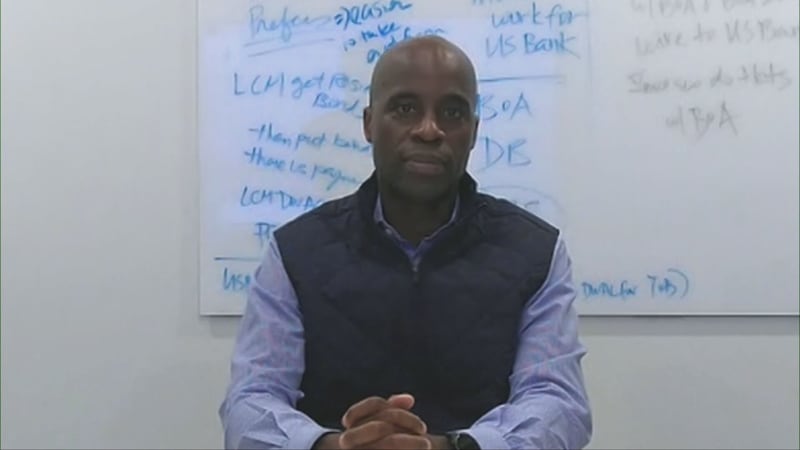
Read the full transcript below:
| DISCLOSURE | PERSONAL | FAMILY | PORTFOLIO/FUND |
|---|---|---|---|
| DLTR:NASDAQ | N | N | Y |
| OLLI:NASDAQ | N | N | Y |
| SVV:NYSE | N | N | Y |
LINDSAY: It’s time now for Hot Picks. As consumers look for more affordable options, our next guest believes many retailers are well-positioned to benefit from holiday demand and new technological plays. Let’s bring in Anthony Chukumba, managing director of Loop Capital Markets, for more. It’s great to have you join us. Thanks so much.
ANTHONY: Thanks for having me.
LINDSAY: So, before we get into your actual names, I want to talk about the optimism you feel ahead of the holiday season. Where’s that coming from? Given that we’re still — it sounds as though we’re still very much in, like, a K-shaped economy here, right?
ANTHONY: I don’t know if I would necessarily say I’m optimistic overall. I am optimistic about the value sector, and specifically, I’m talking about value retailers such as Dollar Tree, such as Ollie’s Bargain Outlet, such as Savers Value Village. I think that, as you mentioned, it is a K-shaped economy. But what we’re going to see in all three of those cases is higher-income consumers trading down to a Savers, trading down to an Ollie’s, trading down to Dollar Tree. So, overall, I am somewhat nervous about the upcoming holiday selling season, but I would say for retailers that cater to lower-income or high-income consumers, I’m feeling pretty bullish.
LINDSAY: Okay, okay, good to get that clarification. You mentioned your three names, but we’ll go through them now in more detail. Your first pick is Dollar Tree. Tell us more about why you’re liking Dollar Tree at this time.
ANTHONY: Absolutely, and we literally just upgraded Dollar Tree to a buy rating this morning. So this is hot off the presses for Hot Picks. So, basically, you know, in terms of Dollar Tree, they are benefiting from the trade-down. But here’s the thing: like, in a lot of cases, let’s say, like Dollar General, they’re benefiting from the trade-down, but they’re seeing a trade-out where their core low-income consumers are shopping less because, you know, let’s face it, they’re dealing with high gas prices, stubbornly high inflation. Now, with Dollar Tree, they do cater to a higher-income household relative to Dollar General, so it’s almost like the best of both worlds, right? In other words, their core customers still relatively healthy, and they’re benefiting from the trade-down. We also think that their multi-price initiative, where they’re adding more above-$1.25-price items, is working. In addition to that, they’re starting to buy back stock very aggressively now. They sold Family Dollar. That’s accreted to their earnings per share, and we like the valuation. The stock typically trades at, call it, like 60 to 17 times earnings. Right now, it’s trading at 14. So that’s why we decided to upgrade Dollar Tree this morning.
LINDSAY: Okay. Next up is Ollie’s Bargain. I think maybe Canadians might not be as familiar with this American discount retail chain, but tell us more about the company and why you’re feeling good about it.
ANTHONY: Sure. So Ollie’s Bargain Outlet is the largest closeout retailer in the U.S. So, basically, they’re looking for cancelled orders. They’re looking for packaging changes. They’re looking for retailers are going out of business, and they’re buying those goods opportunistically and then selling them in their stores. Now, they can make a really nice margin. They do over a 40 per cent gross margin, but it’s a — it’s a value to the consumer. This is a stock that’s been shellacked over the last year or so. I think that folks are sort of mistaking cyclical issues for secular ones. So, for example, in the second quarter, their comp store sales were down for the first time in quite some time. Now, that was just really due to the fact that the second quarter is comprised the summer here in the U.S. They sell a ton of fans and air conditioners. It was an unseasonably cool summer here in the U.S. and many parts of the country, so they didn’t sell as many of those. And that not only impacted sales of fans and air conditioners, but those are a traffic driver for their stores. Now, to be clear, I think that their sales growth has rebounded in the third quarter, and there’s also just a lot of things that the current management team is doing that I just think are just, you know, more scientific, more data-driven, and are going to benefit the company. So that’s a name we really like as well.
LINDSAY: Your third pick is Savers Value Village. You say you were impressed by the Q2 results this year, but you also say you’re impressed by the kind of ramp-up of technology innovation when it comes to this company. Maybe explain that further as well.
ANTHONY: Sure, absolutely. So what we’re most excited about — and there’s a few different initiatives from a tech perspective — but they have this new pricing system called Thrift IQ that they’re rolling out. It’s in about, call it, 15 to 20 per cent of their stores. It’ll be in all stores by early 2028. And what this allows them to do is allows them to more accurately price the used merchandise, right? So they can — they can price it more accurately. That leads to higher sell-through levels. There’s also some cost savings because it’s just much quicker for the person to price those items, and I think that that’s going to be a major driver for them. I mean, their U.S. business is quite strong right now. They are benefiting from the secular shift to thrifting. Now, you know, obviously, you guys are very familiar with Savers in Canada. That business is not doing quite as well, but, you know, sales are flat, and they’re doing a really nice job of generating margin improvements in — in the Canadian business. So this is a name that we really like, and once again, you know, they are benefiting, and I think it’s going to be folks trading down from, let’s say, like a TJ Maxx or a Ross or a Burlington to Savers.
LINDSAY: And just lastly, like, are — obviously, tariffs are a big conversation for a lot of retailers, both in Canada and the U.S. Is that a concern for you, for companies like these?
ANTHONY: You know, not really. I mean, you know, I mean, look, obviously we had Liberation Day, and that was a real shock to the system for all retailers. But a lot of those tariffs have come down considerably. Quite frankly, a lot of retailers, including Dollar Tree, received massive tariff refunds. You know, Ollie’s got one as well. Savers, not applicable to their business, so the concerns about tariffs are just not nearly as high as they were, let’s say, you know, 12 months ago.
LINDSAY: Okay, we got to leave it there. Anthony Chukumba, managing director of Loop Capital Markets. Really great to have you join us. Thank you.
---
This BNN Bloomberg summary and transcript of the Oct. 1, 2026 interview with Anthony Chukumba are published with the assistance of AI. Original research, interview questions and added context was created by BNN Bloomberg journalists. An editor also reviewed this material before it was published to ensure its accuracy and adherence with BNN Bloomberg editorial policies and standards.

