Industrial stocks offer opportunities across different stages of the economic cycle. Selecting names requires balancing long-term catalysts with near-term uncertainty.
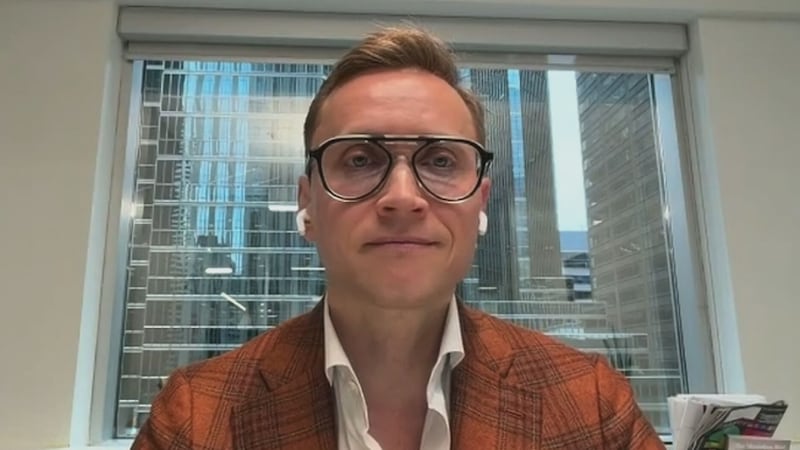
BNN Bloomberg spoke with Maxim Sytchev, managing director of industrial products at National Bank, about his three industrial stock picks and how business fundamentals shape his investment decisions.
Key Takeaways
- Sytchev says cost-plus contracts account for 70 per cent of Aecon’s revenue, reducing risk as nuclear development creates longer-term growth opportunities.
- Aecon’s legacy project difficulties are easing, according to Sytchev, who expects free cash flow to turn positive.
- Sytchev estimates Alberta’s data centre development could generate an additional $2 billion to $4 billion in revenue for Finning over the next decade.
- Improving oil and copper conditions support Finning’s prospects, while Sytchev says equipment operating at client facilities in Argentina could potentially double within five years.
- Sytchev sees RB Global’s valuation as attractive at roughly 18 times earnings, arguing that competition concerns are overdone while construction and agricultural auctions remain depressed.
Read the full transcript below:
ROGER: Time now for Hot Picks. Our next guest covers the industrial sector and sees opportunity tied to Canada’s growing infrastructure buildout. Let’s bring in Maxim Sytchev, managing director of industrial products at National Bank. And Max, thanks, as always, for joining us.
MAXIM: Good morning. Good to be, good to be back.
ROGER: All right, let’s get, let’s get right into it. Aecon Group is up first for you.
MAXIM: Yeah, absolutely. So we’re focusing on, you know, two of the names that are more positive quan-driven and obviously supported by, as you mentioned, massive infrastructure buildout. As we have seen from the Canadian investment meeting, we’re really trying to catalyze hundreds of billions of dollars in investment in Canada right now, and Aecon really sits on that edge of combining not just legacy infrastructure, but nuclear and utilities, which is roughly 48 per cent of what the company is doing.
If you see, obviously, from the share price performance, which has been, you know, pretty spectacular on a year-to-date basis, what’s really exciting for us right now is that the company has dramatically de-risked its backlog profile. So 70 per cent of the company’s top line right now is cost-plus. That was a big pivot under the CEO, Jean-Louis Servranckx.
And when you’re looking forward, if you think about the nuclear buildout, which the federal government is supporting right now, and obviously Ontario trying to build, I mean, we’re talking about transformational revenue generation for this company, not just next year, but in the foreseeable future, kind of, you know, 2030 and plus.
And when you look at the U.S. names, kind of in this cohort of nuclear utilities, all trading at, you know, 25, 30 times EBITDA. Aecon is only at 13. So, you know, from our perspective, this is one of these very unique situations that combines quality with, you know, very substantial growth still ahead. So continue to be extremely bullish on this name.
ROGER: All right. Any concerns with the negative free cash flow I believe it has going right now and the debt-to-capitalization increasing?
MAXIM: Yeah. So, I mean, it’s part of the timing of some of the difficult projects rolling off. You’re 100 per cent correct. So Gordie Howe was the last difficult project that the company was finishing, and right now the drag from that is quite de minimis. I think last quarter was only, you know, $4 million, ballpark.
So when you kind of compare to EBITDA generation of roughly $400 million on a prospective basis and growing, we do expect free cash flow, to your point, going to positive territory. So that the legacy difficulties in the transit space, that’s behind us.
ROGER: OK, let’s move on to Finning.
MAXIM: Yeah, Finning, very interesting situation right now, where basically every single end market that the company is touching is, is up materially. You look at oil, which is, you know, the big driver of the Canadian operations, which is roughly 50 per cent. Obviously, as we’re trying to build more takeaway capacity, that is helping WCS and WTI.
So the product support has been accelerating, actually, in Canada. We have to be pretty excited about the data centre opportunity in Alberta, which we estimate could be an additional $2 billion to $4 billion of revenue over the next 10 years for Finning.
And you also have to think about copper. So copper, which is really driving the company’s LatAm exposure, which is roughly 30 per cent, so it’s Chile and Argentina. So, I mean, Argentina has been on its knees for many, many years. It is recovering right now. It’s profitable for the company, and, you know, speaking with management, I think it’s conceivable that over the next five years, the number of units that are operating at client facilities could be potentially two times over the next five years.
So when you kind of combine all of these things, oil in a much better place, data centre opportunity, and obviously copper being where it is right now, we still see materially more upside in Finning on a prospective basis. And execution under Kevin Parkes has been, you know, pretty tremendous. So it’s really a combination of positive fundamentals and very strong execution.
ROGER: Would you like to see — its rentals are only about three per cent of the business. Do you see that growing?
MAXIM: Given the nature of the clients, which are basically running the operations on a 24/7 basis, you know, like the BHPs of this world, the Suncors, it probably will stay in that relatively small percentage, just because, again, like the bulk of revenue generation for this company is actual product support, which is 55 per cent, and that’s really what’s driving the profitability.
So, I mean, rentals is a nice-to-have, and it does serve a purpose, but we’re much more excited about, you know, other drivers for the company.
ROGER: OK, and the last one, RB Global.
MAXIM: Yeah, RB Global. It’s, you know, a name that used to trade historically at very high multiples and a premium to, to the market, kind of, you know, 25, 27 times P/E. The stock fell completely out of bed after Q2, and right now the shares are trading at roughly 18 times P/E, which is highly unusual and sort of, you know, two standard deviations below its mean.
The reason for that is 50 per cent of what RB Global does is salvage vehicles, and there is a perception in the marketplace that the competitive landscape between RB Global and another public company called Copart could intensify. We just did and published a deep dive on the space, speaking to a lot of insurance carriers. We don’t see this happening because it makes no economic sense whatsoever. It’s a duopoly.
I think both companies are going to be competing on service levels, and RB Global has been taking away market share, kind of rebalancing to go back to kind of 50-50 with Copart on a prospective basis.
And what’s interesting right now, we think that the market is sort of overreacting, thinking there is like a race to the bottom, which we’re not seeing. And then the other 50 per cent of the company, it’s construction and agricultural auctions, and those two verticals right now are at a trough.
So when you kind of combine the two, sort of, you know, the salvage and construction and ag, you’re basically getting a very high-quality asset which is trading at a trough multiple, and given the depressed nature of construction right now, it’s basically trough EPS as well, which is highly unusual for this type of setup. So that’s the reason why we think right now there is a very compelling risk-reward setup for RB Global prospective shareholders.
ROGER: OK, we have to wrap it up there, Max. But thanks, as always, for joining us. Have a great weekend. My pleasure, you as well. Maxim Sytchev, managing director of industrial products at National Bank.
| DISCLOSURE | PERSONAL | FAMILY | PORTFOLIO/FUND |
|---|---|---|---|
| ARE:TSX | N | Y | Y |
| FTT:TSX | N | Y | Y |
| RBA:NYSE | N | N | N |
---
This BNN Bloomberg summary and transcript of the Oct. 2, 2026 interview with Maxim Sytchev are published with the assistance of AI. Original research, interview questions and added context was created by BNN Bloomberg journalists. An editor also reviewed this material before it was published to ensure its accuracy and adherence with BNN Bloomberg editorial policies and standards.

