The race to turn artificial intelligence into a lasting business advantage is reshaping the software sector. Choosing potential winners requires assessing how established businesses fit into an evolving technology landscape.
BNN Bloomberg spoke with Thomas Martin, senior portfolio manager at GLOBALT Investments, about his case for Palo Alto Networks, Palantir and MongoDB.
Key Takeaways
- Evolving AI threats are driving demand for cybersecurity tools, with Martin seeing revenue potential in Palo Alto Networks’ base fees and usage-based pricing.
- Palantir’s earnings estimates have roughly doubled since its earlier share-price peak, making its valuation more attractive at a similar price, according to Martin.
- The time and money customers spend integrating Palantir’s software can make switching providers difficult and support customer retention.
- MongoDB’s work with frontier AI models and agents remains at an early stage, offering potential for rapid growth from a smaller revenue base.
- Martin expects AI competition to sustain volatility for several years and favours businesses with established customers, strong capital resources and access to skilled employees.
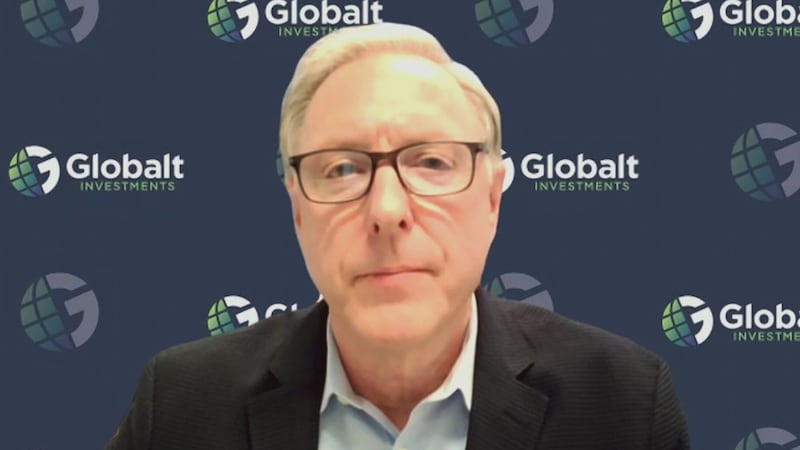
Read the full transcript below:
MATT: Well, it’s time now for Hot Picks, and our next guest has three companies he positions as winners in the software sector. Let’s bring in Thomas Martin, senior portfolio manager at GLOBALT Investments. Thomas, thanks for being here.
THOMAS: Great, thanks for having me on your program.
MATT: Never a dull moment in the software sector, it feels like, and so you’ve got a few for us to start, and let’s jump right into them, shall we? Palo Alto Networks is your first one, too. We kind of have seen, again, all over the place, too. But tell us why Palo Alto is on—is on your picks list for today.
THOMAS: Sure. So Palo is just one of the group of industries, I guess, that we think are attractive in AI, cybersecurity, and—but even in that unit, there’s the, you know, kind of the winners and the losers. You see that with Fortinet having reported today, and the stock’s down big, and it’s sort of dragging down Palo Alto and CrowdStrike. But Palo is a platformization—they announced that about two and a half years ago, and they’ve really been ramping that up. There’s so much change going on so quickly, what with AI and hacking going on, that they are bringing out new products constantly. And the latest one that they’re bringing up is called Continuous Frontier AI Defense, and that product is measuring and looking at things really on a continuous basis, and then they are trying to use that information to think about what the attacks are going to be and to remediate it quickly. What that means for Palo is that they will have both a base fee and then a usage-based consumption. So that should be good for their revenues.
MATT: Yeah, I was going to say. No, sorry. Keep going. Keep going, Thomas. Yeah, go ahead.
THOMAS: No, that was it. We think that they’re well positioned.
MATT: Yeah, and that’s what I was going to say. Reading a little bit about them, too, a little bit earlier, it feels like with those ones in particular that they’re still—that that ceiling is still very high as you get into some of the defence for AI, correct?
THOMAS: Absolutely, and you’re fighting against the agents that are coming and constantly making attacks. So, you know, these products are just going to continue to evolve, and they have the infrastructure to be able to offer that.
MATT: OK, next on the list is Palantir, too. I think well known to, you know, investors that are in this—in this sector a lot. But tell us why Palantir is on your list today.
THOMAS: Sure. Well, Palantir reached a high earlier this year and then really kind of went down a great deal. It’s back up near its old high, but earnings estimates have essentially doubled since then. So you have the same price, but double the earnings. So the stock is cheaper on that basis. They’re going to be the next one to report next week, and we’re expecting a good quarter out of them. You know, both in the government and in the commercial area, you know, the—the story there continues to be that they focus on ontology, and they sit at a layer in between the customers’ needs and the large language models. They focus on data sovereignty, which means that the—their customers get to keep the data, not the LLMs. And the more that you use the Palantir and the time and the money that you put into creating this ontology, the more you have sticky costs associated with it, and that makes it difficult to switch. So we think they’ll be able to continue to grow and penetrate their markets and keep their business.
MATT: Is that a unique position to be in that middle layer? You know, we’ve talked a lot about, I think, both ends right now, but in particular for that middle layer of this AI stack.
THOMAS: Well, I don’t think that it’s unique, but certainly they are the leader. They really were the starting place of that, and they just continue to build on their experience doing this. I mean, it’s a—it’s not something that AI can readily duplicate.
MATT: Right, that’s fair, too. And again, just be prepared for the volatility, I’m assuming, again, given the chart that we saw and you mentioned over the last year.
THOMAS: Absolutely.
MATT: Yeah. Last on the list, too, is MongoDB. Tell us about MongoDB in particular.
THOMAS: So Mongo is a database company, and to a certain degree—and they’re not strictly comparable—but the other two that people may be aware of are Snowflake and Datadog. You know, different businesses, but still sort of in the same orbit. And those two stocks have done very well and seem to be really considered to be AI winners, and Mongo has been more volatile. They did have their CEO leave for a very good position at Meta, and I think, you know, that brought the stock down a little bit. But they are at the beginning stages of positioning with the large language models, the frontier models, and positioning their database and the access to it, and the way that they label their data as particularly good for those and good for agents. And they’re just at the beginning stages of ramping that business with those frontier models. So we expect it to go from a smaller part of the business to a larger part of the business through rapid growth.
MATT: OK, so that rapid growth is there. I was also reading—what about the influence of India, too? Because I was reading that this week, too, at least expanding that part, and also into, you know, when it comes to customers, R&D and the like.
THOMAS: Right. Well, I mean, they’re looking at more geographies and can continue to just, you know, work with folks as they can.
MATT: Interesting stuff, too. And again, I just want to be clear, though, too, Thomas. And at this point, the software—you know, the software sector right now, you like these three picks, too. But as we’re seeing with what’s happening, too, with equities and, too, and we get into some of the Alphabets and some of the influence, we’re still seeing, you know, your overall sense of how much more volatile this is going to be moving forward here for the next, you know, short term, six months, a year, to long term, for the next few years.
THOMAS: Yeah, so AI has really made things to be very volatile because there are so many areas that it affects and that it can—it can do. So, I mean, we’ve seen that with Google’s earnings and with Microsoft’s earnings, is that these companies lap each other, and they’re spending money to get, you know, wherever there is first, and they—the positioning and the opportunity is huge, and we expect that that’s going to continue not just for the next six months or one year, but for several years. I mean, we’re really at the beginning of the usage and use cases for large language models and for AI in general. So that’s why we look for the ones that do have a large kind of installed base, a large capital base, access to capital and to good people, and that we think will be able to weather the storm through the ups and downs. So definitely, the—those leaders are the ones that we think will make it through to the other side.
MATT: Thomas, appreciate your time today on this. Thanks so much.
THOMAS: Great, thank you.
MATT: That’s Thomas Martin, senior portfolio manager at GLOBALT Investments.
| DISCLOSURE | PERSONAL | FAMILY | PORTFOLIO/FUND |
|---|---|---|---|
| PANW NYSE | N | N | Y |
| PLTR NASDAQ | N | N | Y |
| MDB NASDAQ | N | N | Y |
---
This BNN Bloomberg summary and transcript of the Oct. 29, 2026 interview with Thomas Martin are published with the assistance of AI. Original research, interview questions and added context was created by BNN Bloomberg journalists. An editor also reviewed this material before it was published to ensure its accuracy and adherence with BNN Bloomberg editorial policies and standards.

