Lithium Americas shares soared after the U.S. Department of Energy said it will take a five per cent stake in the company and its Nevada joint venture with General Motors. The move is part of Washington’s push to secure critical minerals for electric vehicle batteries and reduce reliance on China.
BNN Bloomberg spoke with Corinne Blanchard, director of lithium and clean tech equity research at Deutsche Bank Securities, who said the deal provides government support and debt relief but may ultimately dilute shareholder value, since the U.S. gained equity at little cost.
Key Takeaways
- Washington secured a five per cent equity position in exchange for loan concessions.
- About US$200 million in debt service payments have been deferred for five years.
- The deal includes a requirement to fund US$120 million in reserve accounts within 12 months.
- Offtake terms were loosened, allowing excess lithium output to reach other buyers.
- Analysts caution the arrangement dilutes investor value despite the stock rally.
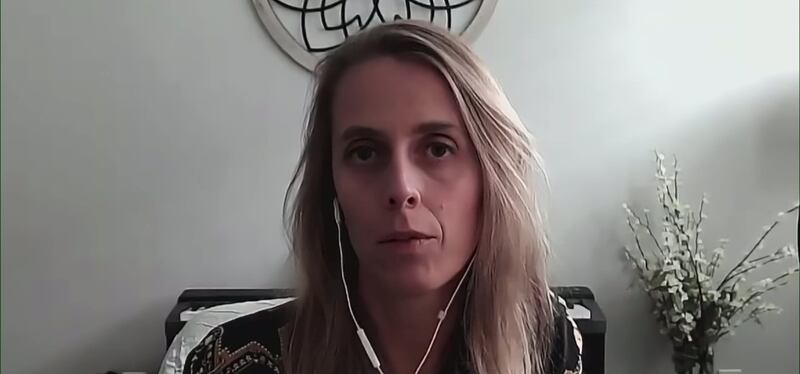
Read the full transcript below:
MERELLA: Lithium Americas shares are surging today after Washington said it will take a five per cent stake in the company and in its joint venture with General Motors. But our next guest says it may not be a great deal for shareholders. Let’s go to Corinne Blanchard, director of lithium and clean tech equity research at Deutsche Bank Securities. Thanks for joining us today.
CORINNE: Thank you for having me.
MERELLA: Shares have been skyrocketing, up 25 per cent at one point today. But you don’t think it’s necessarily a great deal for the company. Tell me why.
CORINNE: We’ve seen a strong market reaction this morning and, in fact, since last week when rumours about this deal started to circulate. One reason we don’t see it as entirely positive is that the government is taking about five per cent equity, essentially for free. That’s one way to look at it. The U.S. is taking the equity in exchange for a five-year deferral of debt service, which is positive for the company and will help cash flow in the near to medium term. But overall, we don’t think this is the best outcome for shareholders.
MERELLA: How much of a better deal is the company getting on its loan from Washington?
CORINNE: Without going into too much technical detail, they’re getting about US$200 million in debt service interest payments deferred for five years. Instead of payments starting as construction wraps up at the Thacker Pass project, they’ll now begin later. That is a positive. I don’t see the deal as fully negative — there is the benefit of U.S. government support for the industry. Lithium has struggled with weak pricing in the past two years, so this could bring some stability and renewed investor interest in the space.
MERELLA: That being said, you have a hold rating on the stock and a price target of US$6.30, which is well below where the shares are trading today. What do you see as the downside risk?
CORINNE: The main risk is execution. This is still an early-stage project. We like the Thacker Pass asset, the U.S. location, and the management team, but there are execution risks over the next few years. Add in a weak pricing environment for lithium and we think the stock is fairly valued here. The recent rally is also partly driven by retail investors, which can exaggerate moves. That’s why we remain at hold and prefer to wait and see how the project develops and costs evolve.
MERELLA: China has been a dominant force in lithium. Do you see it being challenged by the U.S. or others?
CORINNE: Historically, Australia and Chile have led in production, but China has gained significant momentum in the past two years. Its real power lies in refining capacity — it pushed a lot of supply into the chain, which contributed to lower prices. Lithium is different from other critical minerals in that it has more geographic diversity, with production in South America, Australia and some in North America. I don’t see North America disrupting the global market in the next two to three years, but longer term, over five to eight years, the U.S. could play a much larger role in the supply chain.
MERELLA: Under this deal, GM will allow Lithium Americas to sell unallocated production to other buyers. What do you see for demand going forward, especially with EV sales slowing?
CORINNE: Today, most lithium demand comes from EVs, with China leading and Europe next. Growth has been slower than expected due to consumer behaviour and politics. The U.S. demand share is still small. For lithium demand to remain strong, EV adoption needs to stay robust, particularly in China. Another growth driver is energy storage, which is becoming central with the rise of AI data centres and other applications. That’s an area investors should watch. Beyond that, electronics like phones and laptops use lithium but represent a minimal share of demand.
MERELLA: Looking ahead, do you expect more deals like this one in the sector?
CORINNE: It’s possible, but lithium is different from rare earths. It’s more abundant and has many players globally. Lithium Americas was well positioned because it already had a US$2.3-billion loan from the Department of Energy, which made negotiations easier. That’s why this deal happened first. We could see others, but I don’t expect widespread replication across the sector.
MERELLA: Corinne Blanchard is director of lithium and clean tech equity research at Deutsche Bank Securities. Thanks for joining us today.
---
This BNN Bloomberg summary and transcript of the Oct. 1, 2025 interview with Corinne Blanchard are published with the assistance of AI. Original research, interview questions and added context was created by BNN Bloomberg journalists. An editor also reviewed this material before it was published to ensure its accuracy and adherence with BNN Bloomberg editorial policies and standards.

