Primaris is seeing continued strength across its mall portfolio, with record sales, rising rents and resilient demand for retail space despite economic uncertainty. The company reaffirmed its 2025 outlook and introduced 2026 guidance calling for steady growth supported by new acquisitions and leasing progress.
BNN Bloomberg spoke with Alex Avery, chief executive officer at Primaris REIT, about the ongoing resurgence in Canada’s retail real estate market, the company’s leasing strategy for former HBC spaces, and why demand for physical retail remains strong.
Key Takeaways
- Primaris REIT reaffirmed its 2025 outlook and issued 2026 guidance pointing to continued steady growth.
- Strong leasing activity and acquisitions, including Promenades St-Bruno, are driving portfolio expansion and future returns.
- Occupancy has improved by roughly 700 to 800 basis points in recent years, with record sales per square foot across the portfolio.
- The company is redeveloping former HBC spaces, balancing large-tenant leases with smaller retail units to boost returns.
- CEO Alex Avery says Canada’s shortage of retail space and population growth will continue to support rent and income gains.
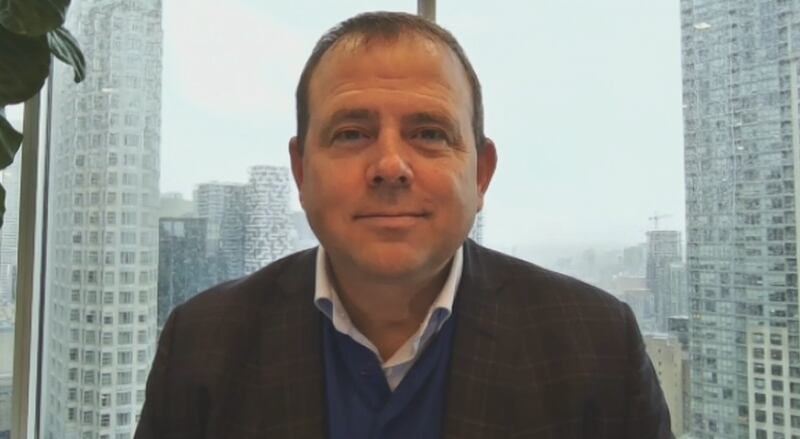
Read the full transcript below:
ROGER: Shares of Primaris REIT are trading lower today despite the company reaffirming its 2025 outlook and posting 2026 guidance that anticipates steady growth. Here to break it down for us is Alex Avery, CEO of Primaris. Alex, thanks very much for joining us.
ALEX: Thanks for having me.
ROGER: What do you think has some investors concerned right now?
ALEX: I don’t think investors are particularly concerned. It would have been surprising if we had surprised people because three weeks ago we announced a large acquisition, and when we did, we actually increased our guidance and gave the beat-and-raise early. That’s something that often happens with Primaris. We have a track record of delivering or exceeding expectations.
ROGER: It’s been a tough year, yet you seem to be doing well. What’s driving that? Where are you finding your successes?
ALEX: We’re finding it across the board. The mall business is one a lot of people were skeptical about — and some still are — but it went through a tough decade. Over the last three or four years, it’s been coming off the bottom with pretty remarkable internal growth. We’ve been delivering average growth of about five per cent in same-property net operating income over the last few years. We’ve also been quite successful on the acquisition front, adding a little over $1.5 billion worth of properties in 2025 so far. The business is doing extraordinarily well.
ROGER: What’s fuelling that resurgence, do you think?
ALEX: I think the rumours of the death of the mall were overstated. You had a very tough 10-year period with Target and Sears closures and the rise of e-commerce, then the pandemic. But once we got through all of that, it became clear that bricks-and-mortar retail is the anchor of a successful retail strategy. People want to shop where and how they choose — sometimes that’s on their phone, sometimes it’s online, and sometimes it’s in person. Retailers understand they need a physical presence.
What we’ve seen is about 700 to 800 basis points of occupancy improvement over the last few years. Sales in our malls are at all-time highs as of September, which is the most recent data we have. Rents are rising, and there’s strong demand for retail space in Canada, in part because there was roughly a 10-year stretch when almost no new retail space was built. The population has grown, retailing has evolved, and there’s now a distinct shortage of space in Canada.
ROGER: It sounds like you’re almost playing catch-up with demand.
ALEX: Exactly. We’ve recently taken back a number of spaces from HBC, and the level of demand has even surprised us.
ROGER: How is it going with those spaces?
ALEX: It’s going very well. This morning, we announced nearly half a million square feet of leasing. We had 10 Bay locations when the retailer went bankrupt in March 2025. We got five of them back in June, which allowed us to start leasing them. So, more than half of that space is already dealt with, and we have several other leases in advanced negotiation. We acquired one more Bay store with the Promenades St-Bruno acquisition earlier this month, and we’ll be getting five more locations back at the end of November. We already have lots of discussions and plans underway for those.
ROGER: Are you seeing more interest from anchor tenants, or are you looking at breaking those spaces into smaller units?
ALEX: It really depends on what’s best for each mall. In some cases, we have large single-tenant retailers eager to take a full-floor or two-floor Bay space. Those tenants often invest their own capital into renovating and upgrading their stores, which is great economics for us as landlords.
In other malls, it can make more sense to carve up the large boxes into smaller commercial retail units — what we call CRUs — since those smaller stores tend to pay higher rent per square foot. It requires more investment from Primaris, but it typically delivers an attractive return.
ROGER: The Bank of Canada’s latest report struck a cautious tone for next year. What’s your outlook for the economy, and do you have any concerns about a slowdown in retail?
ALEX: There’s a common narrative that retail and malls are very sensitive to the economy, and while there’s some truth to that, from a landlord’s perspective the bigger issue is the shortage of space. Retail sales per capita have actually declined in Canada over the past few years, but thanks to population growth, total retail sales have continued to climb.
On a per-square-foot basis, we’ve seen nothing but growth — our sales per square foot are at record highs. Meanwhile, tenant rents as a percentage of sales are well below historical averages, which suggests that even if sales were to flatten, we’d still have plenty of room to raise rents in the coming years.
ROGER: Okay, Alex, thank you very much for joining us.
ALEX: Thanks for having me.
ROGER: Alex Avery is CEO of Primaris REIT.
---
This BNN Bloomberg summary and transcript of the Oct. 30, 2025 interview with Alex Avery are published with the assistance of AI. Original research, interview questions and added context was created by BNN Bloomberg journalists. An editor also reviewed this material before it was published to ensure its accuracy and adherence with BNN Bloomberg editorial policies and standards.

