Pet Valu shares declined after the retailer projected continued weakness in non-essential pet categories like toys and accessories, with slower growth likely to extend into next year.
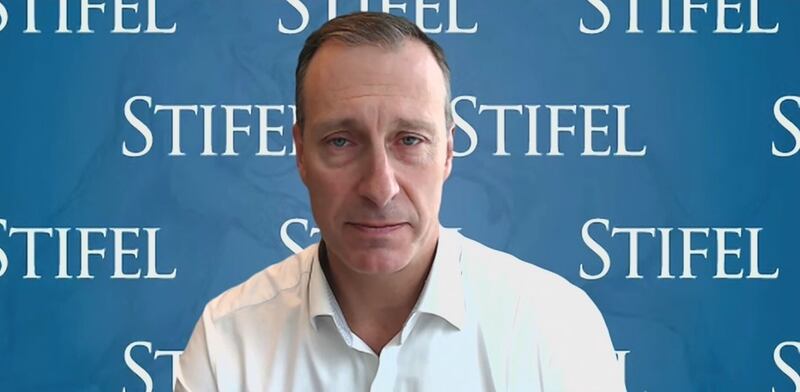
BNN Bloomberg spoke with Martin Landry, managing director of equity research at Stifel, who said Pet Valu remains a strong long-term story, supported by its leading market share and ongoing expansion plans.
Key Takeaways
- Pet Valu expects muted growth in discretionary items such as toys and accessories into early 2026.
- Pet food demand remains stable, providing resilience against consumer caution.
- The company plans to grow its store network by 40 per cent to 1,200 locations.
- Supply chain upgrades should improve free cash flow from 2026 onward.
- Long-term growth is supported by premiumization and humanization trends in pet care.
Read the full transcript below:
ROGER: Shares of Pet Valu are falling sharply this morning. The company’s management is expecting muted growth in discretionary categories such as toys and accessories, which could last into 2026. However, it anticipates demand for food will remain stable. Here to help break it down for us is Martin Landry, managing director, equity research, at Stifel. Martin, thank you very much for joining us.
MARTIN: Thanks for having me.
ROGER: What’s driving this right now when you look at those numbers?
MARTIN: If we look at the shares, investors are a little disappointed this morning with the results and the outlook. The shares are down about 14 per cent as we speak. I think what’s happening is investors expected an acceleration in same-store sales growth into Q3 and Q4 versus what the company achieved in Q2. That will have to wait a little longer. Same-store sales for Q3 were up 2.3 per cent, a little slower than Q2, and the guidance suggests Q4 same-store sales will rise about two per cent again, which is a bit slower than investors expected.
ROGER: And the big drop-off was in toys and accessories. Is that just a bigger picture thing — people watching their money a little more — while food remains essential?
MARTIN: That’s a fair assessment. Overall, the Canadian consumer is under pressure and a little frugal, and that’s reflected in the pet space as well. Consumers are sticking to essentials like food and passing on some of the fun items such as accessories and toys for pets.
ROGER: Has Pet Valu said what it might do to offset that, especially if it’s an extended trend?
MARTIN: Management did say this frugal consumer trend could spill into 2026. They suggested we should temper our expectations early in the year. That said, when you look at the pet category, it’s still a phenomenal industry. Historically, the sector has grown about four to six per cent a year — roughly twice as fast as GDP. It’s a great category to be in, with defensive characteristics that investors like: stable, predictable growth. Right now, it’s not that different from the broader Canadian consumer space, which is under pressure because of frugality, trade tensions and inflation.
ROGER: What are some of the defensive characteristics that make the sector somewhat bulletproof?
MARTIN: There are two key trends. One is premiumization — especially in food. People are feeding their pets healthier ingredients and are willing to pay more for frozen or high-quality food. That trend has played out for years and should continue. The second is humanization. People are treating pets like family, putting coats on them or pushing them in strollers. These trends benefit Pet Valu, which targets higher-end consumers.
ROGER: And Pet Valu is paying attention to those and leading the way?
MARTIN: Yes. Pet Valu is a leader in the space with about an 18 per cent market share in Canada. It has roughly 850 stores and the potential to grow to 1,200 in the years ahead — an increase of about 40 per cent. At a pace of about 40 new stores a year, there’s still eight or nine years of healthy expansion before the network is saturated. It’s a solid growth story and a leader in a sector we like a lot.
ROGER: Does this earnings report impact that at all, or are those plans still full steam ahead?
MARTIN: I think everyone is resetting their growth expectations a bit today, given we could be in a period of slower near-term growth than expected. Investors had expected Pet Valu to grow earnings at a low double-digit pace. The company’s growth model is typically based on store count rising two to four per cent and same-store sales increasing four to five per cent, which drives top-line growth in the high single digits. With some margin expansion and buybacks, that leads to low double-digit earnings growth. That might take a bit longer to achieve now, with near-term growth likely in the single digits.
ROGER: And your overall outlook?
MARTIN: We’re bullish on the name. It’s a high-quality small-cap stock that investors should consider adding to their positions during this period of weakness.
ROGER: Martin, thank you very much for joining us today. We appreciate it.
MARTIN: My pleasure.
ROGER: Martin Landry, managing director, equity research, at Stifel.
---
This BNN Bloomberg summary and transcript of the Nov. 4, 2025 interview with Martin Landry are published with the assistance of AI. Original research, interview questions and added context was created by BNN Bloomberg journalists. An editor also reviewed this material before it was published to ensure its accuracy and adherence with BNN Bloomberg editorial policies and standards.

