Lightspeed Commerce posted stronger-than-expected second-quarter results as demand from retail and hospitality customers lifted revenue by 15 per cent to $319 million. The company’s net loss widened to US$32.7 million as it continued to invest in growth across its core markets.
BNN Bloomberg spoke with Dax Dasilva, CEO and founder of Lightspeed Commerce, about the company’s earnings, its expansion strategy in North America and Europe, and how AI-driven insights and digital payments are shaping future growth.
Key Takeaways
- Lightspeed’s fiscal second-quarter revenue rose 15 per cent to $319 million, above its guidance range.
- The company’s net loss widened to $32.7 million, or 24 cents a share, as it expanded operations.
- Transaction-based revenue climbed 17 per cent, while subscription revenue rose nine per cent.
- Retail strength in North America and hospitality in Europe continued to drive growth, with gross transaction volume up seven per cent to $25.3 billion.
- Lightspeed expects third-quarter revenue between $309 million and $312 million, with adjusted EBITDA forecast at $18 million to $20 million.
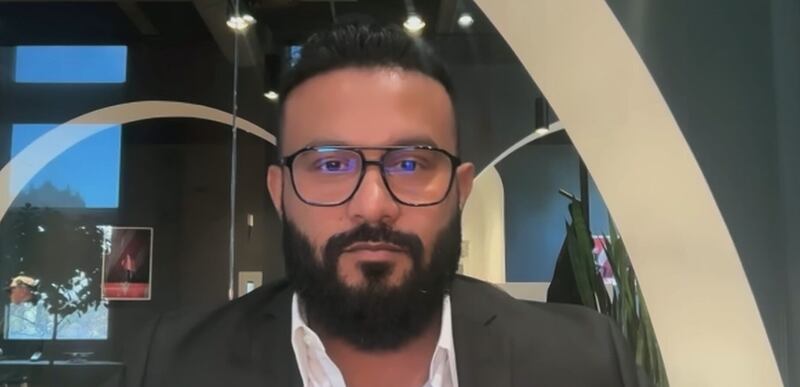
Read the full transcript below:
ANDREW: Montreal-based Lightspeed, which sells systems and software to help companies manage payments and inventory, has just reported its earnings. We’re joined by Dax Dasilva, CEO and founder. Dax, great to see you. Thanks very much. Just remind us, what is Lightspeed’s core business these days? Is it still brick-and-mortar stores?
DAX: Thanks for having me. Our core customers are retailers and restaurateurs — retailers in North America and restaurateurs in Europe. Those are our two growth markets. We operate globally, but those are the regions where we’re investing most of our growth dollars. We serve the upper end of the market — the more complex, inventory-centric verticals in retail, and in Europe, full-service restaurants or those integrated with resorts and golf clubs.
ANDREW: That’s interesting. So how do you get involved in inventory and sales data? Do you help companies manage that and refresh inventory, for example?
DAX: Yes, we’re a full point-of-sale system. We manage inventory on the back end and help with payments on the front end. Whether in-store or online, we handle transactions, e-commerce, and sales across multiple stores and channels.
ANDREW: You’re increasing your revenue growth forecast for 2026 to at least 12 per cent. Where are you seeing the most growth?
DAX: We refocused after our capital markets day in March and chose two growth engines: North American retail and European hospitality. That’s where we have a strong competitive moat, and we’re doubling down there. This quarter, another 2,000 customers joined the Lightspeed platform. We’re expanding our sales teams in key European cities like Germany, France, the U.K. and Benelux. In retail, we’re seeing strength in inventory-heavy verticals such as multi-brand apparel, sports and outdoor categories like cycling and golf.
ANDREW: You mentioned golf — that’s an interesting one. It’s both retail and hospitality, with pro shops and restaurants.
DAX: Exactly. Golf facilities use all parts of the Lightspeed platform, including payments. We also partner with financial services providers and lend directly to businesses through our Lightspeed Capital program, offering merchant cash advances.
ANDREW: Your stock is down about 25 per cent this year. Why have investors been relatively cool lately?
DAX: We’re in a transformation, but we’ve shown accelerating growth metrics in both the first and second quarters. Our growth engines are performing well, and we’ve delivered six consecutive quarters of beating and raising EBITDA guidance. We’re focused on growing both revenue and profitability while capturing more locations in retail and hospitality.
ANDREW: Any retail business has to deal with staff fraud. Is security part of your offering?
DAX: Yes, our platform provides full back-end reconciliation and inventory tracking to prevent shrinkage and fraud. It’s an end-to-end system — the central nervous system of these businesses. It helps them expand digitally, start online sales or loyalty programs, and protect their revenue.
ANDREW: You mentioned Lightspeed Capital, which provides cash advances for customers. TD says that unit grew 32 per cent year over year.
DAX: It’s an exciting part of our financial services offering. Our typical customers are established retailers and restaurateurs processing $500,000 or more in annual gross transaction volume. They may want to expand or restock best-selling items identified by our AI analytics. Our system integrates this insight with financing — recommending inventory, providing the capital to buy it and managing its sale across all channels.
ANDREW: More stores around Toronto now say they don’t take cash. I guess that shift helps your business.
DAX: Definitely. Nearly $100 billion in transaction volume flows through our platform, and a large share is credit card payments. Even in historically cash-based markets like Germany, card use is rising, especially among Gen Z, who prefer paying with phones via Apple Pay or Google Pay.
ANDREW: I sometimes think going cash-only might help me spend less — but I’m old school. Dax, thank you very much.
DAX: Thank you.
ANDREW: Dax Dasilva, CEO and founder of Lightspeed Commerce.
---
This BNN Bloomberg summary and transcript of the Nov. 6, 2025 interview with Dax Dasilva are published with the assistance of AI. Original research, interview questions and added context was created by BNN Bloomberg journalists. An editor also reviewed this material before it was published to ensure its accuracy and adherence with BNN Bloomberg editorial policies and standards.

