Moderna’s latest quarterly results show that cost discipline is helping the biotech firm stabilize earnings as demand for its COVID-19 vaccine continues to decline. The company’s focus on expense reduction and pipeline expansion supported a stronger-than-expected third quarter.
BNN Bloomberg spoke with Geoff Meacham, managing director of biotech and pharma equity research at Citi, about Moderna’s cost strategy, its first made-in-Canada vaccine doses from its Laval facility, and the outlook for new mRNA therapies targeting cancer and rare diseases.
Key Takeaways
- Moderna’s third-quarter earnings exceeded forecasts as cost-cutting offset lower COVID vaccine demand.
- The company’s first made-in-Canada COVID vaccine doses were produced at its new facility in Laval, Quebec.
- Moderna is developing an mRNA-based cancer treatment with partner Merck, showing early success in melanoma trials.
- The company is testing a combined COVID-flu vaccine that could offer steady annual revenue potential.
- Analysts view Moderna’s shift toward oncology and rare diseases as key to its long-term growth, Meacham said.
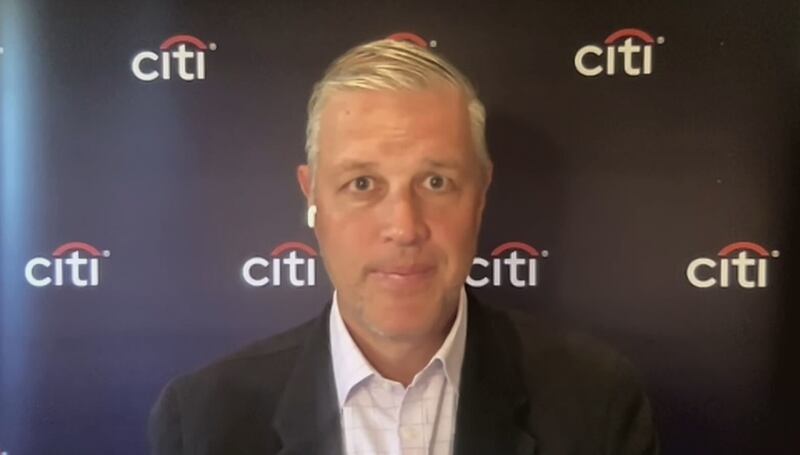
Read the full transcript below:
ANDREW: U.S. pharmaceutical company Moderna has seen its stock drop about 50 per cent in the past year. Shares are up slightly today as the company discusses cost-cutting. Our guest has a neutral rating on the shares. We’re joined by Geoff Meacham, managing director of biotech and pharma equity research at Citi. Geoff, thanks very much for joining us.
GEOFF: Thanks, Andrew, for having me.
ANDREW: Moderna, of course, is famous for its COVID vaccine. Is that still a huge part of its business?
GEOFF: It is, though the narrative has shifted. First, it’s focused on cost-cutting — how much money the company can pull out of operations while still maintaining its goal of breaking even by 2028. Then it’s moving toward oncology and rare diseases as the next drivers of the mRNA platform.
ANDREW: You have a hold rating on the stock. You’ve said the company’s cancer research could take some time to bear fruit.
GEOFF: That’s right. Moderna has an alliance with Merck, which is a huge positive. It has very good data going back a few years on melanoma, but it will take time to expand the number of tumour types the platform can treat. We’re long-term optimistic.
ANDREW: One interesting development is that Moderna’s newest COVID vaccine is being made in Canada. Can you give us some background on that?
GEOFF: As the company went through the COVID process, it managed to improve efficiency and operations. That move was part of a broader effort to identify regions offering the best cost savings or return on investment. I wouldn’t read too much into it from a tariff perspective.
ANDREW: One factor that’s hurt COVID vaccine sales is uncertainty over U.S. government policy.
GEOFF: That’s right. Coming out of COVID, there’s less interest in top-down mandates from the government. What’s interesting is Moderna is now combining COVID and flu vaccines, which could gain traction in the next few years. Having another asset with a seasonal component could stabilize revenue.
ANDREW: Broadly speaking, how does Moderna compare with companies like Pfizer or Merck?
GEOFF: Coming out of COVID, the platform was hugely productive. Alongside Pfizer-BioNTech, Moderna delivered massive numbers of vaccine doses. The challenge now is the encore. One of its peers, BioNTech, has moved into oncology in a major way and has achieved a higher valuation. Moderna is still in that transition phase toward oncology and rare diseases, which should be positive long term.
ANDREW: The world has been trying to defeat cancer for more than a century. Given cancer’s complexity, is the oncology market particularly difficult to enter?
GEOFF: It’s not difficult to enter, but the competition is strong. Immunotherapies reprogram the immune system to recognize tumours, including immune-oncology drugs from Merck and Bristol Myers. Moderna’s mRNA platform could add to that mix. There are many other innovations in oncology, such as antibody-drug conjugates and cellular therapies. It’s a crowded but promising market. I’d say Moderna’s platform, when added to PD-1 drugs like Merck’s Keytruda, is not quite synergistic but definitely additive.
ANDREW: Thanks very much for joining us, Geoff.
GEOFF: Thank you.
ANDREW: Geoff Meacham, managing director of biotech and pharma equity research at Citi.
---
This BNN Bloomberg summary and transcript of the Nov. 6, 2025 interview with Geoff Meacham are published with the assistance of AI. Original research, interview questions and added context was created by BNN Bloomberg journalists. An editor also reviewed this material before it was published to ensure its accuracy and adherence with BNN Bloomberg editorial policies and standards.

