RioCan delivered another solid quarter as necessity-based retail and strong leasing activity boosted operational performance. The real estate trust continued to see rising rents and high occupancy, reflecting consistent demand across Canada’s largest urban markets.
BNN Bloomberg spoke with Jonathan Gitlin, CEO of RioCan, who said the trust’s focus on essential retail tenants and disciplined capital recycling is fuelling steady growth. He noted that limited supply and demographic strength in key cities continue to support rent gains and long-term resilience.
Key Takeaways
- RioCan’s Q3 momentum was driven by necessity-based retail demand and strong leasing performance.
- Committed occupancy climbed to 97.8 per cent, with retail occupancy at 98.4 per cent nationwide.
- New lease spreads reached 44.1 per cent, while blended spreads rose 20.8 per cent year over year.
- Same-property NOI increased 4.6 per cent, supported by consistent demand in major Canadian cities.
- The trust advanced $500 million in capital recycling toward its 2025–26 target, boosting financial flexibility.
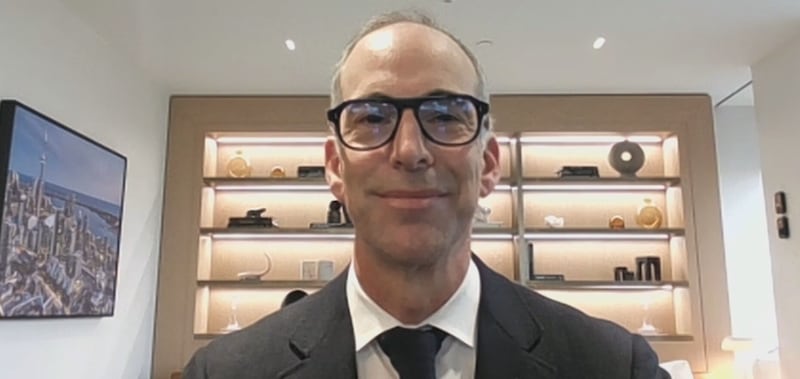
Read the full transcript below:
ROGER: Jonathan, thank you very much for joining us.
JONATHAN: Thanks so much for having me, Roger.
ROGER: It’s been, I think, an interesting year so far for REITs. Can we say that? What drove your success for this quarter?
JONATHAN: The strength of our success this quarter is really behind — it’s all supported by a strong retail environment. There’s a lot of great retailers in this country, and they’ve all got one thing in common — they’re looking to expand, and there’s a very limited supply of good, open-air, necessity-based shopping centres available for them. And when you have that constraint and a lot of demand, you have very good operational results, and that’s what we’re seeing now.
ROGER: And are you seeing it across the country? Are there hot spots?
JONATHAN: It’s pretty consistent. I mean, we’re located in the major markets within Canada, so 94 per cent of RioCan’s revenue is coming out of Toronto, Ottawa, Vancouver, Montreal and Calgary. So I might have repeated those, but within those sectors we’ve got a really good demographic profile, and tenants really want to be where there’s a lot of people around, and so we’re seeing consistent demand across our portfolio for our space.
ROGER: And what’s driving that? We’ve had concerns about the economy, concerns about retail — what’s driving that right now, do you think?
JONATHAN: Well, it’s a great question, Roger, but I think it goes back to the types of products that our tenants offer to the Canadian consumer. And yeah, the consumer is definitely struggling at this point, but you have to remember that RioCan’s focus is providing space to really necessity-based retailers that are going to be relevant in any economic backdrop. And that’s exactly what we’re seeing right now. You’ve got grocery stores and pharmacies and liquor stores — you know, these real necessity-based uses that are still relating to all Canadians. And Canadians need them for their everyday needs, so they end up being vibrant and vital in this type of economy, and I think that’s going to really subsist if we look forward.
ROGER: And you’re also — it looks like you’re seeing the rents increase. So your new leasing spreads 44.1 per cent, your blended leasing spread 20.8.
JONATHAN: That’s right, Roger. We’re seeing significant and fairly consistent growth in our rents quarter over quarter. And I think, again, that’s a byproduct of the fact that we offer exceptional demographics and strong markets, and there’s limited space of that type. And so the tenants in Canada, which are really in expansion mode — particularly the necessity-based tenants I spoke about before — they really don’t want to leave that space. And so in this type of condition, we are able to logically drive rents and keep them at a similar pace to the sales that are being conducted out of these stores, which are very vibrant, especially for those necessity-based retailers.
ROGER: And could this drive new construction, new buildings?
JONATHAN: So we think it will. I mean, but let me break that down. We think that the type of construction you’re going to see is on existing retail properties, and we’re very much involved in that type of growth — where we’re building out strips and pads and components that add to existing shopping centres. I don’t think you’re going to see a tremendous amount of new greenfield retail being built, and that’s simply because there’s not a lot of land that has a demographic profile such as RioCan has that’s available right now for this type of development. When you see land that’s available in a very dense neighbourhood, it’s typically going to be utilized for something a little bit more intense — something like an apartment building. And so the barriers to entry to build new retail are very high. There might be the odd new retail centre built, and hopefully RioCan will be part of that, and the numbers are starting to make sense for that given that rents are high, but it’s not going to be something that’s going to dramatically change the supply environment.
ROGER: And let’s talk a little bit about your capital recycling strategy. Where are you going with that?
JONATHAN: So RioCan has a number of different levers to put money to work. We’ve got $1.3 to $1.4 billion of capital that’s coming back to RioCan as a result of selling off some of our assets. We participated in the condo cycle, and we’re getting a lot of repatriated capital back from that, as well as we’re selling some very highly valued residential assets. And so with that money, with those proceeds, we’ve got a number of different levers. I’ve already spoken about one of the prominent ones, which is building new retail on our sites, which for us creates a significant amount of value. We get a good return on that investment, but we also create a higher value for that existing asset. You bring in newer, better tenants, and that creates a higher value. It also creates cross-shopping and just a better destination ultimately for our consumers. So that’s certainly a really good way to allocate capital. The other is — and it’s something we’ve participated in — but it’s buying back our shares. Right now, our units are trading well below what we feel our net asset value is, and that net asset value is continuously validated by the private market and transactions that are taking place on it. So to buy back our shares at that significant discount is definitely a good use of capital. And then one of the other pillars is, of course, paying down debt, which we’ve continued to do, and you see a much improved balance sheet, which just gives us flexibility going forward. So those are a few examples, Roger. There are many others, but those are the ones I’ll focus on.
ROGER: And with the buyback with shares, where is that going to go? Where are you looking there with that?
JONATHAN: Well, it really depends on what the other competing uses of capital turn out to be. So if we can get a much better result or a much more accretive result from buying back shares relative to, let’s say, building new elements to our shopping centres or paying down debt or acquiring assets, then we will continue to buy back those shares. But I can’t give you specific guidance on exactly how many shares we’re looking to buy back — it really is dependent on what our other capital allocation opportunities are at the time. We weigh everything off against each other.
ROGER: Okay, Jonathan, thank you very much for joining us today.
JONATHAN: Thanks so much, Roger. Nice to be here.
ROGER: Jonathan Gitlin is CEO of RioCan.
---
This BNN Bloomberg summary and transcript of the Nov. 7, 2025 interview with Johnathan Gitlin are published with the assistance of AI. Original research, interview questions and added context was created by BNN Bloomberg journalists. An editor also reviewed this material before it was published to ensure its accuracy and adherence with BNN Bloomberg editorial policies and standards.

