MEG Energy released its delayed third-quarter earnings after shareholders approved an $8.6-billion takeover by Cenovus Energy, ending a five-month bidding war that reshaped the Canadian oil patch. The merger will make Cenovus the country’s second-largest oil and gas producer, behind Canadian Natural Resources.
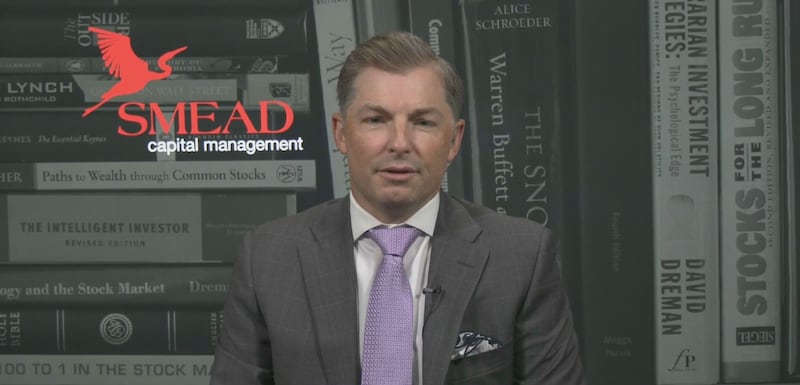
BNN Bloomberg spoke with Cole Smead, CEO of Smead Capital Management, about the valuation benchmarks emerging from the MEG deal and what growing consolidation could mean for smaller producers in heavy oil and Clearwater regions.
Key Takeaways
- MEG Energy’s $8.6-billion takeover by Cenovus makes the buyer Canada’s second-largest oil and gas producer, surpassing Suncor.
- MEG’s third-quarter revenue fell to $1.18 billion, with production at a record 108,000 barrels per day.
- The transaction valued MEG at about $70,000 per flowing barrel, setting a new benchmark for heavy oil assets.
- Investors expect further consolidation, particularly in Clearwater and among smaller heavy oil players like Baytex.
- Analysts say cost-cutting and reduced general administration expenses will drive shareholder returns as mergers accelerate.
Read the full transcript below:
ANDREW: MEG Energy released its third-quarter earnings last night, but it was fairly irrelevant in the sense that shareholders have already approved that takeover by Cenovus, after a five-month saga. It took a while for Cenovus to get enough support for the deal. This now makes Cenovus the second-biggest oil and gas producer in Canada. Let’s get more from Cole Smead, CEO of Smead Capital. Cole, thanks very much for joining us. So Cenovus now surpasses Suncor in terms of production volume?
COLE: Yeah, and there are some other metrics we should really take note of as investors. One would be, if you look at the per flowing barrel that’s been paid, it’s about $70,000 Canadian, or about $50,000 U.S. per flowing barrel for MEG. You should kind of benchmark that number as we move forward to look at other transactions.
Another thing, Andy, would be about five to six per cent of MEG’s revenues — or MEG’s current market cap — is what’s been targeted as synergies in this deal. I think that’s another interesting metric. I was visiting with another oil company last night that had done a deal in the last few years here in the U.S., and I asked them, what did you save of your target’s G&A? They said they took the G&A to zero in the target, and that’s what’s commonly going on in these oil and gas businesses.
So I point those out because those are things we should really watch going forward. I think the other thing is, we’re always learning something as investors. What really shocked us and our investors through this process was when Mark Carney was interviewed the other day at the Canadian Club. He was asked why foreign investors should be interested in Canadian markets, and he said “the rule of law.”
What I find interesting in the MEG saga, now that it’s ended, is that we learned the rules weren’t really rules — they were merely guidelines. I say that because, like the plan of arrangement, the two-thirds vote, we found out it can be lowered by 9.9 per cent under Canadian law. Then, transactions among minority investors can be treated differently under Canadian law. So I think those laws were taught to be guidelines, not actual rules, and investors will pay attention to that going forward in future transactions.
ANDREW: We can’t get into all of it, Cole, and of course we don’t have Cenovus’s side here, but I think you said MEG shareholders had to reach two-thirds approval. But then Cenovus pushed through a big purchase of Cenovus shares — Strathcona?
COLE: Correct, which means even though the law doesn’t say that’s allowable or not, we just learned it is allowable. That’s going to pass and go through. So that’s something investors should pay attention to going forward in these transactions. It’s not a two-thirds number needed anymore.
The second part is, obviously, Strathcona, as a minority, did a signed transaction with who was the acquirer of MEG. We’re also watching different interests among minorities. Investors should pay attention to that because it points to what’s going on with the board of the target — because that’s where that was allowable.
ANDREW: That’s interesting — whether they broke new ground or not, it illustrates a loose interpretation of that two-thirds rule. Correct?
COLE: Yeah, correct.
ANDREW: What about Adam Water of Strathcona? He, in the end, dropped his opposition.
COLE: He did, but I think he made out like a bandit in many respects. The Saskatchewan asset looks like a steal. As you can see, Strathcona hit a new all-time high in the stock yesterday. It’s not surprising — they’re about to do their special dividend.
The other thing we’re watching is talk of Baytex selling its U.S. assets. We don’t own Baytex, but I’ll note that if you look at what’s left in the remaining company, you effectively have a heavy oil business and a Clearwater business — the kind of assets that others in the Clearwater or heavy oil space would be interested in. I think we’re going to see more deals, and they’re going to pick up.
But again, I’d go back to that idea of G&A. If other oil and gas businesses can tell us they take the G&A of targets down to zero, what does that mean for less-scaled operators than MEG? In MEG’s case, they produced 108,000 barrels — that’s a big number to take off the board. To your point, everything smaller than that won’t have five to six per cent of market cap and EBITDA savings; it will be higher as a percentage.
So, do all these assets need all these boards and executives? The answer is no. In Canada, there are only two railway companies. As every other railway went away, you got scale. General administration became your scale advantage in the long run — and fewer boards and executives became the win for shareholders.
ANDREW: I guess there are going to be job cuts in these takeovers. Will they be a political headwind?
COLE: It won’t be people in the field, because these are asset businesses. The people who are great at running assets in the field — they’re the all-stars of this industry. What you’re really talking about, Andrew, is a bunch of white-collar people who are intelligent enough to find a new job, and we shouldn’t cry about them too much. People sitting in corporate offices are expendable. The people in the field who work these real, blue-collar jobs — they’re the rock stars of the industry.
ANDREW: They’re the ones out there in minus-30-degree weather, in the mud. Let’s put up a five-year chart for Baytex. They bought those Permian assets years ago, but I don’t know if the market ever warmed up to that deal. Now they’re talking about selling them off. Is Baytex a decent buy right now?
COLE: I think the real question comes down to what their U.S. assets end up being worth, because those are Eagle Ford assets. If a $3-billion number is accurate, you’re going to see interest in the remaining assets. For example, Tamarack Valley — which we own — might be interested in their Clearwater assets, as there’s some overlap. I wouldn’t be surprised if Strathcona were interested in their heavy oil assets.
I think we’re going to continue to see deals pick up. There’s definite buying interest south of the border — transactions are happening regularly in the U.S. I think that trend will continue in Canada, where companies need more scale. They have to be more shareholder-friendly, and the way to do that is through higher returns from lower costs. That’s where general administration efficiencies come in.
ANDREW: Maybe we could put up a five-year chart for XEG. I use it as a proxy for Canadian oil and gas stocks — I know it’s dominated by the oilsands names. But given the weak oil price, it’s interesting how well that’s done.
COLE: Yeah, it is. I think oil stocks have traded more on economic fears than on fundamentals. You look back at April — people were scared about tariffs and the economy. We’re not far off the same oil price as in the spring, yet the stocks are much higher.
The valuations of these stocks are climbing because investors recognize that their value has less to do with the current economic environment and more with the scarcity of future supply. OPEC+ has just over a million barrels of excess capacity it can bring back to market — that’s less than one year of future demand.
So where will the marginal barrel come from? It doesn’t look like the Permian will deliver as it has in the past. Canada can continue to produce more, but it’s unlikely we’ll grow 10 million barrels a day over the next decade. Four or five million is more realistic, and unless prices rise, it’ll be tough to see 10 million over the next 10 years.
ANDREW: Cole, always great hearing from you. You always bring us a fresh angle on the oil industry. Really appreciate it. Cole Smead, CEO of Smead Capital.
---
This BNN Bloomberg summary and transcript of the Nov. 11, 2025 interview with Cole Smead are published with the assistance of AI. Original research, interview questions and added context was created by BNN Bloomberg journalists. An editor also reviewed this material before it was published to ensure its accuracy and adherence with BNN Bloomberg editorial policies and standards.

