Deere shares slipped after the equipment maker posted a fourth-quarter earnings beat but warned that persistent margin pressures and a sluggish large-agriculture segment will continue into next year. The company is projecting 2026 as the bottom of the large ag cycle while leaning on expected growth in small agriculture, turf and forestry.
BNN Bloomberg spoke with Stephen Volkmann, equities analyst at Jefferies, about the implications of Deere’s initial 2026 guidance, the impact of tariffs and elevated production costs, and how improving crop prices and biofuels demand could influence a recovery across the agriculture sector.
Key Takeaways
- Deere posted a fourth-quarter EPS beat, but operating margins were weaker due to higher production costs and an expected US$1.2-billion tariff headwind in 2026.
- Initial 2026 guidance calls for net income well below consensus as the large ag downturn extends longer than previously expected.
- The company forecasts growth in small agriculture, turf and construction equipment even as production and precision ag continues to contract.
- Improving biofuels demand and China’s recent resumption of U.S. soybean purchases could help stabilize crop markets and support future equipment demand.
- Deere’s outlook depends on how quickly large ag volumes bottom and whether pricing, supply-chain adjustments and productivity gains can offset tariff pressures.
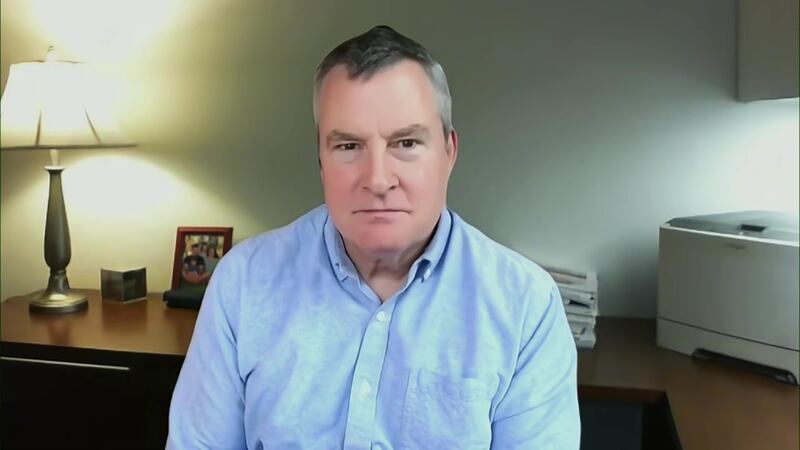
Read the full transcript below:
ROGER: Well, shares of Deere and Company are down this morning despite a beat in profit and revenue, as its 2026 net income forecast misses estimates. You can see it’s off by more than 5 per cent right now. Its CEO is predicting 2026 will be the bottom of the large agricultural cycle. Here to talk more about that is Stephen Volkmann, equities analyst at Jefferies. Stephen, thank you very much for joining us.
STEPHEN: Great. Glad to be here.
ROGER: Before we talk about 2026, let’s look back at the numbers you saw for this earnings report. What did you think about them? Was there some things to like, or was it worrisome?
STEPHEN: Yeah. I mean, it was fairly weak, to be honest. This is one of those situations where the operating numbers were probably a bit of a disappointment, but they made it up with below-the-line items, which the market doesn’t love. So I think that’s part of what we’re seeing today in terms of the stock reaction. You know, they’re sort of mired in a deep downturn in the agricultural markets that doesn’t seem to be letting up. It’s actually getting pushed into 2026 now. And that’s really the full story here. And then I guess I would layer on a little bit of tariff pain as well. They’re absorbing a fair amount of cost on that front.
ROGER: Okay, let’s talk about their 2026 forecast. Four billion reported. The estimates were 5.31. That’s a pretty big difference between the two.
STEPHEN: Yeah, absolutely. I mean, I think there was some cautious optimism that maybe 2025 was the trough of the cycle. And I think you put it right, it’s now sort of being pushed off into 2026. And so, you know, that’s mostly in the large agricultural end market. They actually have a little bit of growth forecasted for construction equipment and for small agriculture. So it’s the large ag that continues to be in that bottoming process, I guess.
ROGER: And the CEO has said that he thinks 2026 will be the bottom. Does he have reason for optimism, if you want to call it that? What is dragging them down?
STEPHEN: Yeah, right. I mean, to be fair, I guess they also thought 2025 was going to be a bottom, and that turned out to get pushed out. It’s hard to forecast that, so I’m not trying to throw shade on them there. But, you know, we’re two years into a downturn. That’s about how long peak to trough tends to last historically. So we have that on our side. You’ve probably seen that crop prices, especially soy, have rallied a little bit with some cautious optimism around a settlement with China. So that would be good news if it happened. And the company did stress on the conference call something we talk about quite a bit, which is that biofuels usage continues to improve, and that helps on the demand side for corn and soy. And so, you know, hopefully that helps to normalize those markets as well. So I think there’s reason to be cautiously optimistic. But, you know, these things sort of have to come through.
ROGER: And that big dispute with China — will we see any lag with that if it’s settled, if it does end up being settled fairly quickly?
STEPHEN: Not necessarily. Actually, China has already bought some U.S. soy, and they didn’t do any of that until just a few weeks ago. So, you know, that’s a big change. And so I think if they do have a reasonably quick settlement there, we could see trade resume fairly quickly.
ROGER: And with the tariffs, what kind of an impact are they having? You mentioned it off the top there.
STEPHEN: Yeah. I mean, in their guidance, they have about $1.2 billion of headwinds in 2026 from tariffs. It’s not clear what they’re doing in terms of timing relative to offsetting that. You know, I think it’s probably a bit of an all-of-the-above approach. I think they’re probably working on getting the supply chain kind of rejiggered for best cost. I think they’re probably doing some productivity. They’re doing a little bit of pricing as well. They expect pricing to be up modestly in both construction and in agriculture. And so, you know, I think as we go through 2026 you’ll see that improving, but it’s certainly a headwind for the full year.
ROGER: And are other companies seeing those similar headwinds? I’m just looking at their trailing Caterpillar. What’s Caterpillar doing different?
STEPHEN: Yeah, nothing really, to be honest. I mean, Cat is also seeing some of this headwind from tariffs. They’ve given some numbers around that. I think it’s upwards of $3 a share baked into the forecast. So, you know, I think this will be a process. I think these companies are wary of pushing through too much price too quickly because the rules are still changing, quite frankly. And you don’t want to kind of overdo it if you don’t have to. And so I think this will be a sort of slow approach. Ultimately, I think they’ll recapture it, but whether that happens in 2026 or perhaps 2027, I guess, is still to be seen.
ROGER: And are there opportunities to be had? Do you see any for them?
STEPHEN: Well, yeah. I mean, I do think the opportunity is if we’re bumping along at the bottom of an ag cycle. You know, we don’t know exactly what will drive the upside, but it could be something as simple as perhaps the Brazilian crops are below expectations. We have a little bit less supply. That would help crop prices in the U.S., for example, and probably start the upcycle. As I mentioned earlier, biofuels blending could be up fairly dramatically in 2026. We have seen California, for example, go from a 10 to 15 per cent blend of ethanol. That would be a nice tailwind if it happened across the country. And also, of course, biodiesel is made from soy, and so increases in blending there could also really help on the demand side. So, you know, it does feel like we’re bumping along a bottom. The valuations kind of reflect that, but we just don’t have a lot of confidence in when and how this goes back up again yet.
ROGER: Okay, Stephen, thanks for joining us.
STEPHEN: Great. Happy to be here. Cheers.
ROGER: Stephen Volkmann is equities analyst at Jefferies.
---
This BNN Bloomberg summary and transcript of the Nov. 26, 2025 interview with Stephen Volkmann are published with the assistance of AI. Original research, interview questions and added context was created by BNN Bloomberg journalists. An editor also reviewed this material before it was published to ensure its accuracy and adherence with BNN Bloomberg editorial policies and standards.

