Aris Mining has emerged as one of the TSX’s strongest performers of the year, with shares up more than 260 per cent as investors look to companies positioned to benefit from high gold prices and new production growth.
BNN Bloomberg spoke with Neil Woodyer, CEO of Aris Mining, about what is driving the stock’s surge, the impact of record gold prices and how upcoming expansions and project approvals may shape the company’s long-term outlook.
Key Takeaways
- Aris Mining has become one of the TSX’s top gainers this year, with the stock rising more than 260 per cent amid strong demand for gold-focused equities.
- High gold prices continue to support the sector, boosting companies positioned for near-term increases in production.
- Expansions at the Segovia and Marmato mines are expected to lift output toward 500,000 ounces a year, with additional projects offering a path to 1 million ounces.
- The company recently secured full ownership of the Soto Norte project, reshaping its development plan to reduce risk and strengthen community support.
- A settlement with the Colombian government ended a years-long arbitration process, improving regulatory certainty and easing security and formalization challenges.
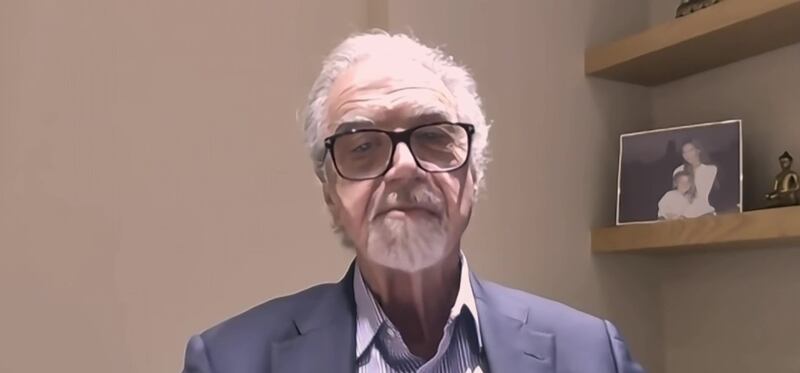
Read the full transcript below:
ANDREW: We’re going to be taking a look at some of the top gainers on the TSX this year over the next few weeks. Aris Mining is well up, with the shares soaring more than 260 per cent since the start of the year, and the one-year return — the 12-month return — is also a three-bagger for investors. We’re joined by Neil Woodyer, CEO of Aris Mining. Neil, thanks for joining us.
NEIL: Thank you for inviting me.
ANDREW: Just remind us about Aris Mining. You have two mines in Colombia. You produced more than 200,000 ounces of gold there last year, and your target is to get to half a million ounces. Tell us how long that will take.
NEIL: Okay, we started four years ago. We’ve acquired two mines, and we’re now, this year, producing about 250,000 ounces. We’re expanding both mines. We’ve expanded our Segovia mine, which produces 200,000 — the production facility — and over the next year, we’ll ramp it up to 300,000. We’re also expanding our Marmato mine by building an industrial mine below the small mine that we have, and that will take us to just over 200,000. We expect to have the first gold pour towards the end of next year. So in total, over the near-term, we will be at 500,000 ounces. And we have two additional projects, one in Guyana and one in Colombia, which, if we were able to put into production over the next few years, gives us a very clear road to a million ounces from our own resources.
ANDREW: How long — how many years — could that take to get to a million ounces a year?
NEIL: Roughly, I think by the time we have Soto Norte permitted — two and a half years, two and a half years to build — five years, order of magnitude.
ANDREW: Now, you got into a tangle with Colombia. You took a dispute to arbitration that’s now settled. What was that all about?
NEIL: Well, it was started by predecessors who were complaining to the government that they weren’t helping them get access to part of their tenement above the current mine at Marmato — the upper mine — and also that they weren’t getting the security they should get from the government at Segovia. So they sued the government in 2018 for US$350 million. After we took over Gran Colombia a couple of years ago, I came to the view that it’s probably not best to be suing your host government, and even if you won, you probably wouldn’t get US$350 million from the government — probably a lot of negative press. So the best thing for us to do was to negotiate and find a compromise where we could work with the government. So over the last two years, we’ve done that. We now have an agreement with the Ministry of Mines, or the regulatory authority, to help us formalize the area above our present mine and take production into our mine. In addition to that, we have arrangements with the army and the navy to improve the security around Segovia. So we achieved what we wanted to achieve without any cash transferring. And also, we obtained very, very much goodwill from the government in doing so. This was the first arbitration they’ve successfully gone into, and I think it’s improved our relationship, which will help us in the future.
ANDREW: You mentioned security. What is the challenge there? Is there narcotics-related activity in the area, for example?
NEIL: It’s a relatively benign area. There is some illegal mining on our site and our areas, so we have to clean that up. The really bad guys are far away from us, so that’s not too bad. So it is really just improving the day-to-day security, because with US$4,000 gold, it’s very easy for people to decide to go in and pick some themselves.
ANDREW: That’s interesting. Yeah. I mean, it’s not unknown in Mexico for gold production to be stolen at mines. That’s interesting, yeah.
NEIL: Well, in Colombia, I think one of the interesting things is: this country has huge gold potential. Only 15 per cent of it comes through formalized industrial mines. Eighty-five per cent is small miners. There are 350,000 small miners operating in Colombia. So Colombia is ranked about the world’s 50th producer, but if you included all that, you get to around about number 10. So it is a significant gold producer — it is just very informal, small mines, low-level industrialization, which is our potential.
ANDREW: It’s interesting. I remember reading years ago in Colombia, these informal miners — they’ll detect some rich gold, they’ll just get a backhoe and dig it up.
NEIL: Yeah, some are more sophisticated than that. But the issue is, there’s no clean processing. When they process, two things happen: they’ve got to get rid of the tailings and the damage that they do, and the second thing is, they only get about 45 to 50 per cent recovery, whereas we get 90 to 95 per cent recovery. So if we could work with them, which is what Aris has started to do, it significantly improves the dollars coming out of the gold. So we have more to share with them, and we form these partnerships with them, which have given us tremendous support in the community and really enhanced our licence. And also fall in line with the current political thinking of the government, which is the formalization of miners. And that’s exactly what we’ve been doing, using our processing and working in true partnership with them.
ANDREW: Yeah, I guess — I’m not sure if this happens in Colombia — but the informal miners use terrible things to refine the gold, don’t they? Mercury and arsenic. And it’s a health hazard.
NEIL: It’s not a health hazard — it reduces their lives too. So yes, we’ve cleaned a lot of that up, and that’s why we’re attracted. We can take these illegal miners, who are part of the black economy, to be real businessmen, operating with us, paying their taxes, getting the social services, and being totally legitimate, and not under any pressures from anybody who would like to take advantage of them.
ANDREW: Talk to us about this Soto Norte asset. You just took 100 per cent control of it. What is that? How big could it be?
NEIL: Soto Norte is a huge gold deposit. It was originally built up by Eike Batista. Mubadala went in and lent him US$1.2 billion. They spent a lot of money on it. They subsequently owned it. They had designed an absolutely huge mine which failed to get environmental approval. So a couple of years ago, we persuaded them to sell us 20 per cent and let us manage it. And as a result of that, we were able to determine that the mine they were building was totally inappropriate. The mine they were trying to build was just too large. It had too many risks. It was too strong in front of the environment, too strong in front of the community, and had a lot of community objections. So we’ve reshaped it, re-formatted it. We’re talking about a mine about half the size, much smaller environmental footprint. The tailings facility is about 40 per cent of the original — relocated. They were going to build a seven-and-a-half-kilometre tunnel between two mountains, and the tunnel-boring machine on top of the Andes is kind of risky. So we’ve re-risked it, got a lot of community support because we’ve taken people from the area to our mine at Segovia, where we’re working with the small miners, and said, “We can do this — the same thing.” In fact, we’ve designed the mine, and we intend to build something 120 per cent of the capacity that we need, so we’ll have 20 per cent capacity available for partner small miners that we can create to work with in the community. So, very much a reshaped mine. And as a result of that, we were able to negotiate some time ago that we got up to 50 per cent, and I was able last week to negotiate the additional 49 per cent, which now gives us 100 per cent of the mine.
ANDREW: You’ve been around for a while, haven’t you? Neil, you were founder and CEO of Leagold Mining and Endeavour Mining — Endeavour Mining, huge now in West Africa. After Aris Mining — well, what are your plans? If you sell Aris Mining — I don’t know if you will — but will that be it, or will you get into another gold startup?
NEIL: Well, I must be honest. I’m 82, so this is probably my last go-to. I’m really enjoying it now. I think, when I think back to how we dealt with the two companies we built out — we built Endeavour up over a five- or six-year period, and I think it was about 500,000 ounces when we left — it’s now 1.1 million, so they’ve done a fantastic job. That’s what I’d like to see at Aris. Eighteen months ago — I think with reflection — I put Leagold into Equinox too soon. I should have taken it to the next step. Here, we now have 250,000, expanding, fully financed, to 500,000, and we have very concrete plans from our own assets to take us up to the million. That is where we’re determined to go, and hope we’re allowed to go there as a management team. At that time, it’s probably time for me to walk away and perhaps retire, so I’d like to see it continue on with a change of management style.
ANDREW: Did you say you’re 82, Neil?
NEIL: I am, indeed.
ANDREW: Good man. Thank you very much indeed, Neil. Neil Woodyer, CEO of Aris Mining.
---
This BNN Bloomberg summary and transcript of the Nov. 26, 2025 interview with Neil Woodyer are published with the assistance of AI. Original research, interview questions and added context was created by BNN Bloomberg journalists. An editor also reviewed this material before it was published to ensure its accuracy and adherence with BNN Bloomberg editorial policies and standards.

