U.S. political scrutiny is intensifying around Netflix’s bid for Warner Bros. Discovery as competing offers, hostile manoeuvres and antitrust concerns collide in a rapidly evolving takeover fight. Comments from U.S. President Donald Trump — and pushback from Hollywood and lawmakers — have increased uncertainty around how regulators may view the streaming giant’s ambitions.
BNN Bloomberg spoke with David Dietze, chief investment strategist at Dietze Wealth Management Group, who said bidding dynamics, political pressures and the Ellison family’s role will shape the outcome, while shifting market sentiment is steering investors toward alternatives beyond the megacap tech names.
Key Takeaways
- Antitrust concerns remain a major obstacle for Netflix’s pursuit of Warner Bros. Discovery, with Trump and lawmakers on both sides expressing opposition.
- Paramount’s hostile US$30-per-share offer could rise, as Dietze expects bids may need to reach US$33 to US$35 to win over Warner Bros. shareholders.
- Hollywood resistance reflects fears that handing HBO Max to Netflix would consolidate too much streaming power and reshape content economics.
- Market debates hinge on whether Netflix competes within streaming alone or a broader entertainment universe that includes TikTok, YouTube and social platforms.
- Investor sentiment is rotating away from megacap AI leaders toward health care, financials and other sectors as expectations build for a potential Fed rate cut.
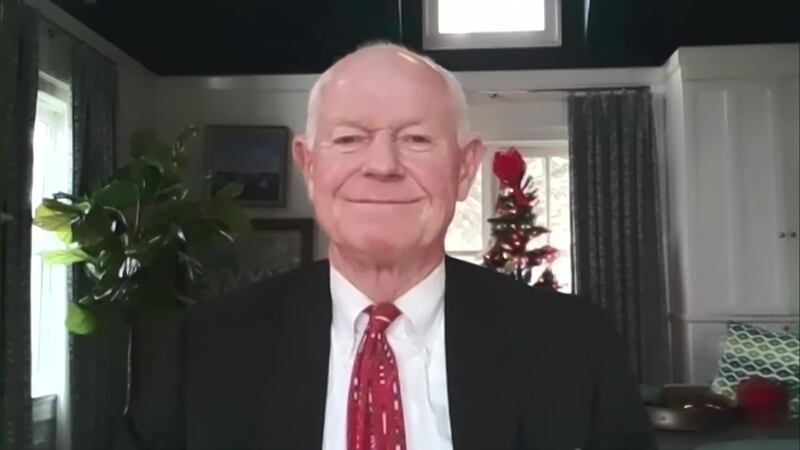
Read the full transcript below:
ANDREW: So Paramount is now going hostile. It wants to buy Warner Brothers for US$30 per share in cash and wants the whole company. Meanwhile, Netflix only wants the Hollywood studios and streaming business, so it’s a three-way fight right now. We’ve got David Dietze joining us, chief investment strategist at Dietze Wealth Management Group. David, what jumps out for you here? Warner Brothers is in play, to put it mildly.
DAVID: What I love about this deal, Andy, is it affects almost all constituencies around the planet. Really, you’ve got the politicians involved, with U.S. President Trump saying he doesn’t like the deal and doesn’t think it’s going to pass antitrust muster. You’ve got Hollywood up in arms — they’re going to lose another key source of their business, with HBO Max going into the hands of an inveterate streamer, Netflix. You’ve got Wall Street licking their chops — how high will the ultimate price be for Warner Brothers? This was a stock that was around US$12 a share as recently as September; now it’s knocking on the door of US$30 a share. That’s a great payday for Warner Brothers investors.
We don’t know how it’s all going to work out. It’s an intersection of law with antitrust. It also is going to involve, in addition to the regulators, the Ellison family. David Ellison’s in charge of Paramount. Their bid has been ignored for US$30 cash. To what extent do the Ellisons dig deep and up their offer to try to make Warner Brothers their own?
ANDREW: And why do they want Warner Brothers so much, David?
DAVID: Well, it makes all the sense in the world. They could add all the streaming business that Warner Brothers has and add it to theirs, giving it tremendous scale. They would have one of the greatest content libraries in their pocket. And they could also take their linear assets, including the CNN newsroom, and combine it with CBS, so it gives them tremendous scale to make a run at being a much more meaningful media player.
ANDREW: And it seems like a given Netflix will have real trouble buying Warner Brothers. My wife has worked in the entertainment business for years, and she was just shaking her head on Friday saying this is impossible. It would give them far too much power.
DAVID: Yeah, I think it’s a toss-up. Netflix thinks they can do it, and they’re willing — and they have said and legally committed — to pay US$5.8 billion to Warner Brothers if the deal doesn’t go through due to regulatory reasons. So they’re putting their money on the line.
I think a key issue is: what’s your marketplace here, Andy? Is it the streaming business, or is it a much larger entertainment business, which would include, for example, YouTube, TikTok, Instagram? You know, it’s going to be great fodder for lawyers. It’s going to take a very long time. It’s going to be interesting to see how it works out.
ANDREW: Yeah, that’s interesting. I think that’s the argument Netflix is making: we’re competing with YouTube, a.k.a. Alphabet, and YouTube is becoming, if not the biggest thing in television, a mighty player.
DAVID: Personally, I don’t really buy that, Andy. I mean, I don’t think families, after dinner, say: what are we going to do — watch a streaming film from Netflix or just turn on TikTok? I do think it’s two separate markets. I’m not seeing too much price erosion in Meta Platforms or Alphabet, the parent of Google and YouTube, so I don’t think their shareholders necessarily see a bulked-up Netflix as that problematic for their businesses.
So I think Netflix saying this is part of the larger business is a bit of a stretch — but anything can happen here.
ANDREW: Yeah, it always does seem odd that YouTube would be called Netflix’s biggest rival, but I guess they have the resources to bring in more custom programming. I think they are making some custom programming now.
DAVID: Yeah, it’s possible, but I don’t see anyone in Hollywood saying, “Well, that’s alright if we lose HBO Max into the hands of Netflix, the inveterate streamer, because we can just go to work for YouTube.” I think it’s a bit of a stretch.
On the other hand, US$5.8 billion — Netflix is putting their money on the line. On the other hand, Warner Brothers said: you have to pay us US$5.8 billion because it’s a big risk and we need meaningful money to take that risk.
What I think is going to be interesting is: does the Ellison family, David Ellison — who really controls Paramount — come in with at least US$33 a share? Maybe US$34 or US$35?
Another interesting aspect is I don’t think David Zaslav, who controls Warner Brothers, wants to sell the company and have CNN go to the Ellisons. There’s a bit of political bad blood there too, which makes the story so interesting.
ANDREW: The fate of CNN — obviously CNN revolutionized TV news decades ago. I suppose to some extent, with so much competition, it’s lost a lot of its relevance.
DAVID: Yeah, absolutely. And of course, you’ve got the Ellison family somewhat aligned with the White House, President Trump and so forth, and you can imagine there’s consternation over whether CNN would ultimately be controlled by people aligned with the president. That’s another theme rippling through here.
And from Netflix’s perspective, you’ve got people on both sides of the aisle railing against this deal. Senator Elizabeth Warren said it was a “horror show” of a merger. And Donald Trump made his feelings quite clear the other night.
Nothing is going to happen quickly. I think the ball is now in the court of Paramount to up their offer. If they get up to US$33, US$34 or US$35, I think Warner Brothers would pay the US$2.8-billion breakup fee they’d owe Netflix — that’s about US$1 a share — and take the higher offer, which, to the extent it’s all cash, could proceed much more quickly with less regulatory scrutiny.
ANDREW: Finally, David, on the broad market: do you think there’s a risk people will start lightening up after a hectic year for AI stocks, some of which are off their highs? Oracle has come down from its peak. Is there a risk people start selling them for the balance of the month?
DAVID: Yeah, I do. And we’ve just heard, for example, Ed Yardeni say that people should no longer overweight the Mag 7. We saw in November a lot of money coming out of those stocks.
Having said that, Andy, we’re just a little bit off an all-time high in the S&P 500. What I like in the bullish case is money is gravitating to other areas of the market. Health-care stocks are one of my favourites. Financials are doing well.
I think the market can still continue to be a great vehicle for long-term investors. The best place may not be the Mag 7, but a lot of other areas look very attractive — particularly as we may get a rate cut later this week and, perhaps later on, a favourable Federal Reserve when leadership changes.
ANDREW: Thank you very much, David. It’s always great talking to you. Thank you. David Dietze, chief investment strategist at Dietze Wealth Management Group.
---
This BNN Bloomberg summary and transcript of the Dec. 8, 2025 interview with David Dietze are published with the assistance of AI. Original research, interview questions and added context was created by BNN Bloomberg journalists. An editor also reviewed this material before it was published to ensure its accuracy and adherence with BNN Bloomberg editorial policies and standards.

