The maker of the Roomba robotic vacuum has filed for bankruptcy protection after years of financial pressure, intensifying competition and a failed takeover attempt. The restructuring is renewing debate about the durability of first-mover advantage in technology and what the company’s struggles signal for investors heading into year-end.
BNN Bloomberg spoke with David Dietze, chief investment strategist at Dietze Wealth Management, about the lessons from iRobot’s collapse, the outlook for a Santa Claus rally, risks around artificial intelligence valuations and whether small-cap stocks could regain leadership.
Key Takeaways
- iRobot’s bankruptcy highlights how early technology leaders can struggle to defend market share against copycat competitors that undercut pricing and improve rapidly.
- Regulatory intervention can unintentionally weaken competition when blocked mergers remove potential lifelines for companies already under financial strain.
- Historical patterns support the possibility of a Santa Claus rally, but labour data and expectations for Federal Reserve rate cuts remain critical drivers.
- Artificial intelligence valuations show pockets of excess, though leading players differ from past bubbles due to profitability, cash flow and real infrastructure investment.
- Small-cap stocks appear relatively attractive after years of underperformance, but recession risk and rising unemployment would pose significant challenges.
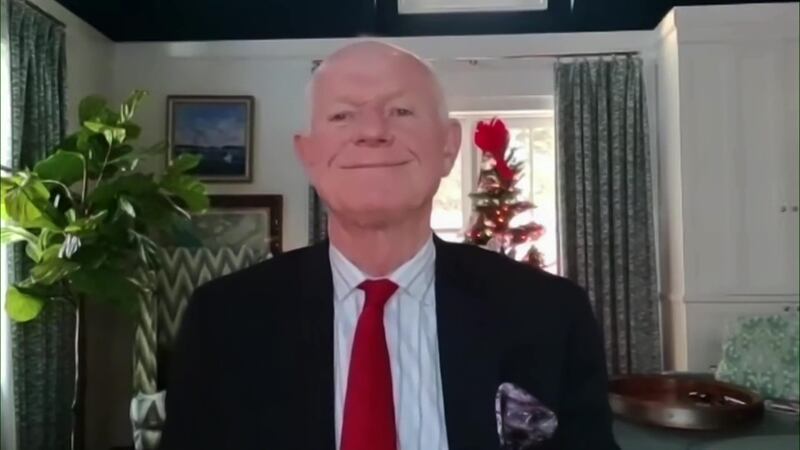
Read the full transcript below:
ROGER: The company that makes Roomba has declared bankruptcy this weekend. iRobot has been struggling financially for years as its vacuums have faced stiff competition from foreign autonomous models. Our next guest says this shows not all technology pioneers succeed, because it is difficult to stop copycats. Let’s get more on this from David Dietze, chief investment strategist at Dietze Wealth Management. David, thanks as always for joining us.
DAVID: Good morning, Roger.
ROGER: A very expensive lesson, or perhaps a useful one for anyone looking to invent something and make it big.
DAVID: Absolutely. The company started out with great fanfare back in 2002 as a pioneer of autonomous robotic vacuum cleaners. The iRobot brand name, and Roomba in particular, became synonymous with innovative technology. At one point, the company had a market capitalization close to US$4 billion. Even today, it still holds a major share of the U.S. market.
However, a series of missteps contributed to its downfall. Activist investors pushed the company to divest its defence division, which could have provided diversification. That reduced the company’s scale. Demand also dropped sharply after the pandemic as people spent less time at home. At the same time, competitors, particularly from China, entered the market with better technology, such as LiDAR, and lower prices. That combination eroded both market share and profitability.
ROGER: You mentioned several factors. Is there one that mattered most, or did they all play roughly equal roles?
DAVID: The decline has been unfolding for some time. When the company recognized it was heading in the wrong direction, Amazon made a bid, offering about US$1.4 billion. Investors often like merger-and-acquisition activity, but regulatory approval matters. Regulators in both the United States and Europe opposed the deal, and Amazon ultimately walked away, paying a US$90 million termination fee.
After that, iRobot took on additional debt, and conditions continued to deteriorate. What is striking is that just about 10 days ago, the stock surged 73 per cent on reports that U.S. President Donald Trump planned to promote robotics domestically. Some investors ignored the company’s debt load and declining market position, buying simply because of the theme. In the end, that optimism proved misplaced.
ROGER: Let’s move to the markets and the possibility of a Santa Claus rally. Do you think it happens this year?
DAVID: I do. The key event investors are watching is the November jobs report. The Federal Reserve has been eager for timely data on the labour market. If the unemployment rate moves to 4.5 per cent or higher, markets could rally further because it would increase the likelihood of additional rate cuts next year. If the data comes in stronger than expected, around the 4.4 to 4.5 per cent range, markets could pull back, as expectations for monetary easing would diminish.
ROGER: Does the unusual September and October performance play into this at all?
DAVID: Yes. Those months were stronger than usual, even though they are typically weaker periods. November, by contrast, was softer, with the Nasdaq and the so-called Magnificent Seven posting losses in what is usually a strong month. The Santa Claus rally is technically defined as the last five trading days of December and the first two of January. Since 1950, that period has been positive about 79 per cent of the time, with an average return of 1.3 per cent. Still, investors should focus on fundamentals rather than relying solely on historical patterns.
ROGER: As we head into the new year, you’ve been talking about small caps.
DAVID: We may already be seeing the start of a rotation away from the artificial intelligence trade. Valuations are elevated, and competition is intensifying. OpenAI once appeared to dominate, but rivals such as Google’s Gemini show how competitive the space has become. With interest rates relatively low and likely to remain so, investors may rotate within the market rather than exit altogether. Small-cap valuations look attractive, and if the economy remains stable, domestically focused smaller companies could benefit.
ROGER: What could give investors pause before moving into small caps?
DAVID: Recession risk. A modest rise in unemployment that leads to easier monetary policy can be supportive. But a sharp increase would be more concerning. Consumers account for about 70 per cent of the U.S. economy, and if job losses accelerate, spending will slow. Smaller companies often have fewer resources, higher debt levels and greater economic sensitivity, which could make them more vulnerable.
ROGER: David, we’ll leave it there. Thanks as always for joining us.
DAVID: Thank you, Roger.
ROGER: David Dietze, chief investment strategist at Dietze Wealth Management.
---
This BNN Bloomberg summary and transcript of the Dec. 15, 2025 interview with David Dietze are published with the assistance of AI. Original research, interview questions and added context was created by BNN Bloomberg journalists. An editor also reviewed this material before it was published to ensure its accuracy and adherence with BNN Bloomberg editorial policies and standards.

