A Bay Street veteran says the federal government’s ability to extract stronger concessions in a major mining takeover was constrained from the outset, despite tough public messaging around protecting Canadian interests. He argues the transaction reflects a broader pattern of foreign control over Canada’s resource sector.
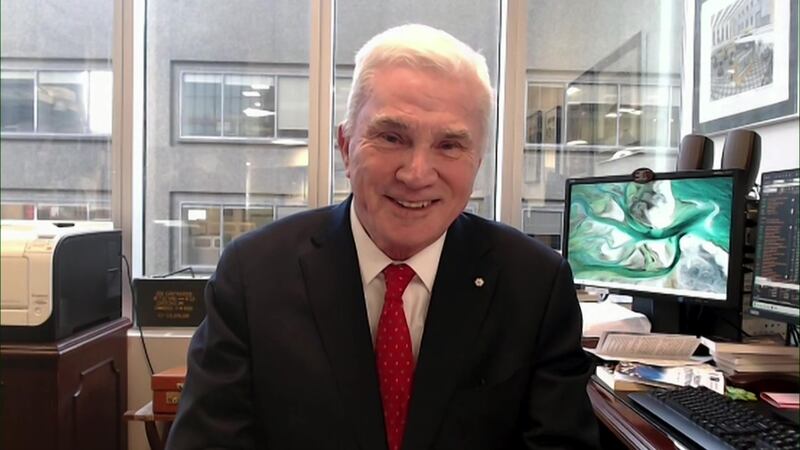
BNN Bloomberg spoke with Thomas Caldwell, chairman and CEO of Caldwell Securities Ltd., who said the deal underscores how government approvals often focus on optics rather than substance and warned Canada risks becoming a branch-plant economy in mining.
Key Takeaways
- Ottawa’s ability to extract stronger concessions after a takeover announcement is limited, leaving governments to focus on optics rather than outcomes.
- Head office location matters less than where real decision-making power resides within a global mining company.
- The takeover reflects a long-running trend of Canadian mining champions being absorbed by foreign firms.
- Legal undertakings under federal investment rules offer enforcement tools but are unlikely to change corporate behaviour.
- Canada’s mining sector risks long-term erosion of influence unless domestic firms become global acquirers rather than sellers.
Read the full transcript below:
ANDREW: A Bay Street veteran says he wasn’t surprised that Industry Minister Mélanie Joly did not extract major additional concessions from Anglo American in its takeover of Teck Resources. We’re joined by Thomas Caldwell, chairman and CEO of Caldwell Securities. Tom, great to see you. I haven’t talked to you for ages. Thank you very much.
THOMAS: Great to see you again, Andrew. I hope you have a great Christmas season.
ANDREW: You too. Thanks very much. So you weren’t surprised. Mélanie Joly talked tough, which I guess is her job, and said she would seek much more from Anglo American. It doesn’t look like she got a whole bunch extra out of them, though.
THOMAS: Well, not really. I look beyond the Anglo American–Teck deal to the broader picture of Canadian mining companies, which are now run by foreign entities, from Argentina to South Africa to Australia. Governments try to — I think I used the quote a neighbour of mine once said — governments are like a giant trying to catch up with a sprinter.
The business case is they’re going to give governments what they need for optics, to make everybody look happy and to say, “Oh well, we got something, and I protected Canada.” The long and short of it is Canadian companies are all being taken over by foreigners. That’s the bigger issue, rather than what you managed to grasp out of this particular deal.
It’s like dancing on the head of a pin — where they’re going to have this person and that person, and they can’t lay off this or that. Remember the old days when offices had to be in Montreal versus Toronto for the banks? Well, it looks like a duck, but it’s not. The power is not here. It doesn’t matter where your legal head office is. This is really about political optics, period.
ANDREW: Their headquarters is moving to Vancouver, and executives will spend a major amount of time in this country. Does that mean Canada can claim some kind of victory here?
THOMAS: Whatever you can glean out of a deal like this is a win. What’s really important is that if you have big mining interests in Canada — which they do — executives are going to spend a little bit more time here.
I don’t think they’re selling their homes in London and relocating real decision-making here. In any corporation, no matter how big, four or five people really run the company. Of those four or five, you might have one or two popping by Vancouver, maybe one or two living here.
But the central power will still be based in London because their geographic interests are so widespread. London also has the expertise and the time-zone advantage to connect with the rest of the world. Everyone is saying Canada has won a victory here, but in reality, this is a major Canadian mining company being taken over by a foreign mining company — just like Inco, Falconbridge and Alcan. They’re all gone.
Head offices are very important, but real head offices matter, not head offices for optics. And as you know, governments work in optics.
ANDREW: They didn’t even move their legal domicile to Canada, which seemed to be a sticking point, but Anglo wouldn’t give in on that.
THOMAS: That would have been far too complex to do. I see this as the continuation — or the end game — of a bad situation: the selloff of corporate Canada. Governments are trying to put as good a face on it as they can.
Minister Joly is part of the Trudeau entourage and she’s well schooled at making things look good. But in reality, we’re losing control of our head offices, and real head offices are critically important to the development of a country.
ANDREW: One commentator told The Globe and Mail that Canada got legal undertakings from Anglo and could sue if they’re breached. But that could drag on for years. Is that really going to change Anglo’s behaviour?
THOMAS: Absolutely not. Again, it’s about appearances. I had a debate years ago with Roger Martin at the Rotman School about head offices.
I said, if we take an airplane and fly around New York, we’ll see a massive concentration of head offices, major charities, major universities and tremendous wealth. Then we’ll fly around Sudbury and see headframes. What’s more important? Head offices matter — but head offices in substance.
You still have many Canadian companies whose theoretical head office is in Montreal, like Air Canada and CN, but in reality, it’s Toronto. Anglo American will still be in London. They’ll have interests in Vancouver because they have mining properties there, but you’re not going to see the four or five people who actually run the company all moving to Vancouver.
ANDREW: You mentioned Sudbury. People love living there, but given the billions of dollars of mineral wealth extracted over decades, you don’t see big skyscrapers.
THOMAS: It’s a production town. People in northern Canada love the quality of life, the people and the culture. It probably beats Toronto in that respect. But managers want to be where banking, accounting and legal advice are concentrated. To date, that’s been Toronto, even though it’s diffusing somewhat.
Sudbury has come a long way. When I first covered mines there, it looked like the face of the moon. It’s improved dramatically, but it’s still a production town.
ANDREW: Leave us with a final thought. Should Canada be much more aggressive about holding on to its companies and saying no to foreign takeovers?
THOMAS: I’d take it one step further. We need to think and dream bigger. It’s not just governments, regulation or constraints — it’s management. Why aren’t we the acquirers instead of the acquired in resources?
We’re a mining giant as a country. Why aren’t we using that expertise to expand globally and take it around the world?
ANDREW: Is there a timidity or laziness in Canadian business culture?
THOMAS: It could be timidity, laziness, incompetence — a whole bunch of things. Head offices gravitate to where capital markets are, and our capital markets have been massively diluted.
You’re not funding new companies here. There are many reasons, but I would challenge management to think beyond being branch-plant managers and instead become aggressive mining champions.
ANDREW: Tom, thank you very much. Really appreciate it. Have a great holiday.
THOMAS: All the best to you, Andrew. Good seeing you again.
ANDREW: Thomas Caldwell, chairman and CEO of Caldwell Securities.
---
This BNN Bloomberg summary and transcript of the Dec. 18, 2025 interview with Thomas Caldwell are published with the assistance of AI. Original research, interview questions and added context was created by BNN Bloomberg journalists. An editor also reviewed this material before it was published to ensure its accuracy and adherence with BNN Bloomberg editorial policies and standards.

