Elliott Management’s roughly US$1-billion stake in Lululemon has intensified scrutiny on the athletic apparel maker as it prepares for a CEO transition and works through slowing North American growth. The investment has raised questions about governance, potential influence over leadership decisions and whether strategic changes are needed to unlock long-term value.
BNN Bloomberg spoke with David Swartz, equity analyst at Morningstar Research Services, about what Elliott’s involvement could mean for leadership selection, competitive positioning and the company’s ability to navigate margin pressures while sustaining global growth.
Key Takeaways
- Elliott’s investment signals confidence that the brand’s long-term value outweighs near-term concerns around slowing North American sales.
- Any leadership change will remain in the hands of the board, with no indication so far of a costly or contentious proxy fight.
- The CEO search could attract candidates with experience restoring brand health, pricing power and disciplined distribution.
- Margin pressure from tariffs and product issues remains a challenge, but strong cash flow and buybacks support valuation.
- Expansion in sportswear, footwear and international markets offers meaningful growth opportunities beyond core athleisure.
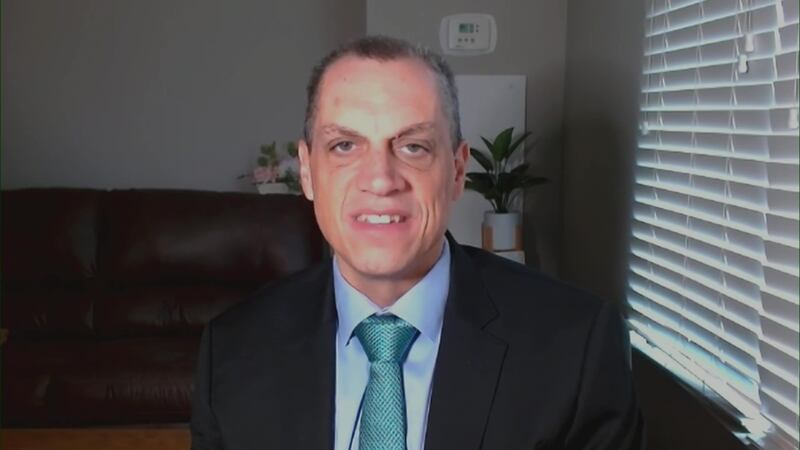
Read the full transcript below:
ROGER: There are reports today that Elliott Management has racked up more than US$1 billion in shares in Lululemon at a time when CEO Calvin McDonald is stepping down. What does this mean for the athleisure brand? We have more on this with David Swartz, equity analyst at Morningstar. David, thanks, as always, for joining us.
DAVID: Thank you.
ROGER: I guess the question is, what does this mean? Where do we stand right now with reports that Elliott is involved with Lululemon?
DAVID: There certainly have been a lot of changes at Lululemon recently. Just last week, we were told that Calvin McDonald would be leaving the company at the end of January, and there was no succession plan in place. The company will be led by co-CEOs in the interim. As you mentioned this morning, we also heard that Elliott, an activist hedge fund that has been involved in other campaigns against companies like Southwest Airlines, has taken a large stake in Lululemon. It has apparently been working with Jane Nielsen, a former CFO at Ralph Lauren and before that at Coach, where she was very successful in helping turn both of those brands around.
Apparently, she may be a candidate to be CEO of Lululemon after McDonald leaves. She would be a very strong candidate, given her success at both Coach and Ralph Lauren, two brands that were in worse shape than Lululemon is now. Both of those companies have seen tremendous turnarounds, and while she was not the only person involved, she played an important role by reducing distribution and improving brand health and pricing. Ralph Lauren, in particular, has been very successful over the past few years, whereas a few years ago it was in quite poor shape.
ROGER: How much sway would Elliott have in bringing in a CEO it would like to see, if this is actually the case? They do have that billion-dollar stake.
DAVID: At this point, Elliott does not have enough stock to simply demand a new CEO, so any decision would have to be approved by Lululemon’s board. There is no indication right now that Elliott is planning a proxy fight, which would be very costly and time-consuming.
There is also the issue that Chip Wilson, the founder of Lululemon, has been vocal lately, which is nothing new. He filed an updated 13D a few days ago suggesting that he wants to be involved in the CEO process as well. Whether that means he wants to return to Lululemon, I do not know, and I do not think so. For one thing, he is a large shareholder in Amer Sports, which could be considered a competitor. Still, it appears both Wilson and Elliott want some involvement in the CEO search. I think the board would be very open to hiring Jane Nielsen, given her strong background at Ralph Lauren, Coach and earlier at PepsiCo.
ROGER: Today this looks good for the stock. It’s up about 5.6 per cent. But will this be good in the longer term? Could we see battles shaping up between Wilson and Elliott?
DAVID: I do not think that would be a good thing for Lululemon. Those fights are very expensive. Many people remember the proxy battle at Gildan last year, which cost tens of millions of dollars. While it ultimately resulted in founder Glenn Chamandy returning as CEO, it was very contentious for a long time.
I do not think Lululemon wants something like that. It is not necessary, because this is still a strong company. Growth has slowed in the U.S. and Canada, which has concerned investors, and there have been some product issues, but the brand remains very strong. The company generates significant cash flow, is buying back a lot of stock, and I think the shares are undervalued. My fair value estimate is $295 a share. There is nothing fundamentally broken here, and I do not see a need for a contentious activist fight.
ROGER: If Nielsen were to come in as CEO, what direction do you think she might take the company? Would she push it even more upmarket?
DAVID: That is possible. Some competitors have tried that approach. Alo Yoga, for example, appears to be positioning itself as more of a luxury brand and has released handbags costing several thousand dollars. Lululemon could do more of that.
That said, I think Lululemon is more likely to become a broader, mainstream sportswear brand. There are opportunities in categories like golf and tennis, where Lululemon has introduced products but is still early. The company has also moved into athlete sponsorships, similar to Nike and Adidas. Footwear is another area of opportunity. Lululemon has entered that market, but it remains small. Overall, there are still significant growth opportunities, whether through sportswear expansion or potentially higher-end offerings.
ROGER: David, we’ll have to leave it there. Thanks, as always, for joining us.
DAVID: Thanks.
ROGER: David Swartz, equity analyst at Morningstar.
---
This BNN Bloomberg summary and transcript of the Dec. 18, 2025 interview with David Swartz are published with the assistance of AI. Original research, interview questions and added context was created by BNN Bloomberg journalists. An editor also reviewed this material before it was published to ensure its accuracy and adherence with BNN Bloomberg editorial policies and standards.

