Shares of Delta Air Lines are under pressure after the carrier issued earnings guidance that came in below Wall Street expectations, despite signs of continued strength in premium travel demand. Broader concerns around consumer behaviour, policy risk and airline pricing continue to weigh on the sector.
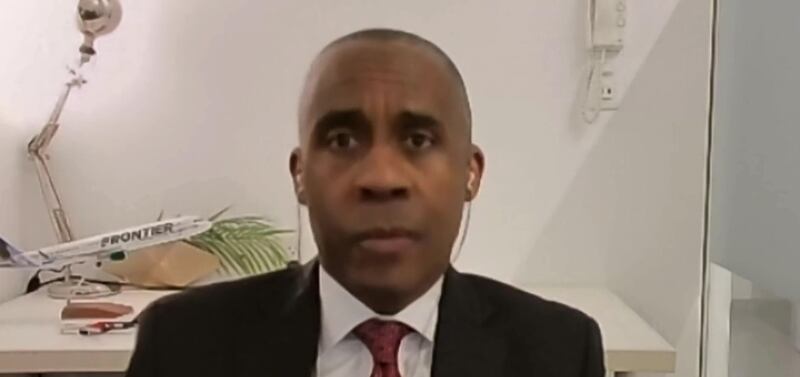
BNN Bloomberg spoke with Stephen Trent, independent aviation specialist, who discussed Delta’s earnings visibility, the resilience of network airlines, risks tied to lower-end consumers and how merger activity could shape pricing across the industry.
Key Takeaways
- Delta’s earnings guidance highlights uncertainty rather than weakness, reflecting economic and policy risks facing U.S. airlines.
- Network carriers remain supported by premium cabins, international travel and loyalty programs.
- Lower-end consumers pose a bigger risk to airline demand than high-income travellers.
- Ultra-low-cost carriers face mounting pressure as their business models struggle to deliver profits.
- Ongoing merger activity could help support airline pricing, particularly outside the major network carriers.
Read the full transcript below:
ROGER: Shares of Delta Air Lines are under pressure after the company issued a profit growth forecast that fell short of Wall Street estimates. The stock is trading lower, despite the CEO saying robust travel demand — particularly at the high end of the market — could push shares to a record high. They are down about 1.9 per cent right now.For more on this, let’s bring in Stephen Trent, independent aviation specialist. Stephen, thanks, as always, for joining us.
STEPHEN: Thank you for having me.
ROGER: What number is most concerning to you in this report?
STEPHEN: I don’t think any specific red flag came out of this. With the guidance for 2026, they were toward the lower end, to some degree calling out economic uncertainty. From a broader industry perspective, I think the lower-end U.S. consumer is the place to watch.How does main cabin demand develop? Do we see some of the M&A activity out there come to fruition? If we were to get a 10 per cent cap on credit card interest rates, that would ostensibly be worse for lower-end consumers versus wealthier consumers at Delta, American or United. From an industry perspective, that’s probably the area to watch.
ROGER: For Delta, when it comes to the main cabin, how important is it that those seats are full compared with first or business class?
STEPHEN: Delta derives the majority of its revenue from outside the main cabin. It’s far more important what we’re seeing in international first and business class, as well as in loyalty and co-branded credit cards.Main cabin-wise, can businesses like basic economy withstand relatively low yields? Absolutely they can, because it’s a very small number of seats. I don’t think that’s a major problem for the big three. I’d be more concerned about the lower end of the market — on the ultra-low-cost carrier side.
ROGER: And who are some of those players people should be paying attention to?
STEPHEN: Spirit Airlines is front and centre. They’ve had challenges, including the recent Chapter 11 filing and questions about whether a merger happens.More broadly, ultra-low-cost carriers are trying to look more like Delta, American and United — adding business-class cabins, launching more international routes and building premium airport lounges. There’s clearly a move away from the traditional ULCC model, because it’s not making money.
ROGER: You mentioned mergers and acquisitions. Could we see one of the big three picking up a lower-cost carrier?
STEPHEN: That would be challenging for the big three, not only because of business model differences, but also because of their already large domestic scale.That said, we’ve seen on-again, off-again activity involving Frontier and Spirit. There’s also been news involving Allegiant and Sun Country. You can extend that discussion south of the border as well, with Volaris and Viva Aerobus in Mexico. If there’s M&A in the space, it’s likely to be outside the network airlines.
ROGER: Would Canada play into that at all — a company like WestJet, for example?
STEPHEN: Never say never. Once you get into cross-border transactions, things become more complex. Canada has one very dominant network carrier, and all else equal, it would face some of the same challenges in pursuing a large acquisition.
ROGER: You also mentioned credit cards. Former U.S. president Donald Trump has said he wants a one-year 10 per cent cap on interest rates. It likely won’t go through, but what would happen if it did?
STEPHEN: That would be significant, but there are a lot of steps that would have to occur for that to happen.If it did go through, lower-end consumers could have trouble accessing credit. Some might be pushed into riskier parts of the market, potentially at higher rates or with more onerous loan terms. Wealthier consumers may be less affected.For the U.S. big three — Delta, American and United — co-branded cardholders tend to be wealthier and would likely be relatively insulated, assuming this even happens, which remains a very big “if.”
ROGER: Bringing it back to Delta, the CEO mentioned that travel flows from Canada and China are affecting results. How significant is that?
STEPHEN: It’s an important topic going forward. For the U.S. big three, about 80 to 87 per cent of international traffic originates in the U.S., but there’s still a meaningful portion that comes from outside the country.If inbound international travel weakens, that’s something to watch. United has the highest international exposure, Delta is in the middle, and American has the lowest.Chinese traffic is less concerning because it’s still well below pre-pandemic levels and isn’t expected to fully recover. Canadian traffic is a different story and something to monitor more closely.
ROGER: We’ll have to leave it there. Stephen, thanks as always for your time.
STEPHEN: My pleasure.
ROGER: Stephen Trent, independent aviation specialist.
---
This BNN Bloomberg summary and transcript of the Jan. 13, 2026 interview with Stephen Trent are published with the assistance of AI. Original research, interview questions and added context was created by BNN Bloomberg journalists. An editor also reviewed this material before it was published to ensure its accuracy and adherence with BNN Bloomberg editorial policies and standards.

