Exchange-traded funds are increasingly emphasizing innovation, profitability and income generation as investors weigh supportive economic conditions against rising valuations. Patent strength, free cash flow and alternative income strategies are emerging as key differentiators in ETF construction.
BNN Bloomberg spoke with Sean O’Hara, president of Pacer ETFs, about how select ETF strategies are designed to capture growth, manage valuation risk and deliver income without sacrificing long-term upside.
Key Takeaways
- Patent-based ETF strategies aim to capture innovation-driven growth while avoiding traditional sector-heavy international benchmarks.
- Free cash flow screening is increasingly used as an alternative measure of quality and value in equity portfolios.
- Momentum-led market leadership has raised valuation concerns, prompting renewed interest in profitable, cash-generating companies.
- Income-focused ETFs are evolving beyond covered-call strategies to preserve equity upside.
- Tax-efficient income structures can improve cash flow for long-term investors, though taxes are deferred rather than eliminated.
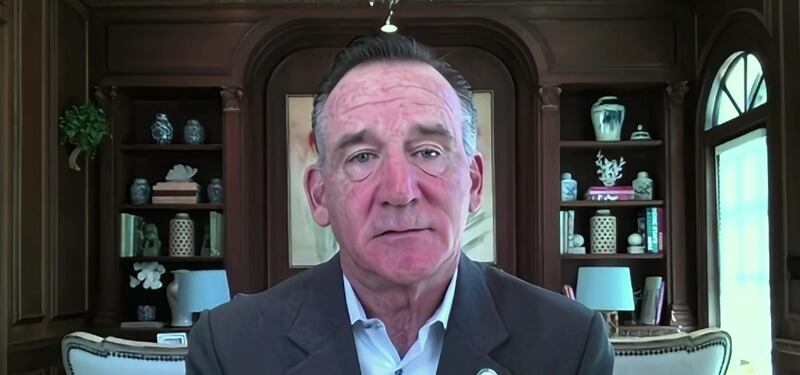
Read the full transcript below:
ANDREW: Time now for the ETF Report. We’re joined by Sean O’Hara, president of Pacer ETFs. Sean, thanks very much for joining us.
SEAN: Good morning. Thanks for having me.
ANDREW: Tell us a bit about your company. What kind of assets do you have in ETFs right now?
SEAN: We have about US$40 billion in assets under management. We started 10 years ago, so we’re on a pretty good growth trajectory. We have about 55 or 56 ETFs at this point.
ANDREW: Are those products offered only in the United States, or are any sold or issued in Canada?
SEAN: We don’t have anything listed on a Canadian exchange. However, Canadians are able to buy our U.S.-listed ETFs. We also have a small UCITS platform based out of Dublin.
ANDREW: Is that mainly for international clients?
SEAN: A little bit of both. There are a lot of investors in the U.S. who come from South America, Mexico and other regions, so it serves those markets as well, particularly in places like Miami, while also addressing broader European demand.
ANDREW: Let’s talk about a few of the products. One that stands out is up about 44 per cent over the past year. The symbol is PATN, the Pacer Nasdaq International Patent Leaders ETF. The idea of intellectual property as a core economic asset is getting a lot of attention.
SEAN: This ETF was developed in partnership with Nasdaq. We use Nasdaq indexes in a number of ways, and we approached them with the idea of creating an international version of the Nasdaq 100. After several iterations, Nasdaq came back with the view that what really defines the Nasdaq is innovation, and what drives innovation is intellectual property and patents.
They work with an organization called IPR to identify the patent value of companies globally. We start with Nasdaq’s international small- and mid-cap universe and then apply a patent score to select the 100 companies with the highest patent value. The result is a portfolio that looks very different from traditional broad-based international indexes, with minimal exposure to financials and a significant overweight to technology.
One of the challenges with international investing has been weaker earnings growth because traditional indexes are heavily weighted toward financials and industrials. By focusing on patent value rather than market capitalization or sector weightings, you get a more dynamic portfolio with potentially stronger growth characteristics.
ANDREW: Taiwan Semiconductor is the largest holding, followed by Tencent, Samsung Electronics and ASML. Toyota is also in the top 10, along with several pharmaceutical companies, including Novartis, Roche and AstraZeneca.
SEAN: That’s a good snapshot of the fund. You have technology leaders like ASML, whose chipmaking equipment is essentially unmatched, especially as global chip competition continues. You also have healthcare companies where patent strength reflects pipeline potential, and Toyota, which is expanding well beyond autos into areas like robotics.
ANDREW: Let’s move to your next ETF, the Pacer U.S. Cash Cows 100 ETF, ticker COWZ. What’s the idea behind this one?
SEAN: This is our approach to quality and value. Traditional value strategies often rely on low price-to-book metrics, which tends to overweight sectors like financials, utilities and materials. Instead, we screen the Russell 1000 for the 100 companies with the highest free cash flow yield.
We then weight those companies by the dollar amount of free cash flow they generate, with a cap of two per cent per holding, and rebalance every 90 days. Over the past couple of years, markets have been heavily momentum-driven, but over the last 90 days, COWZ has outperformed the broader market as investors have become more sensitive to valuations and profitability.
There is also growing skepticism around whether massive spending commitments by large technology firms will translate into earnings. COWZ provides exposure to companies that are profitable today and generate significant free cash flow. Over the life of the fund, it has outperformed its value benchmark by roughly 300 basis points annually.
ANDREW: It did lag the S&P 500 last year, with a return of about nine per cent.
SEAN: That’s correct, but over the last 90 days it’s been roughly 600 to 700 basis points ahead of the broader market. Historically, when momentum slows, this type of strategy tends to perform well.
ANDREW: Tell us about the third ETF, QDPL, the Pacer Metaurus U.S. Large Cap Dividend Multiplier ETF.
SEAN: This fund is designed to generate income from an equity portfolio without capping upside. Traditionally, investors might use covered-call strategies or focus on high-dividend stocks, but those approaches often limit capital appreciation.
In this case, about 85 to 90 per cent of the portfolio is invested in the S&P 500. The remaining portion is used to enter into dividend futures contracts, which generate additional income. The goal is to deliver roughly four times the dividend yield of the S&P 500, while keeping the equity upside largely intact.
Most of that income is treated as return of capital, which allows for tax deferral. Last year, the fund captured about 85 per cent of the market’s equity return, distributed roughly five per cent in income, and about 93 per cent of those distributions were classified as return of capital.
ANDREW: We should note, viewers should always speak with their own tax advisers. Return of capital can reduce the adjusted cost base and may lead to higher capital gains when the investment is sold.
SEAN: That’s right. Taxes are deferred, not eliminated, and investors should consider their individual situation. But for long-term holders, it can be an efficient way to generate income.
ANDREW: That fund broadly matched the market last year, returning just over 16 per cent, slightly below the S&P 500’s 18 per cent gain. Sean, great discussion. Thanks very much for joining us.
SEAN: Thank you. Have a great day.
ANDREW: Sean O’Hara is president of Pacer ETFs.
---
This BNN Bloomberg summary and transcript of the Jan. 19, 2026 interview with Sean O’Hara are published with the assistance of AI. Original research, interview questions and added context was created by BNN Bloomberg journalists. An editor also reviewed this material before it was published to ensure its accuracy and adherence with BNN Bloomberg editorial policies and standards.

