United Airlines posted a stronger-than-expected fourth quarter as premium seating, loyalty revenue and international travel continued to outperform economy-class demand. The results underline a widening gap between full-service carriers and lower-cost competitors, even as some regions showed softer performance.
BNN Bloomberg spoke with Stephen Trent, an independent aviation specialist, about the durability of premium demand, labour cost risks and why full-service airlines continue to pull ahead of the rest of the industry.
Key Takeaways
- Premium seating and loyalty programs remain the primary drivers of airline earnings, with revenue increasingly generated outside the main cabin.
- Full-service airlines continue to widen the gap with discount carriers, which lack comparable premium offerings and co-branded credit card revenue.
- Basic economy growth is being used strategically to fill capacity, with limited incremental cost given strong margins in premium and ancillary sales.
- Labour negotiations are a key variable for 2026, with potential cost pressures tied to new contracts rather than strike risk.
- Despite geopolitical and macro uncertainty, the underlying demand backdrop heading into 2026 remains constructive in the absence of major disruptions.
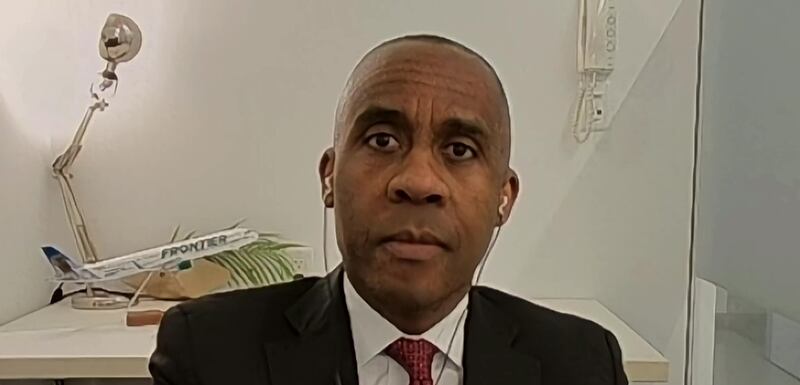
Read the full transcript below:
ROGER: United Airlines beat estimates, driven largely by demand from premium domestic passengers and international travellers. Let’s take a closer look at the company’s fourth-quarter results with Stephen Trent, an independent aviation specialist. Stephen, thanks, as always, for joining us.
STEPHEN: Thank you for having me on.
ROGER: What are some of the highlights for United, and what are some of the concerns?
STEPHEN: Premium continues to be a very good area for United. When we look at the overall revenue stream, as in the case with Delta, United generated the majority of its revenue outside of the main cabin. Those areas continue to be very strong drivers for the carrier in terms of generating higher earnings.
We saw that strength in loyalty revenue and on the Atlantic. There were one or two regions that looked a little softer, such as Latin America and the Caribbean, and some of that was related to military action that occurred not long ago. That said, as we move into 2026, the foundation looks very good.
There are not many concerns. I thought the results were very solid. If I were watching the stock for any warning signs, I would keep an eye on labour negotiations, particularly with the flight attendants. That is an ongoing process, and we should learn more as talks continue.
Longer term, as we move deeper into the year, you always worry about potential black swan events that could create top-down pressure. But in the absence of those factors, the results look very good, and we are constructive on the 2026 outlook.
ROGER: Just quickly on the unions — have there been any rumblings of potential strikes, or are the talks moving along?
STEPHEN: I do not think there are any warning flags at this point regarding potential strikes. It is more a question of where these groups settle in terms of new contracts and what the cost impact per seat mile will be.
I think the company has been conservative in its guidance and has likely already accrued for at least some of this. Looking ahead, the question is whether an agreement creates some modest, unexpected pressure on seat-mile costs. But there is nothing pointing to a major dispute at this stage.
ROGER: Going back to growth, loyalty and premium revenue were both up, but basic economy was also higher. It is sometimes dismissed, but it rose seven per cent. Was United doing anything different there, and how does it compare with other airlines?
STEPHEN: I think the big three U.S. carriers have been very effective in how they manage basic economy. Discount airlines are under a lot of pressure. They do not really have premium cabins, they are trying to build them, and they do not have lucrative co-branded credit card programs like the big three or Alaska Air.
If you are one of the big three, you have the opportunity to take share. In some cases, you can price a small portion of that capacity aggressively to help fill planes. The marginal cost of adding a few extra passengers is not very significant, given how much money is being made in the front cabin and through ancillary revenue. That is likely an area where United had some relatively easy gains when it comes to main-cabin performance.
ROGER: Have we heard any airlines float the idea of operating all first-class or all business-class aircraft on certain routes?
STEPHEN: You hear about that from time to time, and some airlines have tried it in the past, including transatlantic service. Forgive me, the name escapes me at the moment.
As for one of the big three doing that, I would be surprised. You are actually seeing movement in the opposite direction. That is not to say airlines are moving toward all basic economy, but rather that there is experimentation within cabins.
For example, within business class, you could see more unbundling — a lower-priced seat without lounge access, or a non-refundable option, with higher-priced tickets offering more flexibility and amenities. I see more differentiation within cabins, rather than a move to all-business-class aircraft by a major U.S. carrier.
ROGER: We will have to leave it there. Stephen, thanks, as always, for joining us.
STEPHEN: Thanks for having me on.
ROGER: Stephen Trent is an independent aviation specialist.
---
This BNN Bloomberg summary and transcript of the Jan. 21, 2026 interview with Stephen Trent are published with the assistance of AI. Original research, interview questions and added context was created by BNN Bloomberg journalists. An editor also reviewed this material before it was published to ensure its accuracy and adherence with BNN Bloomberg editorial policies and standards.

