Tesla shares moved higher after the electric-vehicle maker reported better-than-expected fourth-quarter earnings, showing improving margins despite weaker EV demand and rising global competition. Investors are increasingly focused on whether progress in autonomy and robotics can offset ongoing pressures in the core auto business.
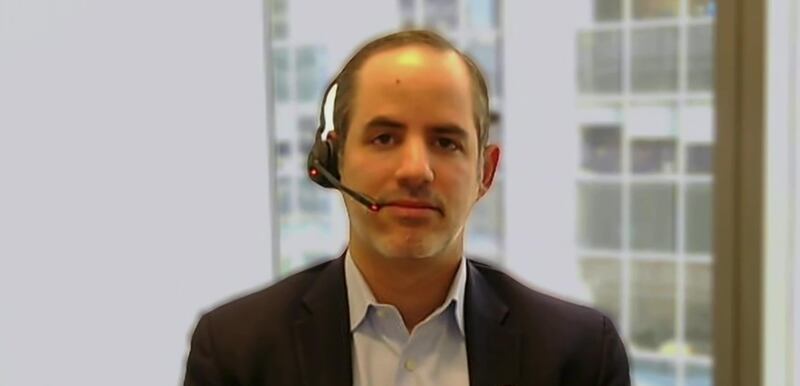
BNN Bloomberg spoke with Itay Michaeli, an equity analyst at TD Securities, about Tesla’s margin resilience, the decision to discontinue the Model S and Model X, and why autonomous driving and robotics are emerging as key catalysts for the stock.
Key Takeaways
- Tesla’s fourth-quarter results showed stronger-than-expected margin resilience despite softer EV demand and intense global competition.
- Automotive gross margins expanded for a third straight quarter, helping stabilize sentiment around the stock.
- Autonomous driving and robotaxi rollouts are increasingly viewed as near-term catalysts rather than long-term concepts.
- Investment in robotics and AI reflects a strategy to expand revenue beyond traditional vehicle sales.
- Competition from Chinese EV makers remains a risk, but recent margin performance has eased concerns about near-term profitability.
Read the full transcript below:
ANDREW: Okay, let’s drill into Tesla’s earnings. Let’s have a look at the stock. The company did post an earnings beat for its fourth quarter. Shares are up around one per cent, and it is going to discontinue its Model S and Model X vehicles and invest US$2 billion in Elon Musk’s artificial intelligence startup, xAI.Let’s get more from Itay Michaeli, equity analyst at TD Securities. Thank you very much indeed for joining us.
ITAY: Thanks for having me.
ANDREW: What jumped out for you with these Tesla numbers? Start with the profit, if you would.
ITAY: I think the number one takeaway is that Tesla delivered a resilient quarter in the midst of challenging EV fundamentals, both in the U.S. following the expiration of tax credits and in a globally competitive market, particularly in China.Automotive gross margin, excluding credits, did expand by a couple of hundred basis points sequentially. This now marks the third quarter in a row where Tesla’s gross margins have been recovering. Overall, we thought it was a pretty good quarter and comfortably ahead of consensus, and that helps set the foundation for sentiment around the company to improve. Tesla now enters a period with potentially significant catalysts on the autonomous and robotics side.
ANDREW: They’re dropping their two oldest vehicles, the Model S sedan and the Model X SUV. Do they have enough new product to make up for that?
ITAY: They do. The Model 3 and Model Y represent a substantial portion of the volume today. The S and X — while certainly the original vehicles that helped build Tesla’s brand and early success — are now a very small part of overall volume. That capacity can be repurposed.Increasingly this year, we think autonomy will play a central role in driving Tesla’s vehicle demand. Oftentimes, people talk about autonomy as separate from the EV side of the business, but ultimately, in our view, they are very much interlinked. Once Tesla moves to fully unsupervised full self-driving, it should be able to launch a variety of new features and eventually integrate those vehicles into a robotaxi fleet. Autonomy could become not only an incremental source of revenue and profit growth, but also a major driver of vehicle demand.
ANDREW: You have a buy rating on Tesla. What do you think will be the main driver of the stock going higher?
ITAY: For us, it comes down to catalysts that could unlock major opportunities in vehicle autonomy and robotics. Many people still think about Tesla primarily as a car company, with the addressable market tied to selling new vehicles.But the real addressable market, in our view, is the lifetime revenue a vehicle can generate, plus incremental services layered on top. In the U.S. alone, that represents about a US$1.5 trillion market. Autonomy could help Tesla unlock a meaningful portion of that. This is no longer a story that is many years out. The company outlined plans to launch robotaxi operations in about seven cities in the first half of this year. Over time, unsupervised full self-driving should enable additional services and expand that revenue pool, alongside ongoing investments in robotics. Selling vehicles will remain important, but these near-term autonomy catalysts are central to our thesis.
ANDREW: You may have touched on this already, but what about Optimus, Tesla’s humanoid robot project? Is that a serious investment for the company?
ITAY: Absolutely. There is a lot of opportunity there, and many companies are investing in humanoid robotics, so it is becoming a sizable industry. It is still largely in the research-and-development phase. Tesla said on the call that it plans to unveil version three of Optimus in the coming months, which should provide additional data points.Meaningful growth is still a couple of years away, but it is a significant opportunity. This year is more about robotaxi autonomy, with incremental progress on Optimus. In the years that follow, we think Optimus could become a much larger contributor to revenue growth. It is an exciting opportunity for the company.
ANDREW: What about competition from China’s electric-vehicle makers? Companies like BYD and Chery are expanding globally. Is that a major challenge for Tesla?
ITAY: The Chinese market is extremely competitive, with some very strong products. Tesla does not compete at every price point, but even in the segments where it does compete, competition has intensified. That is what makes the fourth-quarter margin performance more impressive.There were headwinds in China from competition, and U.S. EV demand was also weaker following the pull-forward we saw in the third quarter ahead of the IRA expiration. Despite lower sequential deliveries, Tesla still expanded gross margins. That helps ease concerns about how the company navigates a more challenging industry environment. Those challenges have not disappeared, but starting from a higher earnings base provides a foundation for sentiment to improve as autonomous driving and robotics catalysts come into clearer view.
ANDREW: Itay, thank you very much indeed.
ANDREW: That’s Itay Michaeli, equity analyst at TD Securities.
---
This BNN Bloomberg summary and transcript of the Jan. 29, 2026 interview with Itay Michaeli are published with the assistance of AI. Original research, interview questions and added context was created by BNN Bloomberg journalists. An editor also reviewed this material before it was published to ensure its accuracy and adherence with BNN Bloomberg editorial policies and standards.

