TMX Group shares are in focus after the exchange operator delivered a fourth-quarter earnings and revenue beat, capping a record year driven by strength across trading, capital formation and market data. The results come as investors weigh valuation pressures and concerns about how artificial intelligence could reshape data-driven businesses.
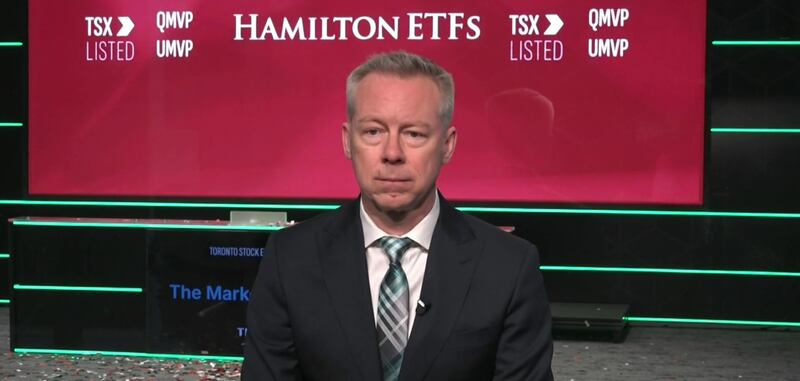
BNN Bloomberg spoke with John McKenzie, CEO of TMX Group, about the company’s diversified revenue streams, the durability of its proprietary data model and what recent trends signal for derivatives activity and TSX listings in 2026.
Key Takeaways
- TMX delivered a record quarter and record year, with double-digit earnings growth supported by strength across all major business lines.
- Trading activity rose double digits year over year, with derivatives remaining a key growth engine heading into 2026.
- Capital formation revenue rebounded, supported by stronger listing activity and financing volumes.
- Management pushed back on AI disruption concerns, emphasizing the proprietary nature of TMX’s market data and analytics businesses.
- TMX raised its dividend and restarted share buybacks, reflecting confidence in long-term cash flow and strategy execution.
Read the full transcript below:
ANDREW: Let’s focus now on shares of TMX Group. Not so long ago, the stock was hitting record highs. As of August last year, it was north of $57. It has come down a bit since then and is trading around $46 today. The company posted fourth-quarter results that beat expectations. Let’s get more from John McKenzie, CEO of TMX Group.
John, thanks very much for joining us. Looking at your results in the latest quarter, what jumped out to you? What was most important?
JOHN: Andy, thank you for having me this morning. We’re very excited about the quarter and the year in general because the overriding story is that the business delivered across every part of the franchise. Capital raising really started to come back last year, trading activity was up double digits across the board, and our global insights, data and information business hit new records.
This was not only a record quarter for TMX, it was a record year, both in terms of top-line growth and double-digit EPS performance. Across the board, we’re thrilled with what we’ve delivered. It allowed us to increase our dividend by nine per cent and relaunch our stock buyback. I think stakeholders around TMX should be very happy with these results.
ANDREW: TD has a buy rating on your stock, but it’s flagged concerns around AI. Your biggest source of revenue in the latest period was global insights, or market data, and it looks as though some investors are worried that could be cannibalized by AI.
JOHN: I think, unfortunately, there is a misunderstanding of the nature of our business, and let me clarify that. You’re right that about 41 per cent of our business last year was global insights, which includes all of our information businesses.
Unlike some software-type companies that have been caught up in these challenges, our business is very much proprietary. Our data and information include proprietary offerings like TMX Datalinx, which provides market data you can only get from us. Our Trayport business aggregates energy market data on a proprietary network. Our VettaFi business focuses on benchmarks and indices that are proprietary to us and embedded in products investors use.
These businesses are very difficult to disrupt with AI technologies. At the same time, we’re actively using AI to become more competitive and efficient in how we bring products to market. In Trayport, for example, we’re already embedding AI capabilities, which has allowed us to do more with the same resources year over year. This is really a misunderstanding of our model. We’re not a software sales business — we’re a proprietary information business.
ANDREW: Your second-largest source of revenue was capital formation, which came in around $82 million, followed by derivatives at about $115 million. Tell us what you’re seeing in derivatives right now.
JOHN: The derivatives business was fantastic for us in 2025 and we expect it to remain strong in 2026. It’s a mix of retail-oriented products, such as ETF options, which grew 80 per cent year over year, and institutional products like fixed-income futures.
Investors globally use our fixed-income futures to gain exposure to the Canadian dollar or hedge those positions. Over the past several years, we’ve expanded the product set with offerings like two-year bond futures and other short- and long-term contracts so investors can access the exposures they need on the Montreal Exchange.
That has driven double-digit growth year over year, and the fourth quarter was another record in terms of usage. It’s a credit to the team’s engagement with the industry and their understanding of investor needs. You’ll continue to see that strength into 2026.
ANDREW: If we look at a five-year chart for the stock, it hit record highs last summer and then drifted lower. We’ve seen a recent selloff that isn’t unique to you — London Stock Exchange shares also fell this week. Broadly speaking, why have TMX shares come down since August?
JOHN: I don’t like to focus too much on short-term share price movements. We’re very much long-term focused. I’m a big believer in semi-annual reporting so investors concentrate more on long-term performance.
If you look at our peer group over the past three years, TMX has been one of the strongest global performers, not just in share price, but in business results — revenue growth, margins and EPS expansion. We’re not taking anything from the near-term decline. We’re focused on our long-term strategy, and we believe it will continue to play out over time.
ANDREW: John McKenzie, CEO of TMX Group. Thanks very much for joining us.
---
This BNN Bloomberg summary and transcript of the Feb. 6, 2026 interview with John McKenzie are published with the assistance of AI. Original research, interview questions and added context was created by BNN Bloomberg journalists. An editor also reviewed this material before it was published to ensure its accuracy and adherence with BNN Bloomberg editorial policies and standards.

