Oracle shares surged after an analyst upgrade, as optimism returned around the artificial intelligence ecosystem and the belief that the AI race is far from decided.
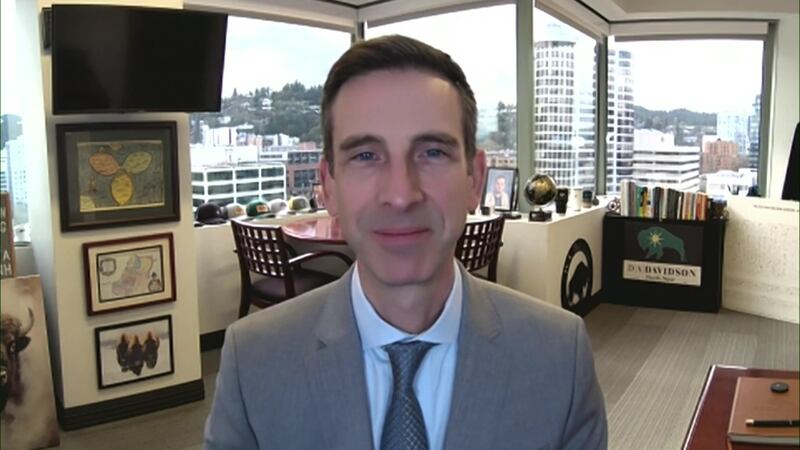
BNN Bloomberg spoke with Gil Luria, head of technology research at D.A. Davidson, who said shifting perceptions around OpenAI’s funding, model development and monetization strategy were central to his decision to upgrade the stock.
Key Takeaways
- The upgrade reflects a reassessment of OpenAI’s long-term competitiveness rather than near-term Oracle fundamentals.
- Recent outperformance by Google has skewed investor perceptions of the AI race toward a single winner.
- Large potential capital raises could give OpenAI a multi-year runway to scale compute and revenue.
- New AI model releases may shift benchmarks and challenge current assumptions about leadership.
- Advertising on free AI platforms is increasingly viewed as a sustainable monetization path rather than a drawback.
Read the full transcript below:
LINDSAY: Welcome back. Our next guest has upgraded Oracle shares to a buy, with the stock rising more than nine per cent today in response. Our guest attributes the rating change to his updated view on OpenAI. Let’s welcome Gil Luria, head of technology research at D.A. Davidson. Good to have you join us. Thanks so much.
GIL: Thank you.
LINDSAY: I was going to ask what’s behind your decision to upgrade. Is it partially, or fully, because of OpenAI? Can you explain?
GIL: Yeah, that’s the biggest reason. The market has decided that Google is the only winner in AI and that the whole complex of companies around OpenAI are not going to win as much. You can tell that by the stock performance over the last six months, where Google has significantly outperformed Nvidia, Microsoft, Oracle and CoreWeave. We argue that’s not necessarily the case.
The race is still on, and OpenAI has room in that race. They’ve done a few good things. One is really focusing on the two most important parts of the business: having a great frontier model and having support for ChatGPT, including turning on ads there. That’s a good decision to stay focused.
The other thing that’s happened is that because there’s a perception Google is running away with AI, Microsoft, Amazon and Nvidia now have a very strong incentive to invest in OpenAI. It looks like OpenAI could raise up to $100 billion in additional capital by the end of March.
Finally, OpenAI is looking to introduce its most advanced model over the next few days and weeks. If that model becomes better than Google’s most recent Gemini model, by any or some benchmarks, the perception that OpenAI is out of the race will likely change. Having the best model and capital on hand would benefit the OpenAI orbit, which is primarily Nvidia and Microsoft, but also Oracle, which has a lot riding on OpenAI being successful.
LINDSAY: I do want to talk about that new model you mentioned, but first, you also said the AI race is very much not finished yet. Given that Oracle and OpenAI have funding obligations extending well past 2026, to what extent is your upgrade based on short-term factors?
GIL: It’s short to medium term, in the sense that if OpenAI raises $100 billion and has nearly $40 billion on hand, that can fund them for at least a couple of years, if not more. That helps them secure compute, ramp revenue and pay for future obligations. That fundraise would really buy them a long runway.
Oracle has raised its own capital to build out infrastructure. As long as it completes its debt and equity offerings successfully, it should have at least a year to build out that infrastructure and then revisit those decisions next year. Our call is about a year out. We think OpenAI has an even longer runway, assuming it completes this fundraise successfully.
LINDSAY: Why do you believe OpenAI’s model is as strong as, or stronger than, its competitors? Going back to the model you mentioned earlier.
GIL: The most recent version they published, the 5.3 model, is the first trained on Nvidia’s Blackwell chips, and it already appears competitive with Gemini. That’s only a small incremental improvement. If they deliver a larger incremental improvement, which is what’s being reported, I think that will grab people’s attention.
Internally, my colleague Alex Platt benchmarks these models. He believes Google’s lead is very small, if any, and that a new OpenAI model, assuming it represents a bigger leap forward, should take the number one spot.
LINDSAY: Why do you think the market was so quick to suggest Google’s DeepMind and Anthropic were gaining momentum over competitors, including OpenAI?
GIL: It’s a pendulum. Just six months ago, everyone thought Google was the biggest loser. It was trading at about 18 times earnings and was left for dead. Then Gemini worked out, Google Cloud started to accelerate, there was talk of selling TPUs externally, and the narrative swung to the other extreme — that Google is the only winner.
We think reality is somewhere in the middle. Google isn’t a loser, but it’s also not the only winner. It’s a winner because it has a great lab, chips and cloud, and can deliver on those. The race just isn’t nearly over.
LINDSAY: We were talking today about OpenAI’s decision to introduce ads on its platform. You’ve said that’s important for monetization and reducing cash burn, but could that hurt OpenAI if some competitors don’t have ads?
GIL: Not if they do it well. Let’s not forget Google is already presenting ads on the way to Gemini. They’re not in the chat, which Anthropic tried to poke fun at OpenAI about during the Super Bowl. They’re around the chat — before it or after it.
Those are the types of ads we’re going to see. We’re not going to see ads inside our conversation with ChatGPT. As long as OpenAI keeps ads outside the chat itself, it won’t hurt them. Consumers are already accustomed to this with Google Search and Gemini. As long as the chat isn’t about advertising, people are fine with it.
LINDSAY: Lastly, do you think this is simply the future for AI platforms — ads on free versions — even though Anthropic has said it wouldn’t do that?
GIL: In the free version, yes. This is a lot like streaming. There will be a paid, ad-free subscription and a free version with some ads. That’s the balance the internet has struck for many years. This is just another iteration of that.
LINDSAY: That’s all the time we have. Gil Luria, head of technology research at D.A. Davidson. Thanks so much for joining us.
---
This BNN Bloomberg summary and transcript of the Feb. 9, 2026 interview with Gil Luria are published with the assistance of AI. Original research, interview questions and added context was created by BNN Bloomberg journalists. An editor also reviewed this material before it was published to ensure its accuracy and adherence with BNN Bloomberg editorial policies and standards.

