Kraft Heinz has paused its planned corporate split and warned that 2026 will be another challenging year, as it prepares to reinvest heavily in its U.S. business. The company signalled lower sales and profit expectations while shifting focus to rebuilding demand and margins.
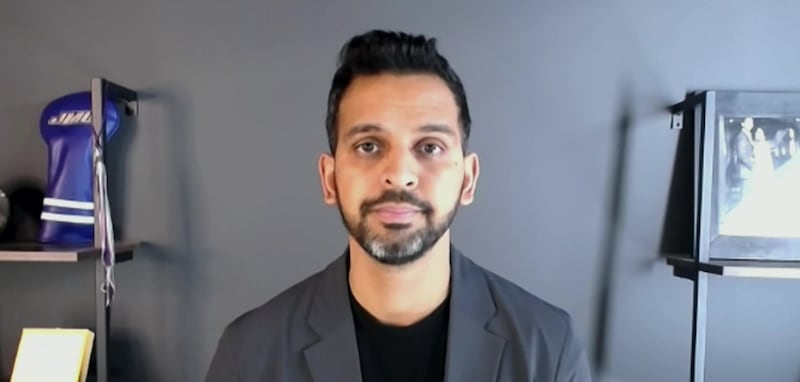
BNN Bloomberg spoke with Arun Sundaram, senior vice president of equity research at CFRA Research, who said broad-based brand weakness and shareholder dynamics likely influenced the decision, with management now prioritizing a return to profitable growth before revisiting any separation.
Key Takeaways
- Kraft Heinz paused its planned separation into two public companies, citing the need to stabilize operations and restore growth before pursuing structural changes.
- Fourth-quarter results capped a difficult year, with continued volume declines and margin pressure across much of the portfolio.
- Management expects 2026 to be a significant reinvestment year, with price adjustments and higher spending on marketing and research and development.
- The company guided earnings well below consensus for 2026, reflecting both weak underlying demand and near-term margin pressure from new investments.
- Elevated dividend payout ratios could come under scrutiny if earnings weakness extends beyond 2026, reviving concerns after the company’s 2019 dividend cut.
Read the full transcript below:
ROGER: Kraft Heinz says it is pausing its split, which was originally planned for September of this year. The $46-billion merger masterminded by Warren Buffett made Kraft Heinz one of the largest food companies in the world. However, the merger has not gone as planned, with the company now forecasting a weaker-than-expected 2026. To break this down, we’re joined by Arun Sundaram, senior vice president of equity research at CFRA Research. Arun, thank you for joining us.
ARUN: Thanks for having me.
ROGER: Initial reaction to the numbers — which ones stand out and which are cause for concern?
ARUN: It was a disappointing quarter to end what has been a fairly disappointing year for Kraft Heinz, but that’s not a major surprise. This is a company that has been struggling for the past five or six years. It’s been a challenging environment.
Even over the last four years, the company hasn’t grown volume sales. A lot of that has to do with the fact that many packaged food companies, Kraft Heinz included, have been raising prices over the last several years. But pricing is not a given — it’s earned. I think many centre-store packaged food companies are learning that some of the price increases taken over the last few years were somewhat unjustified.
So 2026 is likely going to be a big reinvestment year for Kraft Heinz. They are likely to lower prices and invest more in marketing and research and development. While that should yield better results, it probably won’t come immediately. 2026 is expected to be a down year, but the goal is that 2027 should look brighter. That’s still a long way out.
ROGER: Was there one side of the business that took a bigger hit, or is weakness more broad-based?
ARUN: A year ago, it was really a lot of their legacy grocery brands that were struggling — Capri Sun, Jell-O, Oscar Mayer. Now we’re starting to see weakness across more brands. Even some of their historically faster-growing segments, like condiments, are seeing deceleration.
I think that’s largely why the company decided to pause the planned split or spinoff. The weakness is spreading across more of the portfolio. It’s not just the legacy grocery brands anymore. The plan now is to revive growth across the entire portfolio before reconsidering a separation.
ROGER: The new CEO came in on Jan. 1 and didn’t waste time on this decision. That must say something.
ARUN: That was a little surprising. Steve Cahillane joined on Jan. 1. He previously led Kellogg through its separation into Kellanova, so when Kraft Heinz announced he was joining, many thought he would lead Kraft Heinz through its own separation.
Just over a month later, the plan is paused. What’s probably not a coincidence is that a few weeks ago Berkshire Hathaway, the largest shareholder, filed that it could potentially sell its entire stake. It owns about 28 per cent of Kraft Heinz. That likely added some pressure.
It’s a tough sell to investors if your largest shareholder is exiting while you’re asking others to support a major structural change. Berkshire Hathaway and Warren Buffett have not appeared particularly supportive of the separation.
ROGER: Do you think Cahillane is the one to bring things together, or is he simply stabilizing the business before another split?
ARUN: That’s the big question. Management says this is a pause, not a cancellation. The goal is to return to profitable growth. That likely won’t happen in 2026. Maybe by 2027 they can reconsider a split, but that’s a long way out and a lot can change.
They probably want the backing of their largest shareholder right now. Berkshire hasn’t been particularly pleased with the separation, so management may be focused on rebuilding fundamentals first.
ROGER: It’s quite the challenge when you’re seeing pressure across the board. Where do you start?
ARUN: Organic sales have been declining for several years, and the company has also experienced significant margin pressure. Kraft Heinz historically had some of the strongest operating margins in packaged foods, but those have deteriorated.
The 2026 forecast was well below consensus expectations, partly because of the announced US$600-million investment. They are investing in pricing, marketing and research and development, and those investments will weigh on margins in the near term. These initiatives don’t pay off immediately.
That’s why 2026 is expected to be a sizable down year. We’re also looking at the dividend. Based on 2026 earnings forecasts, the payout ratio could be roughly 75 to 85 per cent. That’s high for a packaged food company, where 50 to 60 per cent is more typical.
If earnings weakness lingers into 2027, there could be renewed questions about the dividend. Kraft Heinz cut its dividend by more than 30 per cent in 2019, and the company has struggled to regain momentum since then.
ROGER: Challenges ahead. Arun, thank you for joining us.
ARUN: Thank you.
ROGER: Arun Sundaram, senior vice president of equity research at CFRA Research.
---
This BNN Bloomberg summary and transcript of the Feb. 11, 2026 interview with Arun Sundaram are published with the assistance of AI. Original research, interview questions and added context was created by BNN Bloomberg journalists. An editor also reviewed this material before it was published to ensure its accuracy and adherence with BNN Bloomberg editorial policies and standards.