Applied Materials shares surged 12 per cent in premarket trading after the semiconductor equipment maker beat first-quarter expectations and raised its full-year growth outlook, citing strong demand tied to artificial intelligence and memory chips.
BNN Bloomberg spoke with Atif Malik, analyst at Citi, who said the company’s upgraded semiconductor systems sales forecast and positioning in DRAM equipment reflect a favourable shift in spending toward advanced packaging and AI-driven chip production.
Key Takeaways
- Applied Materials is now forecasting about 20 per cent semiconductor systems sales growth this year, above prior mid-teens expectations, driven by AI and advanced packaging demand.
- Severe memory shortages are redirecting supply toward AI applications, prompting additional capacity buildouts that benefit chip equipment makers.
- China has accounted for roughly 30 per cent of equipment sales in recent years, with export restrictions and in-sourcing efforts remaining key risks.
- Major customers including Samsung, TSMC and Intel represent about 75 per cent of global equipment spending, underscoring customer concentration across the industry.
- Rising operating expenses are focused on research and development, with revenue expected to grow faster than spending, supporting operating leverage.
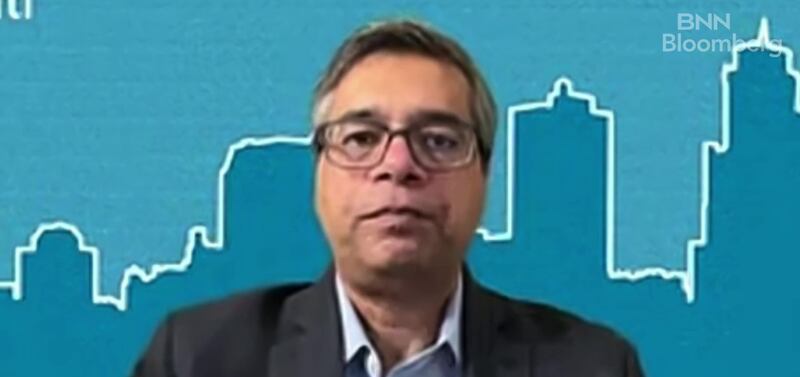
Read the full transcript below:
LINDSAY: Shares of Applied Materials are soaring after the company delivered an upbeat sales forecast, signalling strong demand for artificial intelligence and memory semiconductors. For more on this, we’re joined by Atif Malik, analyst at Citi. It’s good to have you with us. Thanks so much.
ATIF: Thank you for having me.
LINDSAY: What are your initial takeaways from Applied Materials’ latest earnings report?
ATIF: It was a big beat and an even bigger outlook. The focus for investors was management’s commentary for the full year. Semiconductor systems sales expectations were around the mid-teens, and the company is now calling for about 20 per cent growth this year, driven by AI, advanced packaging, DRAM and foundry-logic.
Applied Materials underperformed last year versus peers like Lam Research and KLA, but the mix of spending is in its favour this year. The company has the highest market share in the DRAM equipment market.
LINDSAY: It does seem to reinforce what many have been predicting — that semiconductor and chip-related companies will trend higher this year because of the AI run we’re seeing.
ATIF: Correct. Memory components are in severe shortage. Based on commentary from hardware companies as well as Qualcomm, that shortage is affecting lower-end consumer demand, but much of the memory supply is going toward AI.
Equipment makers like Applied Materials are in a good position because more capacity is needed to meet that demand. Fab space is limited this year, so Applied and peers like Lam Research and KLA are looking at an extended upturn into next year due to constrained fab shell capacity.
LINDSAY: With that in mind, let’s talk more about the risks for the company as we move further into 2026.
ATIF: The biggest risk for the group, including Applied Materials, has been China sales. China has accounted for roughly 30 per cent of equipment sales in recent years, and the country is increasingly looking to in-source. There are also U.S. government restrictions on leading-edge equipment used to make AI chips in China.
That has been the main overhang for the past couple of years. This year, however, non-China demand — outside of TSMC, Intel and Samsung — is growing and helping offset the China risk.
LINDSAY: Applied Materials also settled a U.S. Commerce Department investigation with a $252.5 million payment. Did that have any impact on the latest quarter?
ATIF: No, it did not. It was a one-time fine related to export restrictions. We’ve seen similar cases in the past with hard disk drive companies settling with the U.S. government. There are no criminal or long-term implications.
LINDSAY: The company also has a new partnership with Samsung. How meaningful is that?
ATIF: Samsung, TSMC and Intel combined account for about 75 per cent of global equipment spending. Samsung is a major spender, so partnering with Applied Materials at its EPIC R&D centre is a strong endorsement.
Applied Materials has one of the broadest and most diversified product portfolios in the industry. Integrating all the processes required to build next-generation transistors is complex, and Samsung’s partnership underscores Applied’s strategic position.
LINDSAY: You also mentioned operating expenses are rising. Where is the company investing?
ATIF: The focus is on research and development. Making advanced transistors, packaging and chiplets requires new processes and materials. Applied Materials is continually investing in new materials and technologies.
Given that three customers account for about 75 per cent of sales, the company does not need a large sales force. Operating expense growth is primarily directed toward R&D rather than SG&A.
LINDSAY: We’ll leave it there. Thanks so much for your insight.
That was Atif Malik, analyst at Citi.
---
This BNN Bloomberg summary and transcript of the Feb. 13, 2026 interview with Atif Malik are published with the assistance of AI. Original research, interview questions and added context was created by BNN Bloomberg journalists. An editor also reviewed this material before it was published to ensure its accuracy and adherence with BNN Bloomberg editorial policies and standards.

