YouTube says it has been the largest streaming platform in the United States for three years running, as digital video continues to capture a growing share of viewing time and advertising dollars from traditional broadcasters. The platform is expanding subscription and paid content offerings while maintaining an ad-driven core business model.
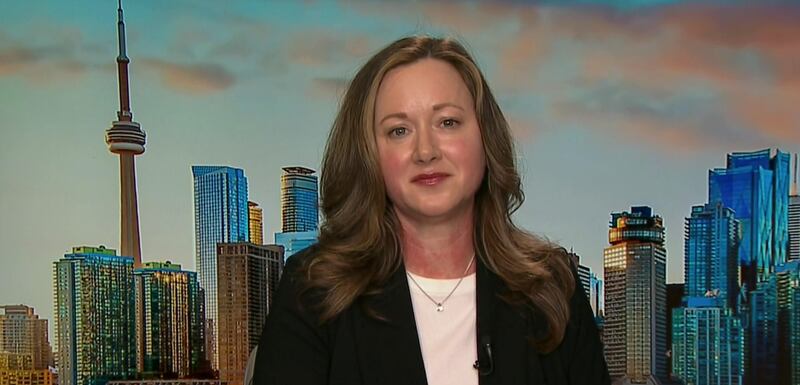
BNN Bloomberg spoke with Nicole Bell, Head of YouTube Canada, about revenue streams, competition with global streaming rivals, advertising integrity and how the platform is positioning itself within a rapidly evolving media and AI landscape.
Key Takeaways
- YouTube says it has been the largest streaming platform in the United States for three consecutive years, signalling continued shifts in audience share away from traditional TV and toward digital video.
- Advertising remains the dominant revenue driver, though subscription services and paid “Primetime Channels” are a growing component of the business mix.
- The platform returns 50 cents of every dollar in advertising and premium subscription revenue to creators, underscoring its marketplace model rather than a traditional studio commissioning strategy.
- Management highlighted increasing viewership on connected TVs, suggesting streaming growth is occurring not only on mobile but also in the living room.
- Fraudulent and spam advertising remains an industry-wide risk, with YouTube emphasizing advertiser approval systems, AI-based monitoring and account removals as mitigation tools.
Read the full transcript below:
ANDREW: Okay, so Canada and the global entertainment landscape have been transformed in the past year. AI is just the latest sweeping trend. YouTube is now apparently the biggest streaming channel in the United States, and it’s challenging Netflix for dominance and, of course, threatening to hollow out the regular TV industry and cable viewers. Let’s get more from Nicole Bell. She’s the new head of YouTube Canada, YouTube, of course, a unit of Alphabet. Nicole, thank you very much indeed for joining us.
NICOLE: Thank you so much for having me, Andrew.
ANDREW: So just remind us that YouTube, of course, belovedly, the famous cat videos and homemade content. You’ve moved a long way beyond that. Tell us, what are the main things you’re doing these days?
NICOLE: We certainly have come a long way from, you know, the cats on skateboards of our earlier years. And YouTube is now — you know, we just announced yesterday, for the third year running, the largest streaming platform in the United States and in Canada. You know, 98 per cent of Canadians are watching YouTube monthly. So, you know, a really tremendous opportunity for creatives to come and tell their stories. And really, you know, a place for shockingly high-quality content.
ANDREW: Tell us about your original content, because I was interested to read about this AsapSCIENCE. It’s a YouTube channel created by Mitchell Moffat and Gregory Brown, and one of their goals here was to improve the image of science among gay young people. It’s pretty big, though, tens of millions of viewers, with sometimes songs about science, etc., that can be edgy.
NICOLE: Mitch and Greg are incredible creators, you know, originally educators and scientists who decided that they wanted to use the platform of YouTube to be able to reach an even wider audience. They’ve built an extraordinary studio in Toronto and have a team of folks who work with them now. And, as you say, reaching billions of people around the world. I think, you know, they were one of the key voices, if people remember the controversy around the dress — was it gold, or was it blue? — that was one of their big viral hits. But they continue to this day to draw a really, really strong viewership.
ANDREW: And then, of course, Lilly Singh. She grew up not far from here, in Scarborough. She rose to fame in part because of her YouTube videos.
NICOLE: Absolutely, yes. Lilly was an early breakout star and continues, obviously, to be a household name in Canada. And I think what’s really interesting is that pipeline of what I would call the startups of Hollywood, or the startups of the entertainment industry, that then go on to build these powerhouse new media businesses. That is still happening with Canadian channels on YouTube every day.
ANDREW: Now, I go to YouTube. Sometimes I want to watch a movie and I can pay to rent the film. Is that kind of paid-for content a big part of the revenue stream?
NICOLE: That is a growing part of our revenue stream, both our subscription business and those kinds of services that we call Primetime Channels, where you’re able to go in and select a video or a series that you want to watch. That’s a growing part of the business. But overall, I would say still a business that is predominantly advertising-driven.
ANDREW: Right. And so that’s the thing. I mean, most of the content is free, but you have to sit through an ad. Isn’t it interesting, though, just the rise? You said YouTube is now the biggest streaming platform in the U.S.?
NICOLE: Yes, for three years running, the biggest streaming platform in the United States, so capturing more viewership than Netflix, Disney+, etc. And one of the things that we increasingly find is that the largest growth of viewership for YouTube is actually on people’s television screens. So what we’re finding now is, as families sit down and turn on the TV, what they’re turning on is YouTube.
ANDREW: But you still aren’t making high-quality dramatic content like Apple or Prime or Netflix. That’s not a step you’ve taken yet.
NICOLE: Well, the difference for YouTube is that we’re not a service that commissions content, and so we’re not going out and looking for the latest dramatic series and picking winners and losers in the content business. YouTube is a business where you, as a creative, get to greenlight yourself and greenlight your own idea. You know, YouTube provides you with all of the tools and resources and the ability to find that global audience, which Canadian content does so well. It’s really borderless IP. And from that, you’re seeing tons of channels that are able to grab a gigantic audience and deliver a truly high-quality experience. If you think about today, a lot of the largest talk shows, for example, are actually taking place on YouTube, whether that’s something like “Chicken Shop Date” with Amelia Dimoldenberg. Those are landing huge interviews with massive stars. Same thing for giant podcasts, all happening on our platform.
ANDREW: That’s interesting. But shows like that, you’re not financing them. Are you paying for the production?
NICOLE: We don’t. But the way that works on YouTube is, for every dollar that we bring in in revenue through advertising or premium subscription sales, 50 cents of that dollar goes back out to the creator that made the content. And so it really is a way for creative people to be able to build a thriving and sustainable creative business for the long term, which is what you’re seeing when you talk about channels like AsapSCIENCE that have been able to do it for a decade.
ANDREW: You mentioned ads, and of course there’s controversy, not just about you — Instagram, other channels. How about these fraud ads, these spam ads and worse, actual fraud, fraudulent ads? Why can’t you keep those off the channel?
NICOLE: That is a really, really big priority for us at YouTube. Obviously, that kind of content is very much against our policies, and we take it down very, very quickly. It’s something that we tackle every single day with a combination of both machine learning and human intervention, and something that we’ve poured a ton of resources into. It’s not something that we want people to be finding on our platform.
ANDREW: But how seriously do you take it? The ads are still there.
NICOLE: I think we do a pretty good job of tackling it. You know, this is an emerging threat area, and certainly one that we’ve invested the resources to develop new kinds of AI and new kinds of machine learning to be able to find it much more quickly and remove it. And I think you’re seeing a huge difference in the way that YouTube tackles those problems versus some of the other platforms.
ANDREW: But the ads are still there. You could check the ads before you run them, but you don’t bother because it would be too hard on your profit, I guess.
NICOLE: Not true. I think the way that it works on YouTube is you do have to be approved as an advertiser. And if we see somebody who’s abusing our systems that way, we remove their advertising account and they’re not able to advertise anymore.
ANDREW: But still, the stuff gets up there. I mean, it’s like a newspaper that was running fraud ads. It would be pretty quickly kicked out. But you guys, the problem persists.
NICOLE: I’m not sure that it persists to the degree that you’re suggesting. I think that we do a pretty great job of taking that stuff down. These are systems that people are trying to attack on a regular basis. We see different forms of abuse from different kinds of bad actors. But it’s something that, at YouTube scale, we put a ton of investment into. It’s certainly not the environment that we want our advertisers to be in and not one that we want our creators to be in either.
ANDREW: Right. It’s not unique to you. I mean, it’ll show up on Instagram and other platforms for sure. Nicole, thank you very much indeed.
NICOLE: Thanks so much.
ANDREW: Nicole Bell, head of YouTube Canada.
---
This BNN Bloomberg summary and transcript of the Feb. 18, 2026 interview with Nicole Bell are published with the assistance of AI. Original research, interview questions and added context was created by BNN Bloomberg journalists. An editor also reviewed this material before it was published to ensure its accuracy and adherence with BNN Bloomberg editorial policies and standards.

