Emera reported lower fourth-quarter profit but delivered record full-year earnings in 2025, with Florida utilities driving growth and capital investment. The company also extended its earnings growth target through 2030.
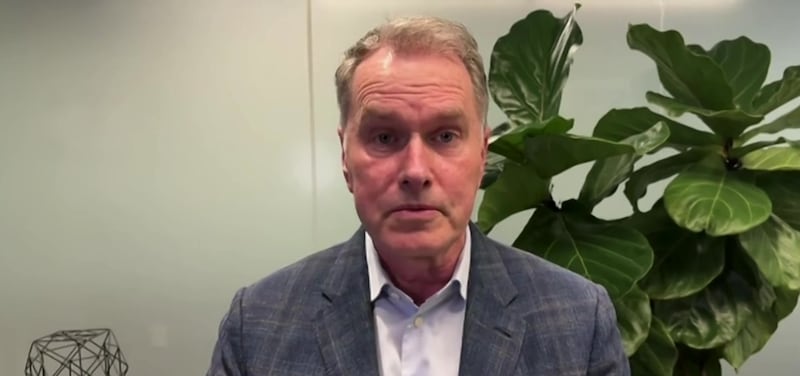
BNN Bloomberg spoke with Scott Balfour, president and CEO at Emera, who said Florida now represents roughly 72 per cent of earnings and remains central to the company’s $20-billion capital plan, including potential data centre-related demand growth.
Key Takeaways
- Adjusted net income fell to $167 million in the fourth quarter from $246 million a year earlier, largely due to milder weather, weaker utility performance and lower tax recoveries.
- Full-year adjusted net income reached $1.045 billion, while adjusted earnings per share rose 19 per cent to a record $3.49.
- Florida operations now account for about 72 per cent of total earnings, reflecting a strategic shift toward higher-growth regulated U.S. utilities.
- The company extended its average adjusted earnings per share growth target of five to seven per cent through 2030, supported by its $20-billion capital investment plan.
- Management expects large-load additions, including potential data centres in Florida, to cover incremental system costs and potentially ease rate pressure for existing customers.
Read the full transcript below:
ANDREW: Canadian electricity generator Emera did see a slip in fourth-quarter profit, but year over year, profit jumped 19 per cent and adjusted earnings topped $1 billion for the first time. We are now joined by the president and CEO, Scott Balfour. Thanks very much indeed for coming on the show, Scott.
SCOTT: Happy to be here. Thanks, Andrew.
ANDREW: Just looking at your income statement here, Florida really is the big source of your profits this year, isn’t it? You’re north of $840 million in adjusted profit from there, whereas your Canadian utilities were less than $200 million.
SCOTT: Yeah, that’s right, Andrew. As you said in your lead, 2025 was a record year for us, with our adjusted earnings per share up 19 per cent. The real driver for that is our businesses in Florida, which now represent about 72 per cent of Emera’s earnings today and are really the driving force behind our growth in 2025 and our forward-looking growth as well, including most of our capital deployment.
ANDREW: And gas is not a rounding error. It was almost $300 million in earnings last year. Where are your gas assets?
SCOTT: Currently, we have two gas utilities, one in the state of New Mexico, which we’re in the process of selling. We’re awaiting a final regulatory decision there that we expect very soon in terms of a recommendation on the closing of that transaction, which we expect to happen before the end of the second quarter. And then in Florida, we have two businesses: Tampa Electric, serving electric customers in the greater Tampa area, which represents almost 60 per cent of Emera today, and Peoples Gas, which serves about half of the gas-connected customers in the state of Florida and is one of the fastest-growing utilities in the country.
ANDREW: Your stock is trading near record highs right now. It’s had a great run. Your profit per share jumped last year — it was almost $3.50 a share, up from just under $3 in the previous year — but there was a decline in the fourth quarter. Why was your profit down in the latest three months?
SCOTT: As a utility, we’re fortunate that we have pretty good insight into our earnings profile. As a company that owns a number of regulated utilities, we provide stable and predictable earnings and cash flow to deliver value to shareholders. But we do get impacted by weather at times. In the fourth quarter of 2025, we had more temperate weather, particularly in Florida. That meant our earnings for the quarter were a little lower. But as you highlighted, for the full year, our results were very strong.
ANDREW: Is Florida seeing much in the way of construction for data centres? Does that point to bigger demand for you?
SCOTT: It’s a good question. Data centres are a big part of the story for electric utilities today in the United States. Florida has not been front and centre in that discussion, but it is increasingly happening now. We are in a number of advanced discussions with large-load customers, including data centre customers, and we’re optimistic that we’ll see some traction this year, in 2026.
ANDREW: I’m just wondering, because Florida’s hot, does that make it less attractive to locate a data centre? You might have extra cooling costs.
SCOTT: You’re picking up on a good theme. However, electricity costs in Florida are lower than in many places, and the reliability of the electric system in Florida is very strong, in fact leading the nation in many respects. It’s also hot in other places with a lot of data centre activity, including Louisiana and Texas. Florida is not unique in that way, but it does have advantages. One of the most important is capacity — generation and energy capacity — to serve these customers. That’s why we’re seeing interest from potential customers at Tampa Electric.
ANDREW: In many parts of the U.S., people are blaming data centres for pushing up electricity prices.
SCOTT: That’s true in some regions. But in the regions where we operate, they are mostly integrated markets. As a utility, we’re responsible not just for transmission and distribution, but also for generation, which means we manage the planning cycle to make sure we have enough energy for all of our customers. When we price these large-load customers, we ensure they pay 100 per cent of the incremental cost to serve them, plus a little more. We see data centres as potentially helping customer affordability, rather than hurting it, in our markets.
ANDREW: Just to clarify, Tampa Electric is your operation there?
SCOTT: That’s right. Tampa Electric is our largest business today, almost 60 per cent of Emera, and it’s in a number of conversations with prospective data centre clients.
ANDREW: If you were to put in new gas-fired capacity, is it frustrating trying to secure contractors and equipment, given the building rush in the U.S.?
SCOTT: One of the challenges everyone is working through is long supply chains for major equipment such as gas turbines and transformers. We’ve shared that we’re already in the queue for two large GE gas turbines that we expect to be delivered in the next couple of years to serve growing needs, including prospective data centre customers. Maintaining strong relationships with contractors and equipment suppliers is key, and that positions us well in Tampa in particular.
ANDREW: We’re tight for time, but your dividend yield is just over four per cent. What is your policy on the dividend? Do you try to increase it every year?
SCOTT: We’ve increased our dividend for 19 consecutive years, and our guidance to investors is that we’ll look to continue increasing it each year in the range of at least one to two per cent.
ANDREW: And you usually declare that in the fall?
SCOTT: That’s right. We usually make that declaration in the fall. Of course, it’s a board decision, but that’s typically the timing.
ANDREW: Thank you very much, Scott. Great talking to you.
SCOTT: Thank you, Andrew.
ANDREW: Scott Balfour, president and CEO of Emera.
---
This BNN Bloomberg summary and transcript of the Feb. 23, 2026 interview with Scott Balfour are published with the assistance of AI. Original research, interview questions and added context was created by BNN Bloomberg journalists. An editor also reviewed this material before it was published to ensure its accuracy and adherence with BNN Bloomberg editorial policies and standards.

